If they were to throw my grandmother out of her house again
No vital pirouette is needed to end up on the street. It is enough to be a normal woman, any one, like those you find on the street: at the supermarket, on the bus, in the doctor's waiting room. All these women were my grandmother.

-
CAT -
CAST -
GER
PalmaYou don't need to be evicted to end up on the street. You don't need a vulture fund to buy your home to lose it; it is enough not to be able to pay for it. You don't need the police to remove you from your home; your own children can do it. You don't need force, but you do need violence, to leave a pensioner homeless. You don't have to be Maricarmen. You can also be María del Carmen.
To end up homeless, it is enough to have been a woman born in the 30s in Spain, to have had the children that didn't suit you, and to trust that the State, one day, would compensate you for all the work done in its service without contributing. But my grandmother didn't know all that. My grandfather had to die for her to discover that if we subtracted the 650 in rent from the nearly 700 euros of widow's pension she received, in a matter of months she would be on the street. My grandfather also had to die for her to discover that she could not count on any of her male children—nor their labor force—to get by. The road to hell is paved with good intentions, and the welfare state is built on women with dysfunctional families.
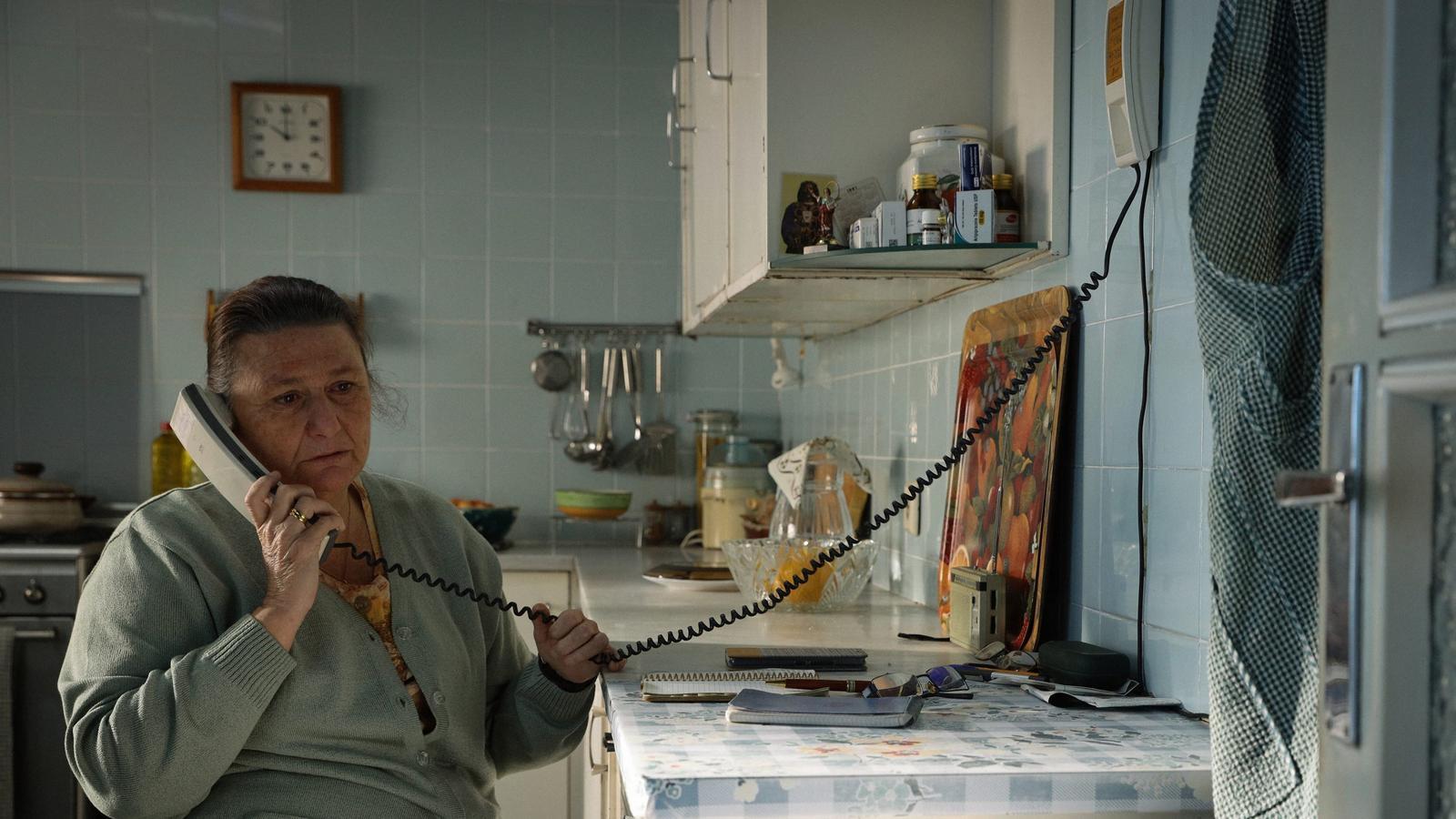
You don't need any vital pirouette to end up on the street. The system doesn't even need to play its cards to get you out of your home. It's enough to try to move forward on the board, like a queen, to fall into one of its traps. It's enough to have had a normal life. It's enough to be a normal woman, any woman, like the ones you find on the street: at the supermarket, on the bus, in the doctor's waiting room. All these women were my grandmother. You would have crossed paths with her on any given day, thinking you could be her, when you're older: an octogenarian who needs help carrying the groceries. Really, you could be her: an octogenarian with an entire life compacted into two cardboard boxes under the bed.
Everything happened very quickly. Perhaps the accounts had never added up for them. There weren't even any savings to spend. Just some children and a black hole in the bankbook. Nobody forced her out: it was her common sense and the urgency of a debt she didn't know how long she had been carrying. She told us “take me with you” and we hurried so much that the snack cup must have been left in the sink still to be washed that day. Forty years and a family of seven buried in a fifth-floor apartment with an elevator and views of the parish. So much time to build a life and so little to say goodbye to it. She didn't know that day would be the last day. Or perhaps she did, and that is why—among everything she could gather—she packed the photo albums and her wedding dress.

Sometimes, it is not so good to explain why a person has had to leave their home without making a move, or how they arrived here. Most likely, my grandmother never imagined that this could happen to her: that the day she left, she would not have to rent a truck to transport her things. She also could not have imagined that, however, wherever she was going, there would be no room for her things. Because she assumed she would have to be doing very poorly to have to abandon her life and burn the past, like a fugitive. From her, I have learned never to take a roof for granted. And from my mother, to guarantee it for myself. I wonder if my grandmother ever dreamed of a house, or if she felt her home more as a loss than as a fantasy. If she placed her faith in other plots, neglecting this one. I ask myself this now, when we all dream of walls. What are we ceasing to dream about?
We do not need any misfortune to end up on the street. But we do need a social system to save us, because among ourselves we will never be able to save everyone. My mother tried: she sold her house –my house, my childhood– to get ours, something big, outside of Palma, where a plural could fit: all three of us. And then who was to save us from ourselves, from our rotten structure, from the infected care? Only our taxes and someone's decision to invest them where it was needed did that, to take us out of hell, to free us from the weight of a structural problem that we were supporting with a family infrastructure.
I would like to know what would have happened if we had not saved my grandmother from the street, how the machinery in which we are stuck would have responded, what resources would have been activated, and if we would have been capable of putting the welfare state to the test, to its ultimate consequences. I would like to know what would have happened if she had not had a daughter, if we had not acted as a safety net, if someone else would have stopped the blow. I would like to know how many more things they save themselves from taking charge of, because we already do it ourselves. I would like to know how many Maricarmens and Marías del Carmen more we are saving and how many, still, need to be saved.
