Daniel García Veira: "Losing seagrass increases the risk of coastal flooding"
Biologist and researcher

-
CAT -
CAST -
GER
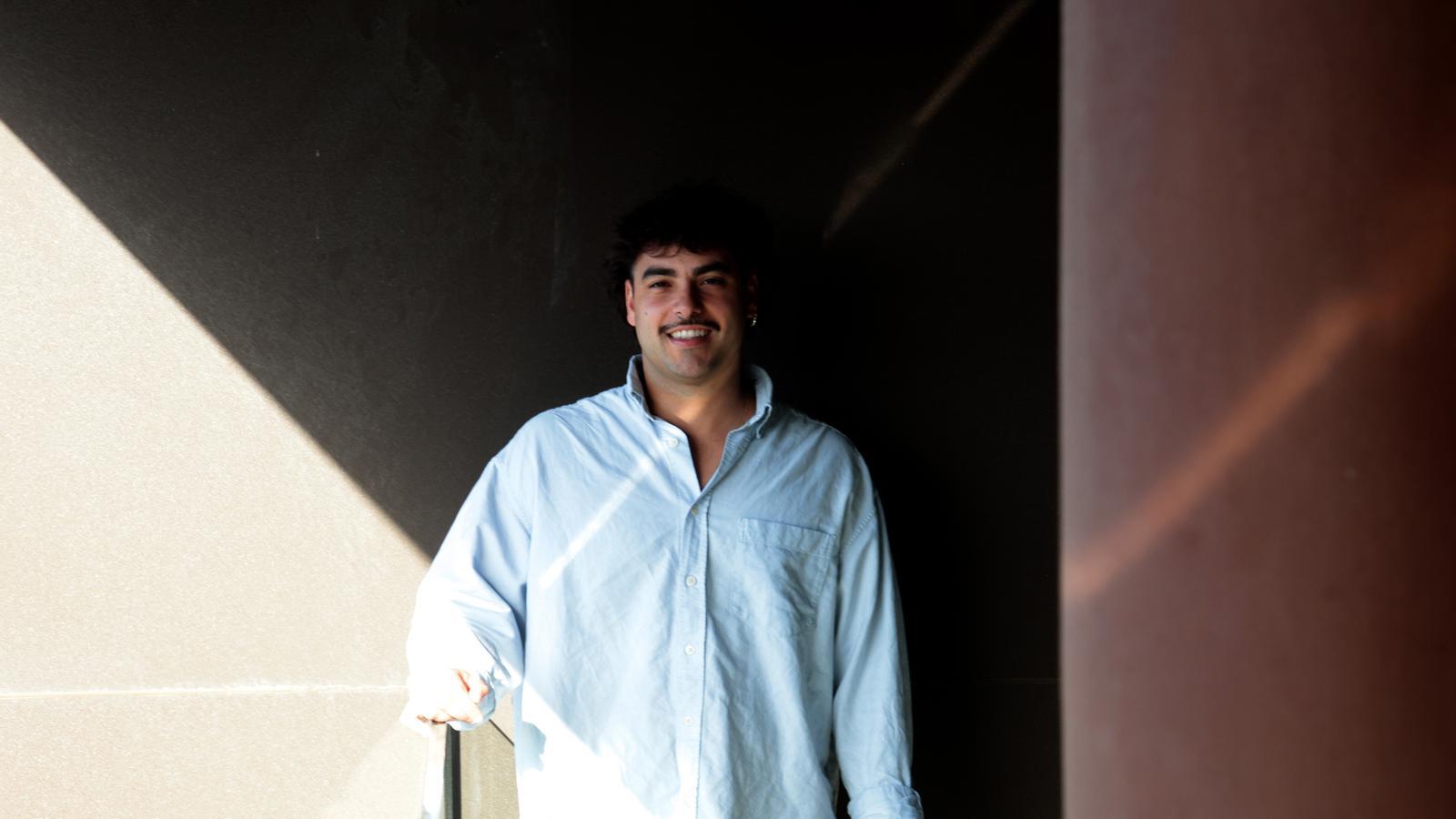
PalmaDaniel García Veira (Carballo, 1997) is a biologist and marine ecologist. At the Mediterranean Institute for Advanced Studies (Imedea), he researches the role of oceanic posidonia meadows in marine protection.
What exactly is posidonia and what role does it play in the sea?
— Oceanic posidonia is a marine plant endemic to the Mediterranean. It is often confused with algae, but it has roots, a stem, leaves, and flowers, and forms extensive underwater meadows. It plays a fundamental role in the marine ecosystem: it serves as a refuge and breeding area for numerous species, stores carbon, retains particles and sediments, and helps maintain the transparency and quality of the water. Furthermore, it protects the coast by reducing part of the wave energy and the speed of currents, and helps stabilize the seabed. Therefore, conserving it means protecting a species and maintaining an ecosystem that directly influences the quality of our beaches and the natural resistance of the coastline against storms.
What would you say to those who see the seagrass accumulated on the seashore as a nuisance?
— These accumulations are part of the natural cycle of Posidonia. They are known as banquettes and help retain sand, provide organic matter and nutrients to the ecosystem, serve as a refuge and food for small organisms, and can act as a natural barrier against waves and erosion, especially during storms. They have significant ecological and coastal value. They are part of the natural functioning of the beach.
How can a marine plant help protect a coast?
— Seagrass meadows modify the way waves and currents interact with the seabed. The leaves slow down part of the water's movement and reduce the energy with which the waves arrive. At the same time, the roots and rhizomes help to fix the sediment on the seabed; they make the sand more stable and it is lost with less ease. Therefore, a well-preserved meadow can act as a form of natural protection and contribute to reducing erosion, cushioning part of the waves, and maintaining the stability of the coast.
What is the connection between the loss of seagrass and a greater risk of flooding?
— If a meadow degrades, the seabed offers less resistance to the movement of water. In addition, waves can reach the beach with more energy, and this increases the capacity to mobilize sediment. This can make the coast more vulnerable during storm episodes. If a natural defense is reduced, the risk of erosion increases. Therefore, the loss of seagrass also increases the risk of coastal flooding.
To what extent does tourist pressure also affect the health of seagrass meadows?
— The health of seagrass meadows is conditioned by a combination of global and local factors, many of which are related to human activity. On the one hand, the warming of the sea associated with climate change poses a significant pressure for a sensitive species. On the other hand, there are more local impacts, such as pollution, discharges, loss of water quality, waste, anchoring of boats, and certain actions on the coast, which can directly damage the meadows or reduce their recovery capacity.
Are ship and yacht anchors a threat?
— Yes, especially when the anchor falls directly on the meadow or when the chain drags along the bottom. Posidonia is a very slow-growing plant, barely a few centimeters a year, and anchoring can uproot clumps of posidonia, break rhizomes, and leave clearings in the meadow. The problem is the repetition of many anchorages in the same areas over years.
Is enough being done to reconcile nautical activity with the conservation of this ecosystem?
— In the Balearic Islands, there is specific legislation on the conservation of oceanic posidonia that generally prohibits anchoring on meadows. Furthermore, the species has state protection. From here, compatibility with nautical activity involves avoiding physical damage to the meadow and correctly using the available information and cartography to know where anchoring can be done without affecting the posidonia.
What threatens seagrass more: climate change or human activity?
— It is affected by both local and global impacts. Among the former are the loss of water quality, pollution, dumping, physical impacts on the meadow, and certain alterations to the coastline. These pressures can greatly weaken the meadows in specific areas. Among the latter, the warming of the sea associated with climate change is an increasingly important threat, as posidonia is a species sensitive to temperature. Both factors can add up. Therefore, reducing local pressures is key to increasing the resilience of posidonia to climate change.
Based on the models you work with, how do you imagine the coasts of the Balearic Islands in a few decades if the seagrass meadows continue to deteriorate?
— It will affect the quality and transparency of the water, marine biodiversity, and the entire coastal ecosystem. In this scenario, coasts could be more vulnerable to erosion and coastal flooding, but also lose part of the environmental quality that characterizes many areas of the Balearic coast.
Were there any results from your searches that particularly surprised you or that you didn't expect to find?
— It is not necessary to think of a total loss of the meadow to note how it loses coastal protection capacity. It is important to keep these meadows healthy, dense, and functional.
Is it possible to restore a degraded meadow or are we talking about ecosystems that need decades to regenerate?
— There are restoration and transplant experiences that can work under specific conditions, but they do not replace the conservation of existing meadows. Prevention is fundamental. And yes, damage can occur in a short time, but recovery can take decades.
If you could ask for a single urgent measure from the Balearic administrations to protect Posidonia, what would it be?
— Reduce the impacts that already affect it, such as physical damage, loss of water quality, pollution, discharges, and some coastal alterations. For me, the priority should be to maintain the meadows in the best possible condition. The healthier they are, the more capacity they will have to withstand other changes that are more difficult to control.
If you had to convince a skeptic that seagrass is an issue that directly affects the future of the Balearic Islands, what would you tell them?
— I would tell him that its state is directly related to the future of the coast and that it is not an isolated issue from what is happening on the seabed. Protecting it has to do with how we want the coasts of the Balearic Islands to be in the coming decades, with this coast that we see every day.
