Manacor will begin to charge an annual fee for each niche in Son Coletes
The reform of the municipal cemetery will oblige to identify the holders of more than 12,000 funeral concessions and will allow to activate a tax that the City Council admits has never settled
-
CAT -
CAST -
GER
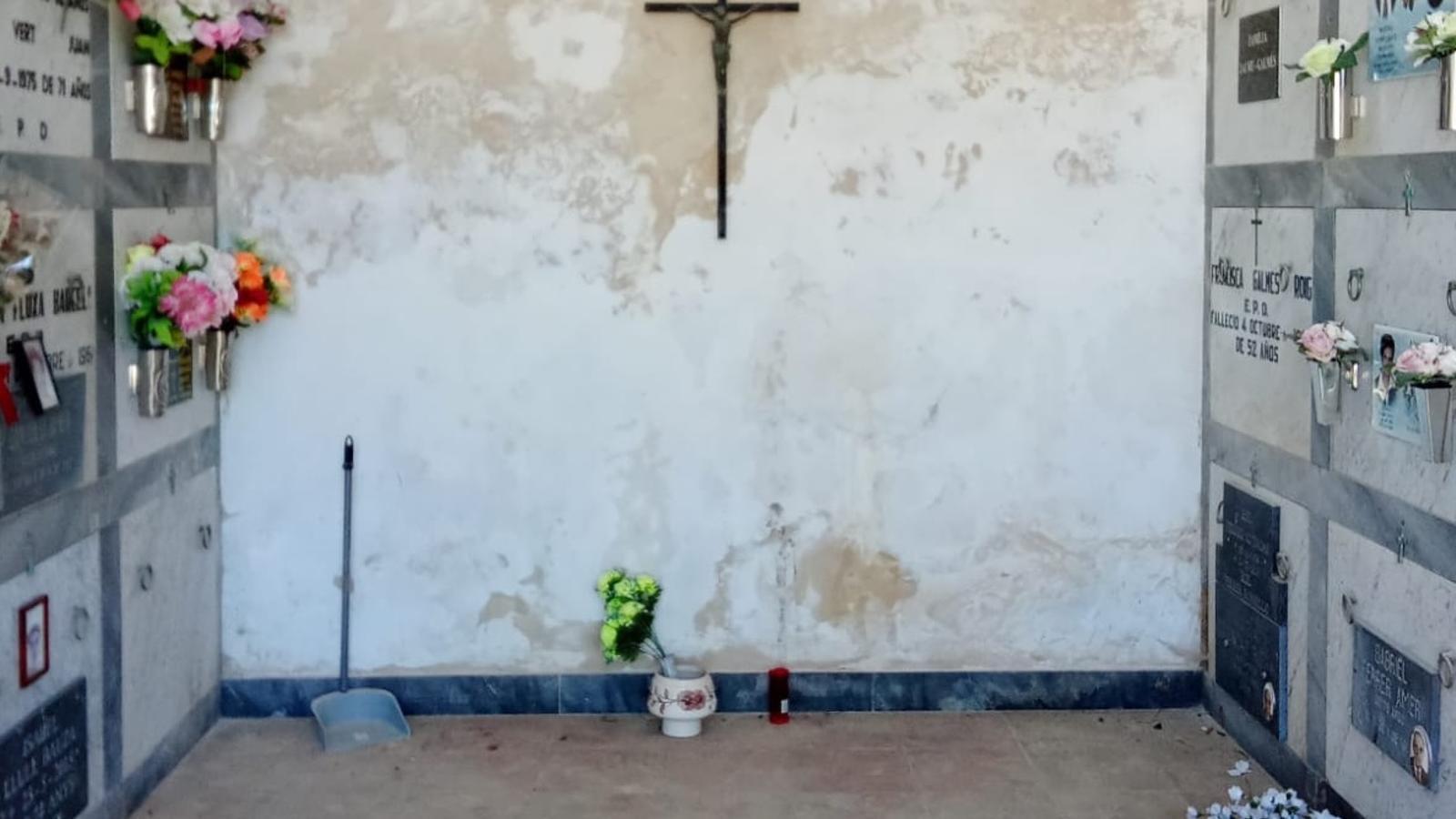
ManacorThe latest problems and criticisms made public by users who have not been able to bury their loved ones, due to security problems, in family tombs, have led the City Council to now face the urgent need to reform the old part of the Son Coletes municipal cemetery, in Manacor. And it is that although the space, redeveloped between 1953 and 1957 after an initial use during the plague, has been in a state of evident degradation for years due to the passage of time and lack of maintenance, it has not been until recent weeks that the Consistory has decided to get down to business.

Some actions that have already begun with a visual inspection, commissioned to an external company, which will draw up an initial diagnosis from June 29, when the upper part of the most urgent tombs will be uncovered, which are suffering from 'exhaustion' from the effects of humidity accumulated over 70 years. Once this initial phase is closed, in September the most evident and necessary distinct projects will be put out to tender in parallel.
Regarding the effective works, they will not be put out to tender as within three months later, in December. An administrative process that would end in July of next year, 2027, when the works would begin in distinct pluriannual lots, also depending on municipal allocations, until next year's budgets or through remainders. A cost that is estimated at several million euros, taking into account that the emptying of the interior planters for their waterproofing has already cost 700,000 euros and the adaptation of the central burial area of the cemetery has cost another 126,000.
Fee inactive for 70 years
Likewise, the Manacor council wants to completely update the municipal cemetery regulations, which are obsolete even though they were punctually reformed for the last time in 2006, in order to streamline processes, but above all to definitively compile a census of the more than 12,200 niches (the vast majority on concession to individuals), which means identifying their holders and ensuring compliance with obligations of action. The intention is that there be at least one representative for each grave with whom the City Council can speak as an intermediary.
This would lead to the possibility, after 70 years, of being able to collect the annual fee for these concessions, which the City Council admits to have never settled. Considering that, if in other island cemeteries they are between 10 and 20 euros, we could be talking about millions of euros that the Council would have failed to collect due to not having an internal and updated control of the Son Coletes census.
The old part of the Son Coletes cemetery is made up of 720 excavated tombs grouped into 20 flowerbeds, 116 chapels, and the central tomb, while the extension incorporates various types of chapels. Currently, about 25 of these spaces are closed and access is prohibited by order of the Urban Planning department, which believes that after the first phase of the study of the condition, they will increase significantly.
