A rock from a comet crosses the sky at 238,000 km/h to the northeast of the Balearic Islands
The Calar Alto Observatory has recorded a super fireball coming from a cometary fragment, while two other fireballs have illuminated the sky over Cadiz and off the coast of Morocco
-
CAT -
CAST -
GER
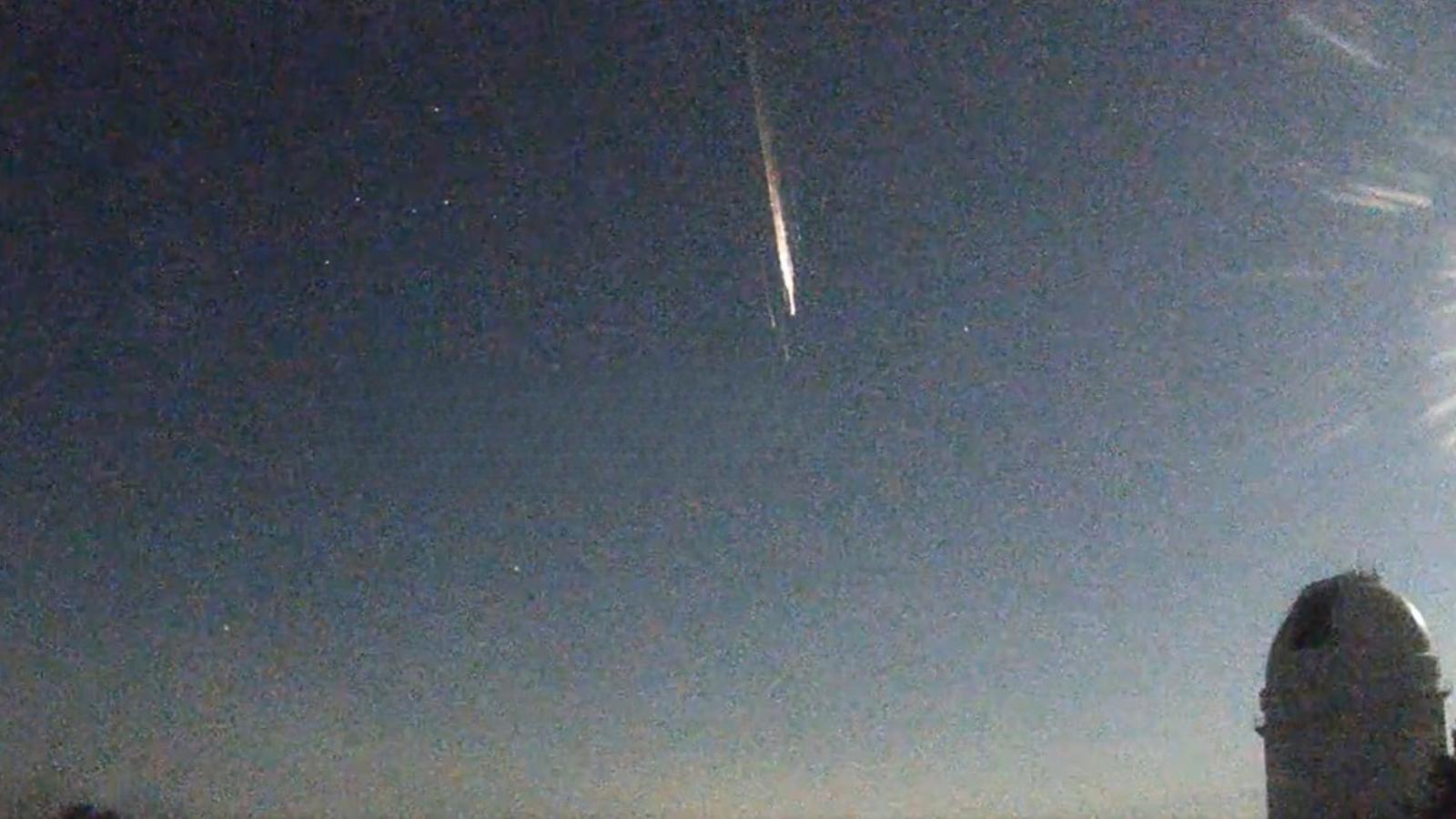
PalmaThe Calar Alto Astronomical Observatory, located in Almeria, has recorded a super fireball originated from a rock detached from a comet that entered the Earth's atmosphere at an estimated speed of 238,000 kilometers per hour, at a point located northeast of the Balearic Islands. The episode took place between September 10 and 11 and is part of the high-luminosity phenomena detected in recent days by the Calar Alto observation systems.
In addition to this event, the observatory has captured two other fireballs, one of cometary type and another of asteroidal origin, which have crossed the sky at high speed. Both phenomena were recorded between September 19 and 20, one over the Gulf of Cadiz and the other off the coast of Al Hoceima, in Morocco. According to the center, the phenomenon of September 20 was especially spectacular because it occurred during dusk, when there was still plenty of natural light.
The analyses carried out by Professor José María Madiedo, of the Institute of Astrophysics of Andalusia (IAA-CSIC), have allowed for the precision of the characteristics of both episodes. The fireball recorded on September 19 was detected around 4:14 a.m. and crossed the sky at an approximate speed of 97,000 kilometers per hour.
The object began its journey at an altitude of about 98 kilometers, over the coast of Cadiz, and the phenomenon could also be captured by six other observation stations, among which were two located in Huelva, two in Granada, and one in Seville. The episode of September 20, on the other hand, was recorded around 8:47 p.m., already during dusk, a fact that allowed it to be observed with a sky still containing sunlight. The records from Calar Alto thus allow for the documentation of several entries of small rocky bodies into the atmosphere in just a few days, both of cometary and asteroidal origin.
