The invisible cost of Pollença's tourism model
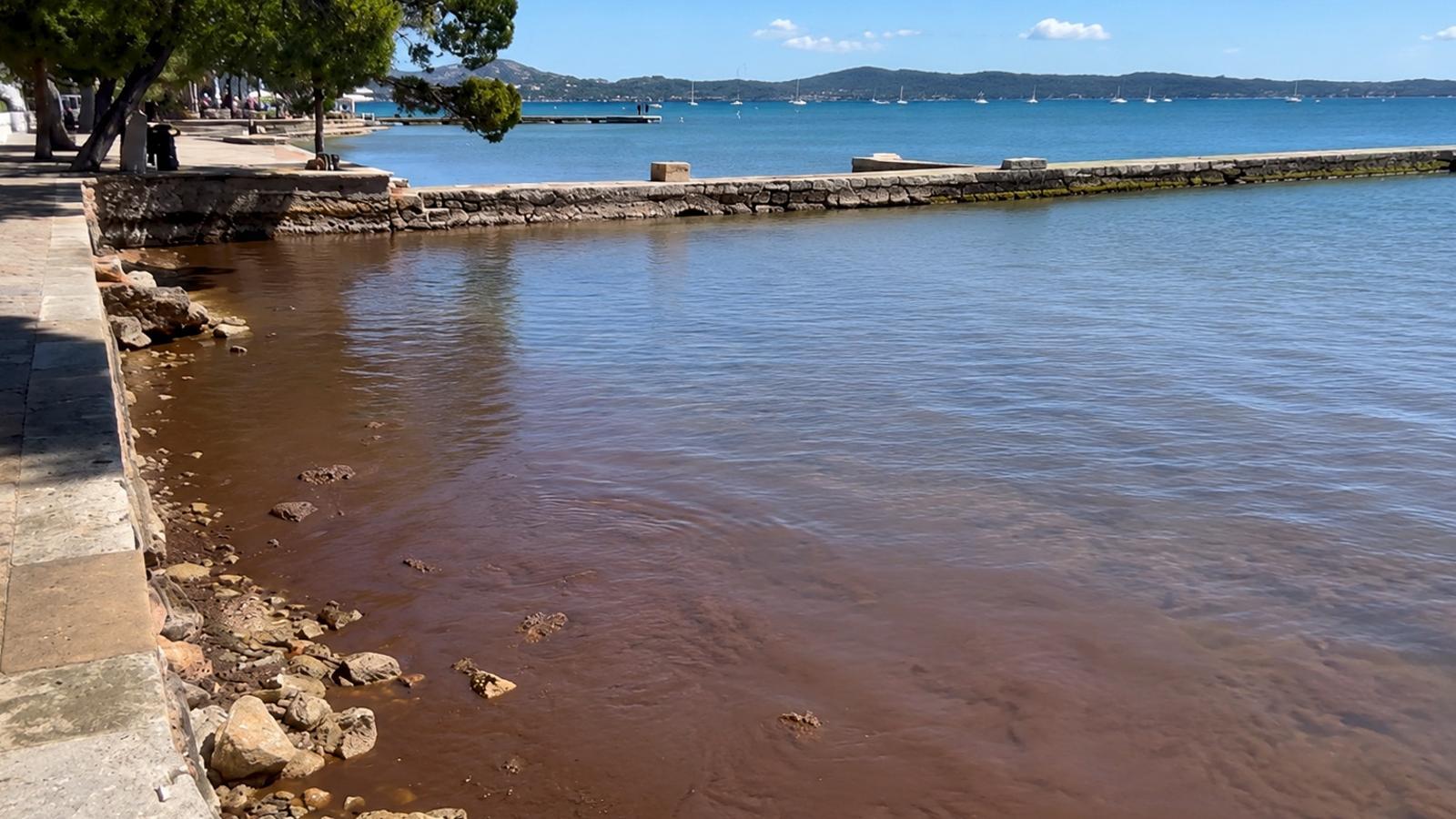
The bay accumulates decades of urban, tourist, and environmental pressure. The pollution episodes are only the most visible face of an ecosystem that has been showing signs of exhaustion for years.

PollençaWhen talking about tourist pressure in Mallorca, the image is usually that of a large hotel facade. In Pollença, however, the reality is different. The municipality has built a large part of its model on holiday rentals. Today it continues to be one of the municipalities with the most tourist-use homes in the Balearic Islands, and almost 68% of tourist places correspond to this type of accommodation, a reality very different from that of other primarily hotel destinations.
This model has profoundly transformed the municipality. Photographs of Port de Pollença from 50 years ago show a much more open front line, with less construction and much lower human pressure. Today, the landscape is different. But the most important change is not what is seen. It is what has happened underground and under the sea.
More than a problem of dumping
Every summer, episodes of turbid water return, along with complaints about possible spills and debates about the bay's environmental quality. The temptation is to look for a single culprit. Ignasi Cifre, a member of Arrels Marines, believes this is precisely the first mistake. “Degradation is multifactorial,” he summarizes. In his opinion, water quality does not depend solely on a single spill, but on a combination of pressures that have accumulated over decades.
This is not a conclusion exclusive to Arrels Marines. Studies carried out in recent years also indicate that the inner bay is a particularly vulnerable area because it is shallow and water renewal is limited. This means that any impact will have more pronounced effects than in other stretches of the coast. The research divides these pressures into two main blocks: those originating from land and those arriving from the sea.
On land, studies point to decades of urban growth, the construction of developments on infrastructure that is now outdated, and a sewage system that needs renovation. At sea, intense nautical activity, permanent moorings, discharges from boats, and coastal transformation complete a picture far more complex than a simple spill.
Cifre insists that the municipality's own development model helps explain the situation. Unlike large hotel complexes, a very significant portion of visitors stay in dispersed chalets and homes, many located on rural land. This involves swimming pools, gardens, private wells, and, in some cases, individual sanitation systems that are not always connected to the public network.
“When we only look at the treatment plant, we overlook part of the problem,” he explains. According to him, there are still homes that function with septic tanks or cesspools, some of which may have leaks. This is one of the hypotheses that researchers have on the table after verifying that the treatment plant's analyses comply with regulations, while, at certain times, the Sant Jordi stream shows lower quality.
Water consumption is another piece of the puzzle. A large part of the dispersed properties obtain water directly from aquifers. During the summer months, when the municipality's population multiplies, the demand derived from swimming pools, garden irrigation, and tourist activity also increases.
Cifre warns that this sustained pressure can favor the entry of seawater into coastal aquifers. "When an aquifer becomes saline, it is very difficult to recover it," he warns.
For Arrels Marines, some of the most important problems in the bay hardly appear in public debate. One of the examples is artificial beaches. Decades ago, sand input buried marine meadows and algae communities that performed an essential function within the ecosystem. Without this vegetation, sediments are stirred up more easily, water turbidity increases, and the light available for many species decreases. It is a slow process that still has consequences today.
To these effects are added breakwaters, piers, changes in natural water circulation, illegal moorings, underwater noise, and overflows from the sewage network during intense rainfall episodes.
"It cannot be said which is the most harmful factor," states Cifre. "Ecosystems do not function as a sum of independent problems. An apparently small impact can trigger much larger consequences." This is what scientists call cascading effects.
Looking beyond the water
The Black Flag awarded this year by Ecologistes en Acció has once again placed the bay at the center of public debate. But, beyond the distinction, the challenge remains the same: to adapt infrastructures designed for another Pollença to a municipality that multiplies its population and pressure on the territory every summer.
Looking at photographs from half a century ago allows us to understand to what extent the landscape has changed. Understanding what is happening under the water and underground is much more difficult. But it is precisely there that, according to Arrels Marines, many of the keys are found to explain why one of Mallorca's most valuable natural spaces has been giving warning signs for years.
