The Maricarmen decree stops the first blow, but does not resolve a runaway housing crisis
The housing movement highlights that the measures have prevented evictions and extended rental contracts, but warns that many cases remain outside of legal protection

-
CAT -
CAST -
DE
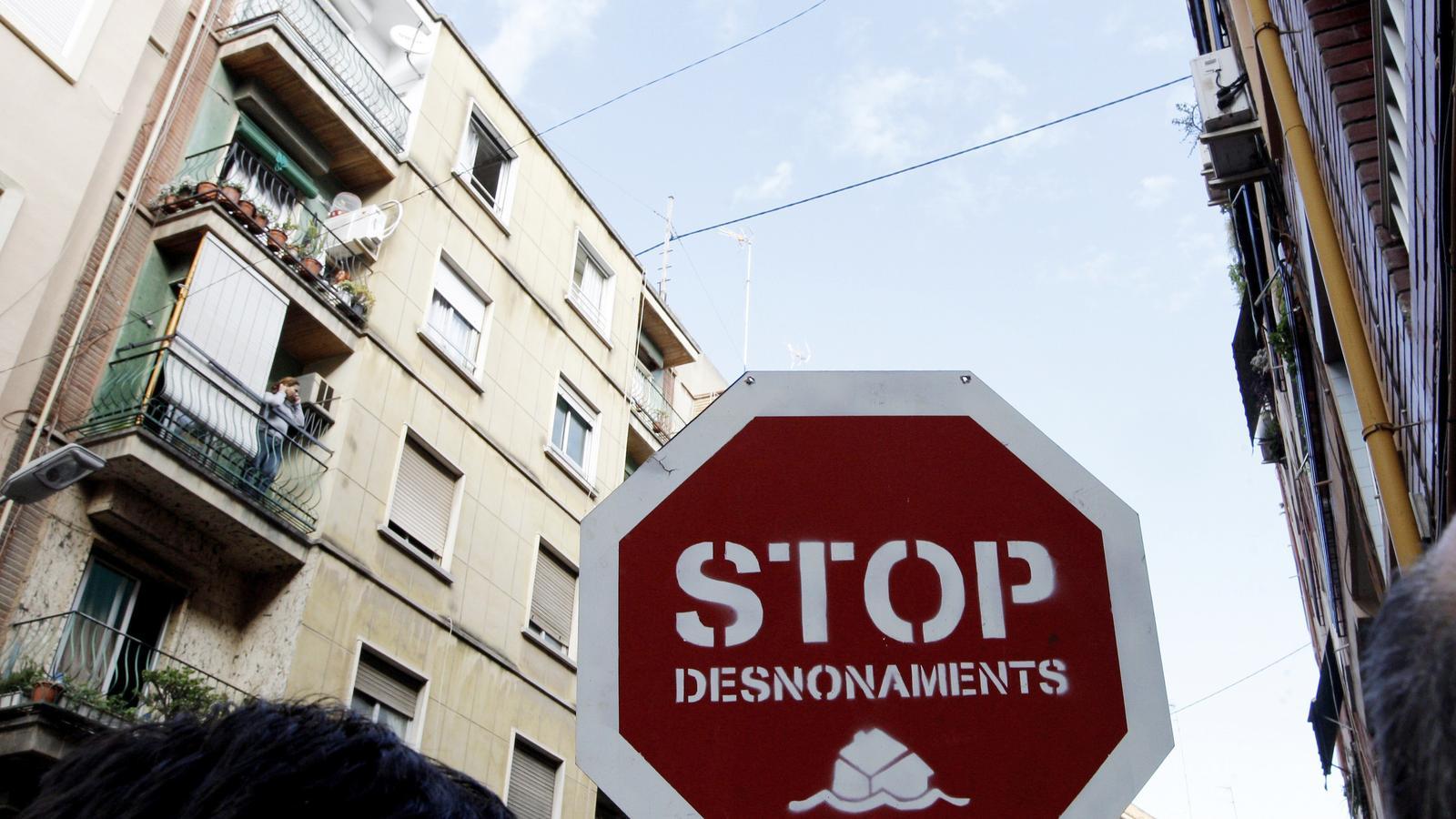
PalmaThe Maricarmen decree has had positive, albeit limited, effects on the protection of vulnerable families against evictions. This is confirmed by the Platform for People Affected by Mortgages (PAH) and the housing movement, which highlight that the measures have allowed people at risk of losing their homes to gain time and avoid having some conflicts over the termination of rental contracts reach the courts. Nevertheless, professionals who work directly with those affected warn that the regulations are insufficient and do not reach all the cases that should be protected.
The validation of the decree last Thursday in Congress, after the PP, Vox and Junts struck down the rule a month and a bit ago, has allowed for the recovery of the temporary suspension of evictions for vulnerable families and the extension of rental contracts for two years. The support of the PSOE, Sumar, ERC, EH Bildu, the PNV and Podemos in the Permanent Deputation was sufficient to validate it, without the need for Junts' vote. In contrast, the rejection by the Basque nationalists prevented the approval of the second decree, which provided for indefinite rental contracts.

The spokesperson for the PAH, Àngela Pons, highlights the effect of the contract extensions. “People were afraid that when the contract ended, they could be thrown out, but not even any lawsuits have been filed,” she points out. In this regard, PAH lawyer Glòria Olmos assures that all eviction cases that have reached the association have been successfully halted thanks to the decree.
Pons also highlights that the measures have contributed to curbing evictions outside of judicial proceedings. “Not only have legal evictions been stopped, but also many that were not,” she says. And she recounts the case of a father with an adolescent daughter at risk of losing their home because the landlady claimed she needed the property for personal use. Finally, thanks to the intervention of the housing services in Inca, he obtained a contract extension. “This man has two more years secured. If it hadn't been for this extension, he would have ended up on the street,” she explains.
Lawyer Laura Vallès agrees that the extensions have had a significant preventive effect and remarks that so-called silent evictions are also avoided. These are cases in which tenants receive a burofax informing them of the end of the contract and they leave the dwelling without consulting a lawyer or knowing the legal possibilities to remain there. According to Vallès, the measures have allowed these people to know and exercise their rights, instead of leaving directly out of ignorance or fear.
On the other hand, she has not perceived a significant increase in the suspensions of judicial evictions in Palma. According to her experience, these proceedings were already being stopped before the approval of the decree. The lawyer also questions the distance between the drafting of the rules and the reality of those affected, and demands that the experience of the professionals who handle these cases be taken into more account. "Until you assist 30 or 40 people a month with problems with rentals, you don't see exactly what the problem is and where you have to change things," she maintains. In this sense, she criticizes that some legislative initiatives have more of a propaganda function than a real capacity to transform the situation: "It has been a while that many laws are political propaganda," she laments.
The spokesperson for Stop Evictions, Joan Segura, clarifies that not all evictions suspensions can be attributed to the Maricarmen decree. Some procedures have been halted thanks to this regulation, but others have been suspended with different legal arguments, as the platform did before the approval of the decree. This is the case of possible procedural fraud, frauds of law, or the non-existence of a title that would authorize the eviction.
Segura warns that there are procedures that remain outside the expressly provided cases, despite presenting circumstances similar to those of the cases that are indeed protected. He considers that judges should extend the protection to these procedures, but regrets that not all of them do so. "The situation is the same, everything is the same, and yet they still do not do it," he maintains.
“A small step towards a fairer reality”
The member of the housing protest camp, Manu Galera, points out that the decree represented an opportunity that they tried to take advantage of the first time it was approved while it was in force – the full Congress did not validate it, something that the Permanent Deputation has now done. They organized free counseling sessions so that those affected could gather the documentation to benefit from the measures. “All the cases in which we submitted the documentation at the time it had to be done were stopped,” he points out.
But Galera believes that the protection is not enough. “It serves to stop the first blow, but it is totally insufficient,” he says. Even so, he defends that any progress, however small it may be, is positive. “A small step towards a fairer reality is desirable,” he assures, and warns that these measures cannot be presented as a definitive solution: “They shouldn’t try to sell us these small steps as the panacea, because they are not.”
The recovery of the decree in Congress allows for the maintenance of tools that have contributed to preventing some families from losing their homes, but the assessments of the PAH, the lawyers, and the housing movement coincide in pointing out its limitations: from silent evictions to procedures that remain outside legal coverage, the current protection does not resolve a residential crisis that continues to need a structural response.
