The Minister of Health denies the collapse of the system, but attributes the saturation to the fact that "we are more and we live more years"
Manuela García appears before Parliament six months after the PSIB made an urgent request

-
CAT -
CAST -
GER
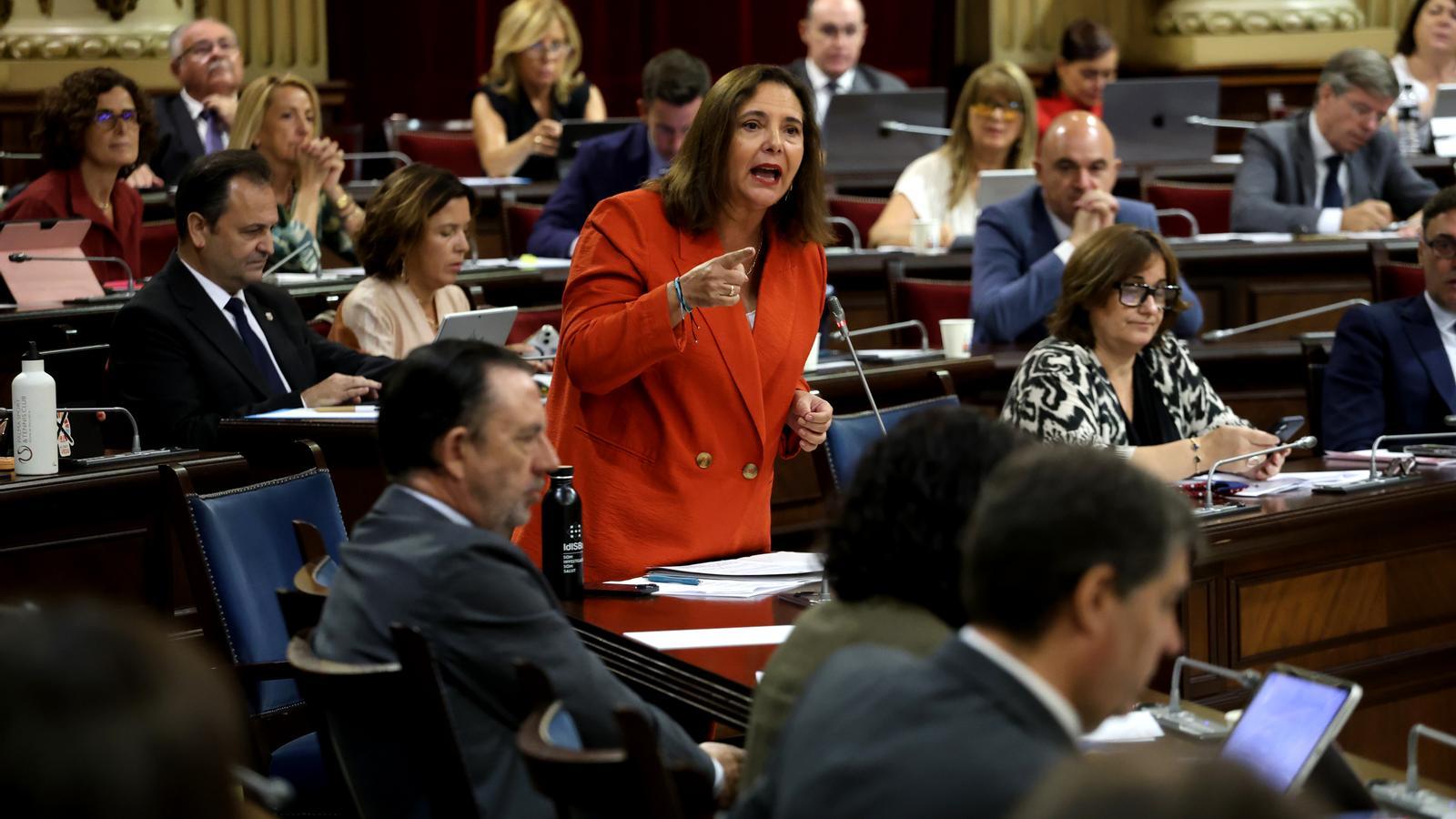
PalmaThe Minister of Health, Manuela García, appeared this Wednesday before the Parliament's Health Commission, six months after the PSIB made an urgent request for her to provide explanations regarding the collapse of the Balearic public health system. García has denied that there is a collapse and has defended her management. What she did do was justify the strain on the system with the growth and aging of the population. "Not only are there more of us, but we are living longer. Since the legislature began, there are 40,000 more people entitled to healthcare benefits," she remarked at the beginning of her appearance – right now there are 1,258,490 people in the Islands with a health card. As she explained, primary care centers handle an average of 33,643 consultations every day. "In hospitals, 1,522 emergencies are attended to, 223 surgical interventions are performed, and around 5,840 specialized consultations are conducted," she detailed. García also highlighted the increase in chronic patients on the Islands, a fact derived from aging. With 210,230 people over 65 years of age – 59,117 over 80 – "34,406 complex chronic patients and 2,549 advanced chronic patients" have been identified.
The minister explained that the Government commissioned an audit from a private company to determine what to do with the Public Health Agency of the Balearic Islands and whether it should be continued. However, beyond the data, García's intervention focused on defending the Government's management this term. In fact, the minister did not even mention the waiting lists or the situation in hospital emergency rooms until the opposition brought them up. "I am not being triumphalist. I have presented the measures in a straightforward and respectful manner," García justified herself in the rebuttal round, in the face of criticism from the opposition.
PSIB deputy Irantzu Fernández has criticized that García has taken six months to appear and has recalled that the reason for the appearance was "to talk about the collapse that various services are suffering". "I remind you that you are obliged to come, it is not an option. The only reason why you are here is to avoid this appearance automatically moving to next Tuesday's plenary session", said Fernández, in addition to detailing that García has another five pending appearances. "I imagine you are waiting for them to expire or for the legislature to end", she added. Fernández recalled that, beyond political parties, health professionals and unions such as Satse are the ones who have spoken of collapse.
114 days for an operation
The socialist pointed out data regarding waiting lists: 17,758 patients on surgical waiting lists, 15% more than in 2024, with an average delay of 114 days. "The demographic justification is insufficient, because there has always been a population increase in the Balearic Islands and there has been a shift towards an aging population," she said. "For more than half a year, 3,395 patients have been waiting to be operated on, an increase of 30.5% compared to the previous year. There are more people waiting and people are waiting longer," continued the PSIB deputy, noting that the average wait for external consultations is 67 days.
MÉS per Mallorca deputy Marta Carrió lamented the councilor's lack of self-criticism. "When you come here without a time limit, I hope you tell me what worries you about your management. There are indicators of things that are not working," she commented. "The collapse of emergency services is continuous. When this becomes a structural problem, it is a political issue," she added. Furthermore, Carrió lamented that the budget increase and the execution of resources are not sufficient.
On behalf of the PP, deputy Isabel Borràs denied that there is a collapse, even though the healthcare system has problems, a position with which the mixed group deputy Llorenç Córdoba agreed. "There is no single definition of collapse. It is something more serious than waiting lists or high healthcare pressure," argued Borràs.

