Networks are boiling against the Palma Christmas market after the broadcast of a video entirely in German
Dozens of users denounce that Cort collaborates in the promotion of an event that they consider alien to the own culture of Mallorca and question that public resources are destined to it

-
CAT -
DE
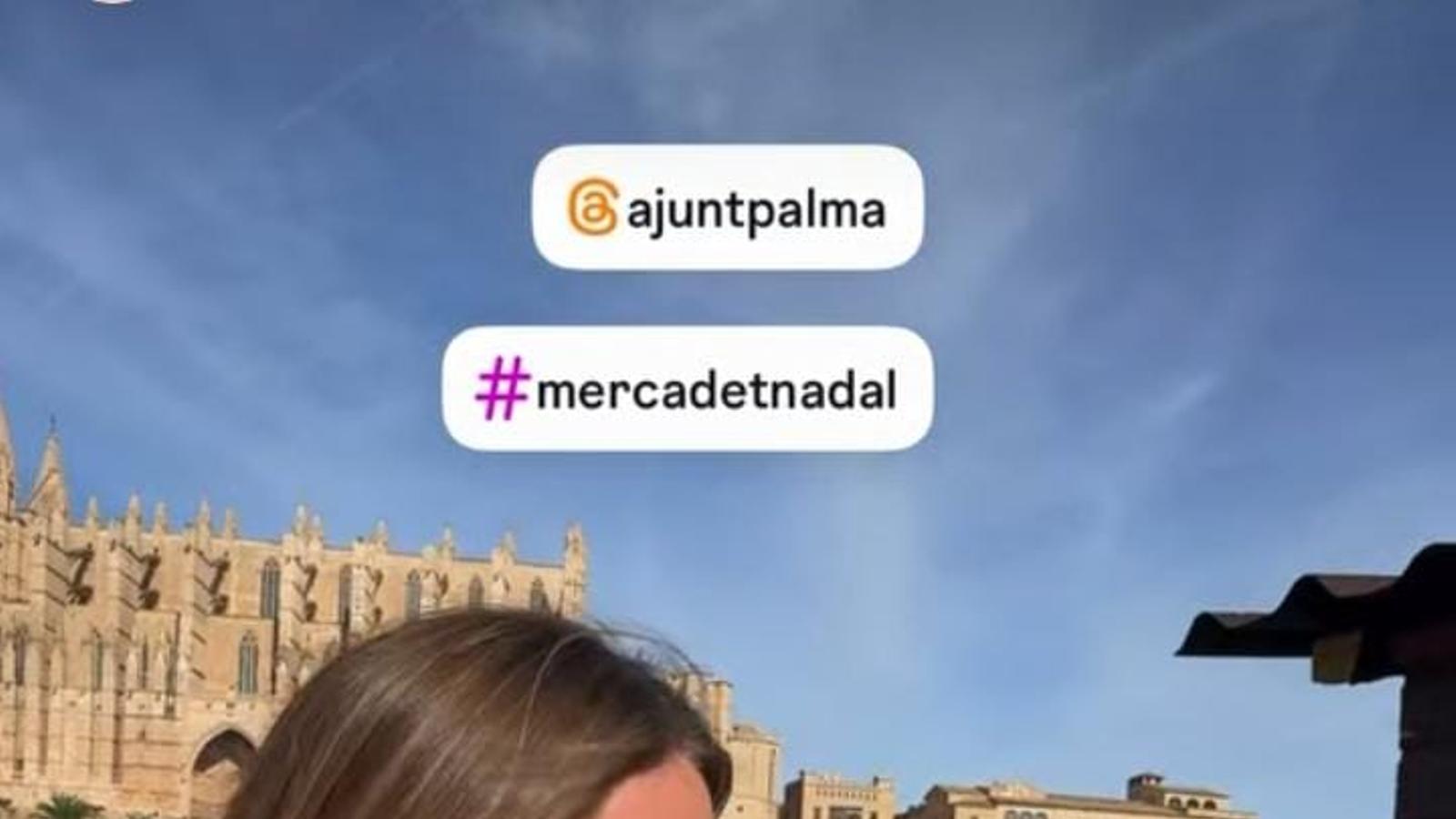
PalmaSocial media has been buzzing in recent hours following the release of a promotional video for the Christmas market that is set to be installed this year at the Parc de la Mar in Palma. The controversy erupted after the Madò Farta profile shared the recording, featuring a girl and a man explaining the characteristics of the event and everything that can be found there. The detail that sparked the criticism is that the entire presentation is done exclusively in German.
The post has gone viral and generated dozens of comments and shares from users questioning why the Palma City Council is collaborating in the promotion of an initiative with these characteristics. One of the main criticisms is that public resources are being used to promote a cultural proposal that they consider alien to Mallorca and which, as they denounce, reproduces the model of the Christmas markets found in any German city, both in terms of the types of products and the gastronomic offerings and atmosphere.
The reactions also focus on the language used to promote the event. Users who have shared the video regret that the presentation is not in Catalan or Spanish, but exclusively in German, and they question that an initiative that will occupy a public space in Palma is promoted in this way. The controversy also comes after the polemic that surrounded the Christmas market installed last year at the Feixina park. The initiative, which generated unease among residents due to the occupation of public space, the products offered there, and the language used, is intended to be repeated this year at the Parc de la Mar. In fact, some neighbors even went so far as to describe the event as a "blatant colonization."
The complaints, however, have not been limited to the dissemination of this video. For days, residents of Palma and the Association of Tourist Guides themselves had already expressed their unease over the privatization of public space. In this case, the criticisms focus on the fact that the Palma City Council has kept all access points to the Parc de la Mar closed for weeks due to the assembly work for the market, a situation that prevents citizens from using it normally. Thus, the controversy once again brings the debate over the occupation of public spaces and the model of events that is being promoted in the city to the table.

A project with numerous deficiencies a few weeks ago
The market planned for Parc de la Mar has also encountered administrative obstacles. The company Parc Màgic de Nadal SL, linked to the German businessman Bernhard Gewessler and the Austrian Gerald Kendlbacher, registered the project to organize the fair with the Palma City Council, which would occupy about 10,000 square meters, open its doors on November 20th, and remain until January 6th.

ARA Balears published a few weeks ago that Cort had detected numerous deficiencies in the documentation submitted. The document pointed out shortcomings in fundamental issues to guarantee the safety of the event, such as electrical and gas installations, fire prevention, public evacuation, and capacity control. However, it is presumed that the numerous deficiencies have been corrected since the market opens this Saturday, November 21.
The Parc de la Mar project is the continuation of the initiative that was installed last year at La Feixina, with more than 60 stalls, an ice rink, and an atmosphere typical of the great Christmas markets of Central Europe. The fair already provoked rejection from part of the neighborhood, which reported that a large part of the park had been occupied and that the usual uses of this public space had been limited. The Barri Cívic de Santa Catalina i el Jonquet association questioned that the location had been decided without consulting the residents, the artisans, or the traditional fair merchants, and reported that the initiative resembled more of a generic European fair than an exhibition linked to local culture.
