The controversial Christmas market of La Feixina wants to go this year to the Parc de la Mar with a project full of deficiencies
The technical report of the Palma City Council detects dozens of shortcomings in security, gas and electricity installations, emergency plans and capacity control

-
CAT -
CAST -
DE
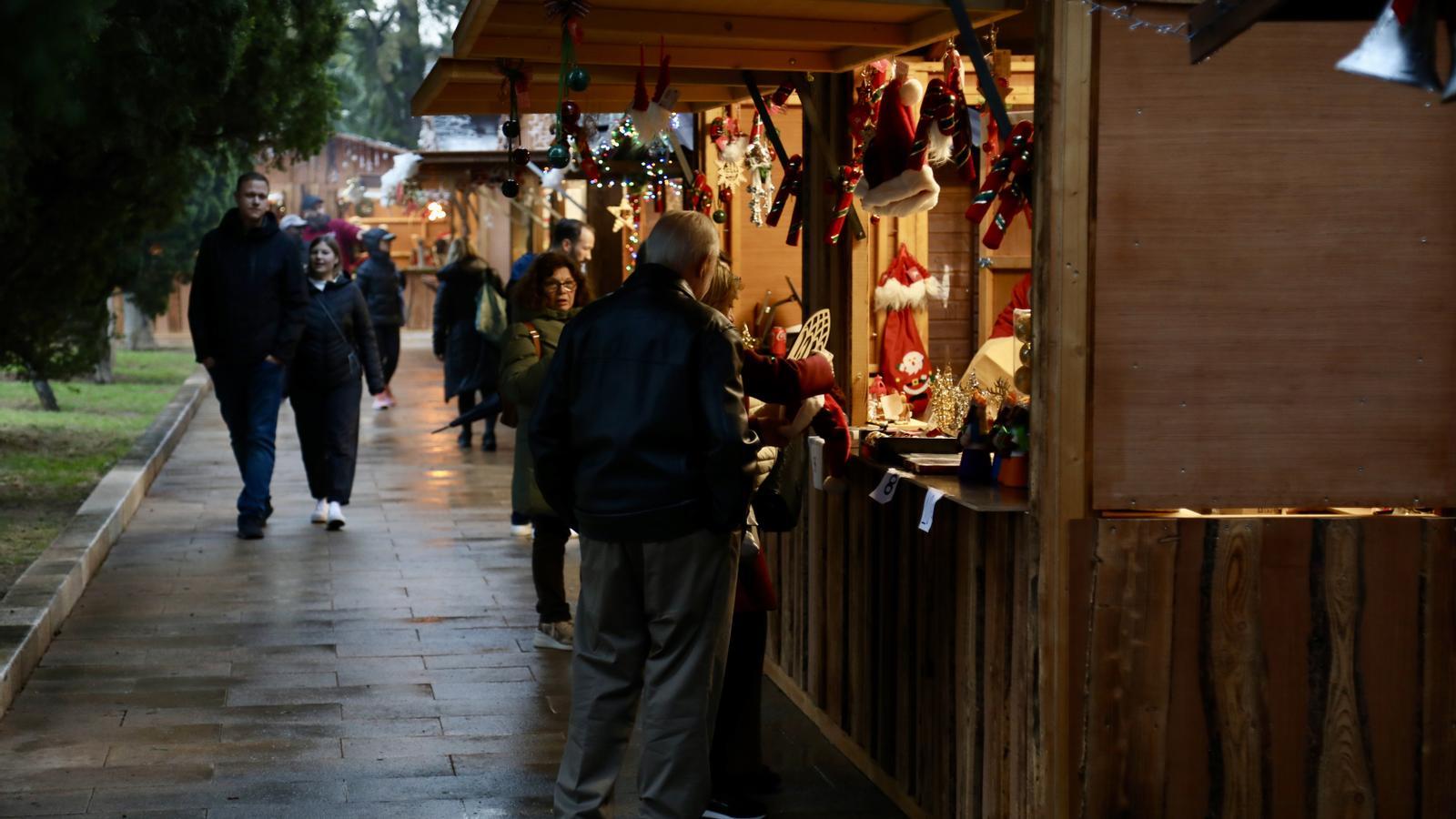
PalmaThe Christmas market that was set up in La Feixina last year, surrounded by controversy due to the occupation of public space, the products offered there, and the language in which it was held, wants to repeat this year in Parc de la Mar. It should be remembered that the residents of the area branded the event as "brazen colonization".
The company Parc Màgic de Nadal SL, a company linked to the German businessman Bernhard Gewessler –also related to Barca Samba SL– and to the Austrian Gerald Kendlbacher, has registered the project to organize the controversial market with the Palma City Council. The fair would occupy about 10,000 square meters, would open on November 20, and would end on January 6. However, Cort denied the permit due to the numerous deficiencies in the project, according to a report from the Palma City Council's Activity Control and Establishment Safety Service, to which ARA Balears has had access. Despite the dozens of shortcomings detected, the organizers have already published the project on a website, where a recreation of the Christmas market and the ice rink planned for Parc de la Mar can be seen.
The municipal report points out deficiencies in fundamental aspects to guarantee the safety of the fair, from the technical documentation of the electrical and gas installations to fire prevention measures, public evacuation, and capacity control. The proposal includes a gastronomic offer, a Christmas product market, and musical activities, with an expected capacity of up to 1,614 people.

One of the issues that the report calls into question is the safety of the catering kiosks that use liquefied petroleum gas (LPG). The City Council is requesting the components of each installation, the documentation certifying their homologation and the validity of the elements, as well as the plans of the kiosks with the machinery. It also requests information about the gas appliances – especially if they operate with an open flame –, the CE marking, the ignition safety systems, the distances with respect to wooden surfaces, and the smoke evacuation mechanisms. The document warns that the fire protection measures for each kiosk must be justified.

The deficiencies also affect the electrical installations, because the project does not include documentation regarding the connections to the booths nor the machinery that will be used.
Regarding the structures, Cort considers the documentation provided on the scaffolding systems to be insufficient. If they are to be used to assemble the stage and other structures without specific authorization, a project must be submitted that certifies their structural safety and conditions of use. Information is also missing to correct the shortcomings of the acoustic study, and the validity of a certificate for the application of fireproof varnish is questioned.
A security device without sufficient detail
Another problematic point is security and crowd control. The project mentions a security company, but does not provide for hiring private security guards or access and internal environment controllers, but rather assigns these functions to people from the same organization. The City Council demands a detailed description of the tasks they must perform and warns that interventions to prevent fights and altercations correspond to qualified security guards and competent administration personnel, not to just any person designated by the organization.
The report also asks for identification of who will control access, how it will be ensured that the maximum capacity is not exceeded, and who will be responsible for keeping evacuation routes clear and preventing crowding. The project anticipates 223 people in the craft area, 956 in the dining area, and 153 in the stage area, but does not sufficiently specify the duties of the staff responsible for monitoring these figures. It also fails to provide plans showing the location of organizational staff or clarify whether the response times of the authorities would be sufficient in the event of an emergency, as there is no provision for hiring Local Police, security guards, or specific control personnel. The City Council is demanding explanations regarding how capacity will be controlled and how action will be taken to ensure safety.
Risks at the ice rink
The ice skating rink also appears in the report, which points out that the risk of people falling into the lake at Parc de la Mar has not been sufficiently taken into account, despite the presence of attractions, tables, chairs, and other elements in the area. The City Council demands that fences be installed in the areas of the lake in contact with the public and that the closure, delimited areas, and safety distances regarding machinery, furniture, and attractions be specified.
Cort also demands that there be a lifeguard and the necessary intervention equipment –a first aid kit, an oxygen therapy kit, and a defibrillator– available until the closing of the event. Regarding the stage, the report demands that its homologation, the elements to be installed, the maximum loads it can support, and the safety measures be specified.
The document points out that part of the technical documentation has not been presented in either Catalan or Spanish, the official languages of the Balearic Islands. This is the case for the ice rink machinery catalog and the information about a fireproof varnish. Furthermore, it demands additional technical documentation regarding the wooden huts and the classification of the materials used according to their behavior in the face of fire. The conclusion of the report is clear: with the documentation presented, it is not possible to issue a favorable report. This does not imply a definitive denial of the authorization, but it requires correcting the shortcomings.
The neighbors' criticisms
The Parc de la Mar project arrives after the controversy that surrounded last year's Christmas Market at Parc de la Feixina. The fair had more than 60 stalls, an ice rink, and an atmosphere that followed the aesthetic of large European Christmas markets. However, the initiative clashed with criticism from residents, who denounced the occupation of public space and the loss of local identity. The Barri Cívic de Santa Catalina i el Jonquet neighborhood association denounced that the location of the market had been decided without consulting residents, artisans, or traditional fairground workers. The organization described the decision as "arbitrary, without a public tender, and with favoritism".
One of the main complaints was the occupation of a large part of the park and the limitations on the usual uses of the space. "It's a drama, a total occupation. They even use the park's entrances as parking spaces," a neighbor denounced. Other residents lamented that they could not walk their dogs there normally and that regular users of the park, such as skaters, had lost space.
The organization also denounced that the signage for the stalls and products was mostly in Spanish, English, and German, while Catalan was relegated to a welcome sign and official notices. It also questioned the presence of local and Christmas products and lamented that the proposal resembled a generic European fair more than an exhibition linked to local culture. The move to Parc de la Mar begins a new chapter in the controversy.
