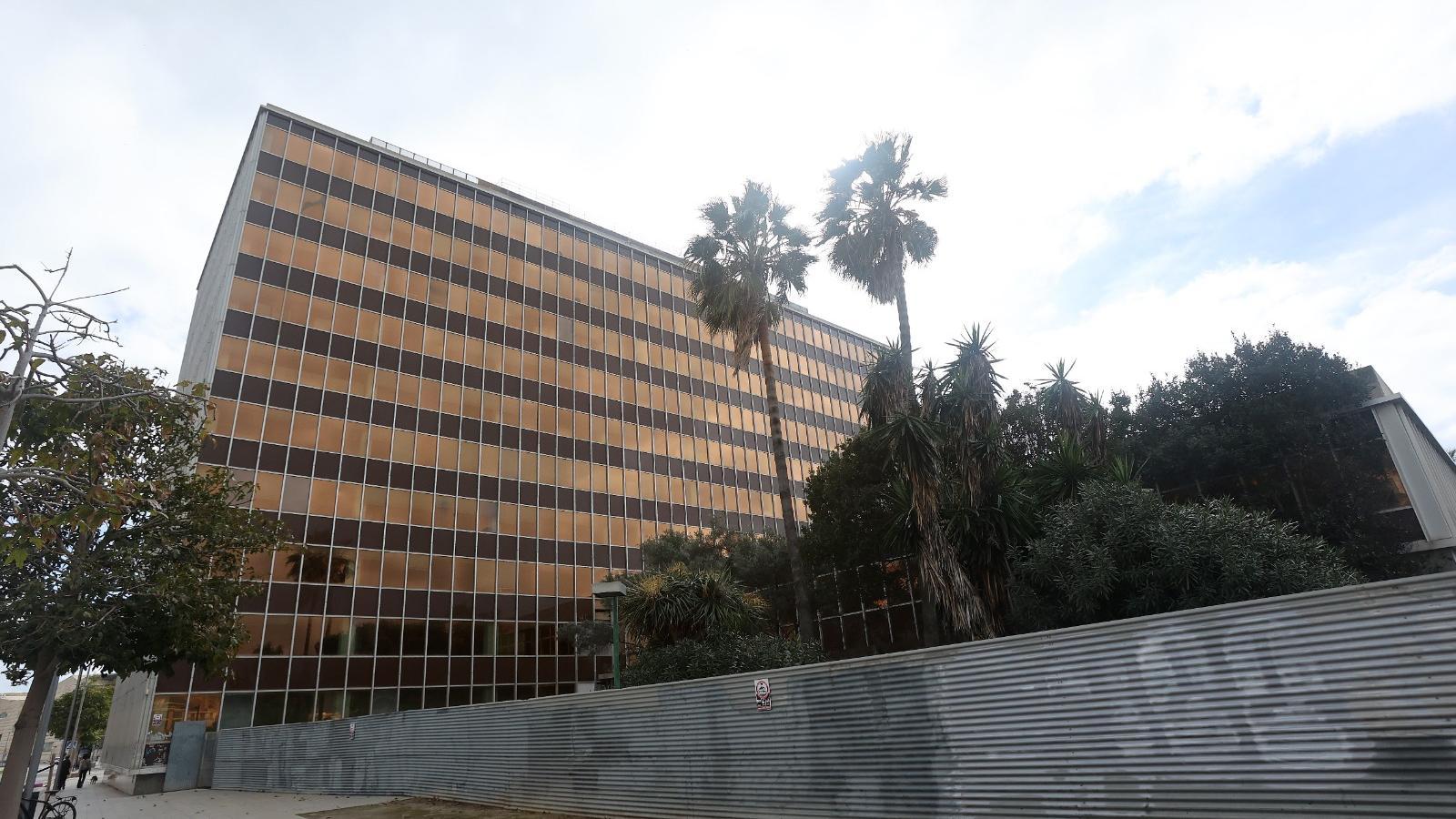
The Palma City Council will spend more than 76 million euros on the renovation of the Gesa building
The project includes an underground car park for a thousand cars
-
CAT -
CAST -
GER
PalmaThe Palma City Council has selected the proposal from the Cruz y Ortiz Arquitectos studio to renovate the Gesa building and its surroundings, an action budgeted at 76.5 million euros that includes the creation of the future central library, cultural spaces, an auditorium, and an innovation center on the city's waterfront.
The winning project of the ideas competition affects an area of approximately 30,000 square meters and will now need to be detailed in an executive project. According to municipal forecasts, this document will be completed during the first half of 2027, and the works can be put out to tender before the end of the year. The execution is estimated to take around 25 months, although it will be carried out in phases.
The proposal involves the renovation of the old Gesa building, closed for fifteen years, and its conversion into a facility primarily dedicated to cultural uses. The first and second floors will be allocated to Palma's future central library, while the third and fourth floors will house the municipal institute of arts. Shared workspaces, business incubators, and facilities for the Palma Culture & Innovation Bay project will also be set up there.

The project also includes an auditorium, new exhibition spaces, and a panoramic terrace for cultural activities. Outside, a large public square will be created in front of the sea and an energy interpretation center.
One of the most significant interventions will be the construction of an underground car park with 960 spaces. The project also includes new pedestrian connections between Joan Maragall street and the Ma-19, as well as actions on the area's cycling network.
As explained this Tuesday by the mayor of Palma, Jaime Martínez, the City Council plans to carry out the works in stages, so that some spaces can become operational before the entire intervention is completed. The City Council estimates that the investment could be amortized within fifteen to twenty years.
