After El Caserío: Menorca's countryside resists, but it is no longer the same
Maintains more than 200 active farms, half of which are oriented to milk and cheese production, and clings to vocation and generational handover to overcome the uncertain landscape marked by war and PAC cuts

-
CAT -
CAST -
DE
CiutadellaOvercoming the traditional dependence on El Caserío that marked the sector until the beginning of the century, Menorca's countryside survives the blows of international politics, the concern caused by price increases due to the war in Iran, and the 22% cut in European CAP aid. The change in land ownership into the hands of foreign investors, such as businessman Víctor Madera, has prevented the premature abandonment of dozens of farms and has reinforced the sector's commitment to other types of agricultural exploitation that have given it new momentum.
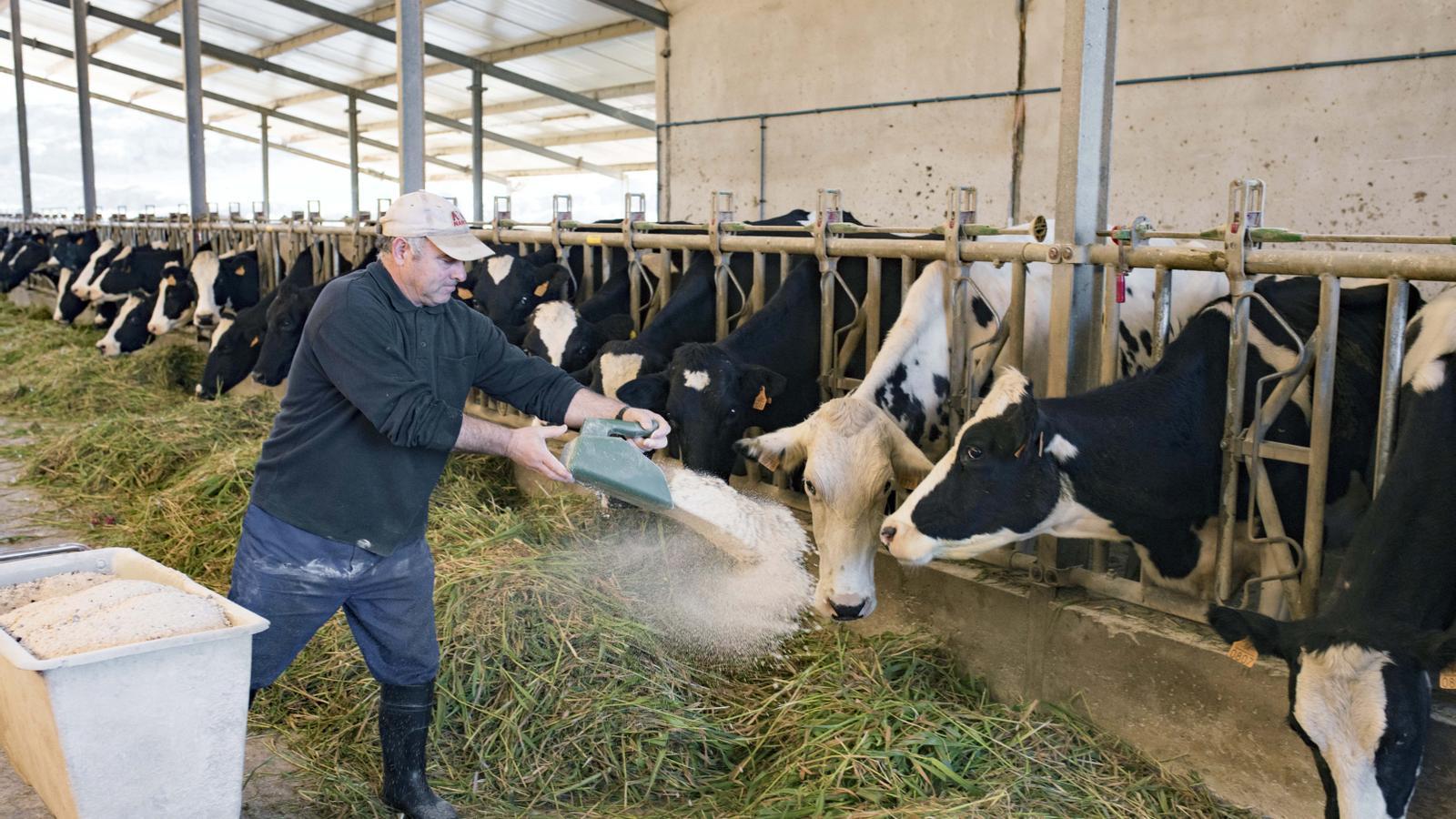
Traditional management, focused primarily on milk and cheese production, still maintains a wide following, despite the increasingly reduced prices paid by the processing industry to farmers, which put their profitability at risk. In fact, around 90% of the cultivated area is still dedicated to forage and cereals for feeding cattle.
The Menorcan councilor for the sector, Maria Antònia Taltavull, sees the glass as half full. Despite the uncertainty caused by the war in the Middle East and the drastic rise in diesel and feed prices, the councilor, who is also a homemaker from Torralbet (Ciutadella), sees farmers as "encouraged." "The last two years have been good for rainfall, and therefore for being able to feed the livestock, and public aid has arrived," she explains. This also includes aid from the Consell itself, which has increased by 24%, to 1.3 million euros, the fund allocated to the Agrarian Contract, public compensation for owners and farmers who maintain biodiversity and preserve the traditional rural landscape, the postcard image sold to tourists.
Nor have there been any significant farm closures – in one year, only three have been deregistered, leaving the last known census at 209 – and generational handover is again pointing upwards. Currently, at the Sa Granja training center, there are 13 students in the first year and another 13 in the second year training to work in agriculture. In fact, the Ministry of Agriculture of the Balearic Government estimates that around twenty young Menorcans join the island's agricultural workforce each year.
Four generations of Mussuptà de Baix
The place of Mussuptà de Baix, on the road to Sant Climent, is a good example. At 26 years old, Guiem Pons continues a lineage of farmers that dates back at least four generations. “It is a vocational job that, with a little dedication, yields results”, says master Guiem. “Those who do not like being in the field will not succeed”, he highlights.
That is not his case. Since he was a child, he has seen his parents and grandparents working on the farm and, despite the multiplicity of professional paths now available to any young person, he has decided to stay and forge his own way. “Guiem has always liked tractors and animals and has followed what he has seen since he was little. We have a vocation, we love the countryside and, like other trades, this one is also viable”, explains his father, Tóbal Pons.
Mussuptà de Baix has about forty dairy cows, as well as a few heifers. The farm sells a good part of its production to Coinga. The Alaior cooperative has become over time one of the reference processing industries for the sector. Nevertheless, Quesería Menorquina – which has inherited the legacy of the old El Caserío plant in Maó – still absorbs almost a third of the milk produced by the island's livestock farms today.
Dairy farms have dropped below one hundred for the first time, but the pasture and fodder area remains, to the point that Menorca's bovine herd has increased by 597 head during 2025. It has been the first of the last 17 years that the number of livestock heads has increased. “If the farmer sees that it rains, they get encouraged and dedicate more animals to milk production”, highlights the secretary of the Frisona Association, José Ramón de Olives.
Good proof of this are the 93 farms currently registered with the Regulatory Council of the Mahón-Menorca Cheese Denomination of Origin (CRDO). These farms produced 38.6 million liters of milk last year, of which 28.5 were used for cheese making.
The 47 cheese dairies subject to the Denomination of Origin, 41 of them artisanal, reached their own record in 2025 by producing almost 3,300 tons of cheese. Of these, 2,649 were sold, the highest figure ever achieved by the island's cheese. 68% is marketed within the Balearic Islands; 25% in the Peninsula, and the remaining 7% abroad.
The growing production of wine and vegetables and fruit, which consumes 120 hectares, helps diversify the economy linked to the primary sector. Tourism also plays an increasingly important role, with nearly 1,300 accommodation places, linked in all establishments to the obligation to maintain agricultural activity.
