The small moorings against the marinas: the war for the ports of Menorca
The users of Lago Resort and Es Jonquet unite against the abuses of private marinas and in favor of direct management of ports

-
CAT -
CAST -
GER
CiutadellaThe new Ports Law, which plans to extend the private management of some marinas and sports ports in the Balearic Islands until the age of 75, has coincided with the abrupt end of the concession of the 270 moorings at Lago Resort in Cala en Bosc, Ciutadella, the only one that had been in force for 30 years without any economic consideration from the company to the Administration.
The exploitation was obtained in 1995 by the former Urbanización Cala en Bosch SA, led by local businessman Biel Cerdà, when it offered Ports de les Illes Balears to exchange its 20,195 square meters for the concession, without having to pay any annual fee to the autonomous administration. However, with the 30-year term expired, the Government has rejected the continuous requests from the concessionaire, now reconverted into Next Port Nautical Services, and has decided not to renew the agreement.
The serious irregularities denounced, and confirmed, in the management of the sports port have led the affected boaters to place the case in the hands of the Prosecutor's Office, while the Balearic government has called a new tender to re-privatize the marina. All of this has exposed the lack of control by the Administration in ensuring that commitments made by private companies are met, and the defenselessness suffered by many individuals, subjected to tariffs and conditions more suited to nautical tourism than to local owners of small boats.
The same Minister of the Sea and the Water Cycle, Juan Manuel Lafuente, has admitted that the insufficiency of human resources complicates the exhaustive control of concessions. However, the delay in convening and resolving the tender in time has meant that, for the second year, Ports has had to renew the concession precariously so as not to leave the service unattended.
Rates and canon
Sources from the Ministry explain that the tender is already underway, but pending consultations that interested companies have submitted may extend the process even beyond July. However, Ports says that new tariffs have been temporarily approved that are "significantly" lower than those currently in force, and the payment of a canon of 177,763 euros has been imposed on the current concessionaire.
However, the conditions that the marina taking over the new concession of Lago for the next 20 years will have to comply with also arouse the suspicion of the mooring holders. The Users Association, presided over by Tolo Torres, does not understand how the Government can set an annual canon of only 475,000 euros and an investment of only 4 million in renovating the facilities.
Councilor Lafuente says that the port entrance needs to be reinforced and equipped with water, electricity, personnel, and a mooring system, in addition to guaranteeing public access to the boatyard. A meager consideration, according to the users, who believe that the enrichment of the company that assumes the concession is being favored, even if it is obliged to give priority to boats that already have their base at Lago. According to their calculations, it will earn at least 30 million euros over the two decades of the concession.
The PSOE and Més per Menorca in Parliament and the government of Ciutadella City Council itself have insisted that Ports withdraw the tender and take advantage of the end of the concession to regain public control of the Cala en Bosc moorings. "The indirect management of Lago must end, and if it cannot, the concession must be strictly controlled," requests the mayoress Maria Jesús Bagur.
Audit of the marina
The City Council has also requested the preparation of an audit on the management carried out at the sports marina. It assures that in the last five years only two inspections have been carried out at Lago, when the average number of inspections in the same period in the rest of the Balearic ports is 10, "or 13 in the case of the Club Nàutic Ciutadella".
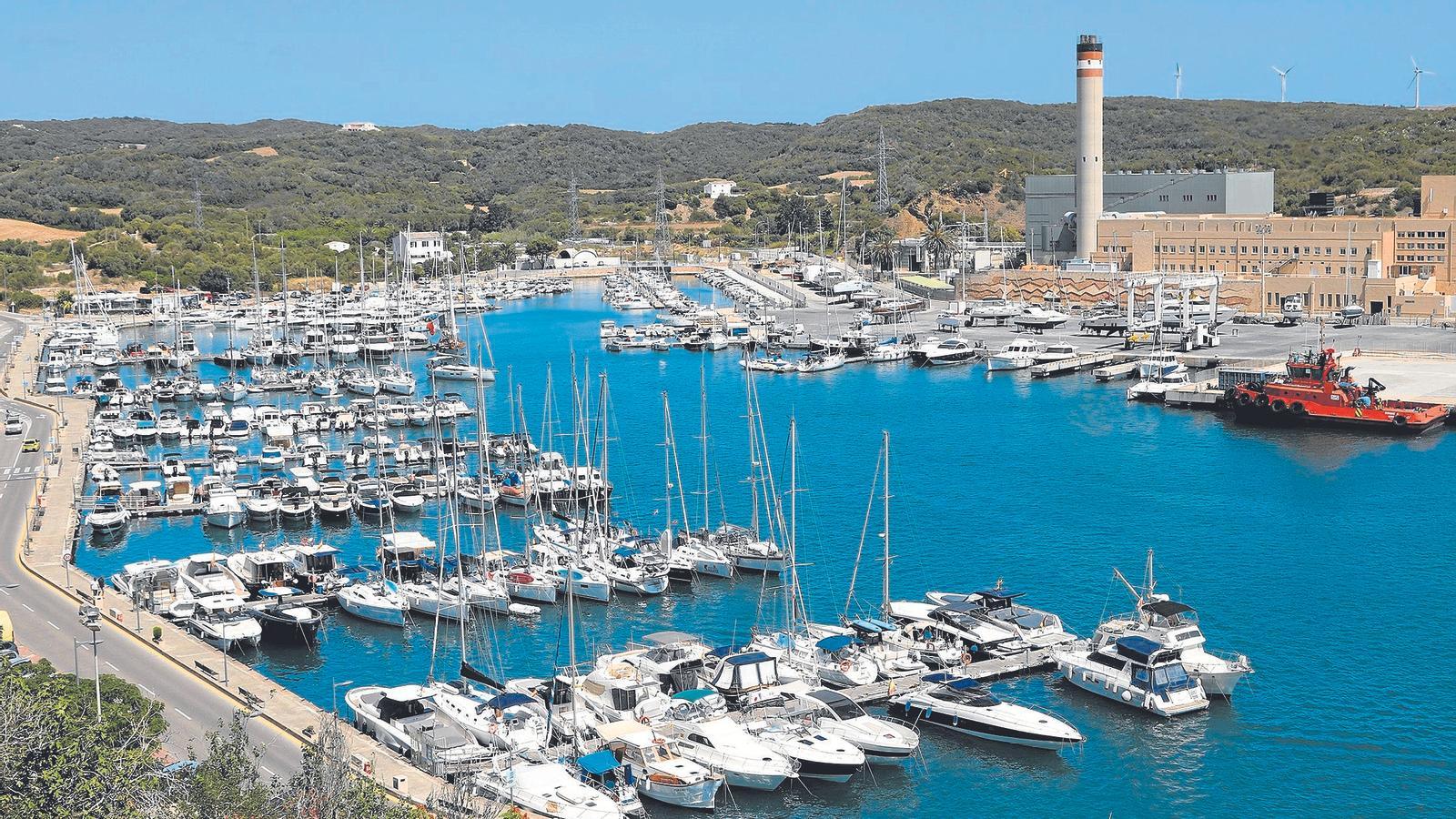
At the other end of the island, the port of Maó still has 598 public management moorings, 35% of the 1,674 offered by the Port Authority (APB), either directly or through private marinas. The president, Javier Sanz, has announced, in fact, that he maintains "the firm commitment to preserve the direct management we currently have".
But the last formalized award, curiously to the same company that still manages Lago de Cala en Bosc, Next Port, has included the privatization of 55 moorings on the Ponent quay that until now remained in the hands of the Port Authority. The director of the APB, Toni Ginard, says that, however, "the prices are practically the same and, even so, the conditions of indirect management are even better, because they include some additional services".
The small boat owners, however, do not see it so clearly and, for five years now, they have maintained a crusade against the Administration in order to make themselves heard and achieve social rates and more berths for boats less than eight meters long.
The Es Jonquet collective is the one that best represents the small boat owners of Maó. Since in 2021 it prevented the privatization of the dock with this name, which accommodates 150 moorings in the colàrsega, it has managed to find a place in the navigation councils and other participation bodies of the APB. “But they don’t let us be on the boards of directors, where decisions are made and where the marinas are,” complains Antoni Barber, spokesperson for Es Jonquet. “They want us to die of finesse, but it won’t end like this. We won’t let ourselves be easily trampled on,” he warns.
New privatized zones
Of the two new areas that have been privatized, in the Ponent and Llevant docks, only the latter is still pending award, and "with the added problem that affects local boats over eight meters long that have been there for 30 years." But since the APB's regulations do not consider them social boating, they are not guaranteed that they can keep their directly managed moorings.
Also in Cala Figuera - explains Barber - half of the moorings that are not transferred to the Maritime Club will remain in the hands of private marinas. "They want to get rid of public management when it is precisely what people are asking for. This means there are fewer and fewer places to moor and many holders end up putting their boats up for sale," he comments.
"Privatizing is the most convenient option for the Administration. They charge a fee to the concessionaire, collect it, and don't have to manage anything directly," he insists. "The problem arises when they have to ensure that the winning companies respect the lower rates they have committed to in the tender documents or carry out the agreed-upon investments for facility improvements. In the end, they don't carry them all out and end up passing the cost on to users, with tariff increases and a reduction in the proportion of permanent berths in favor of transit moorings, for tourists."
The "most flagrant case" of this lack of control is that of Lago de Cala en Bosc, admits Barber, who has contacted the association of boaters established in Ciutadella to join forces with Es Jonquet. "Both groups are united to achieve that the Administration is more sensitive towards social boating. Owning a boat is not a luxury, nor does it have to do with the millionaire people who visit us and the lucrative business that drives private marinas. We simply want to be able to go out with our little boat on weekends, to fish or to sail with the family. We know we are going against the current, because the world is increasingly leaning towards privatization and economic interests, but - he warns - we will not give up. We will not back down".
