Concha Alós, two-time Planeta prize winner, marked by exes and saved by friends
Despite obtaining the literary award in 1962 and 1964, the Valencian writer was about to end up in a mass grave in Barcelona, after living in Palma. As is usual with female figures, her trajectory was marked by her personal life, as the ex-partner of Baltasar Porcel, and she was belittled for being a feminist
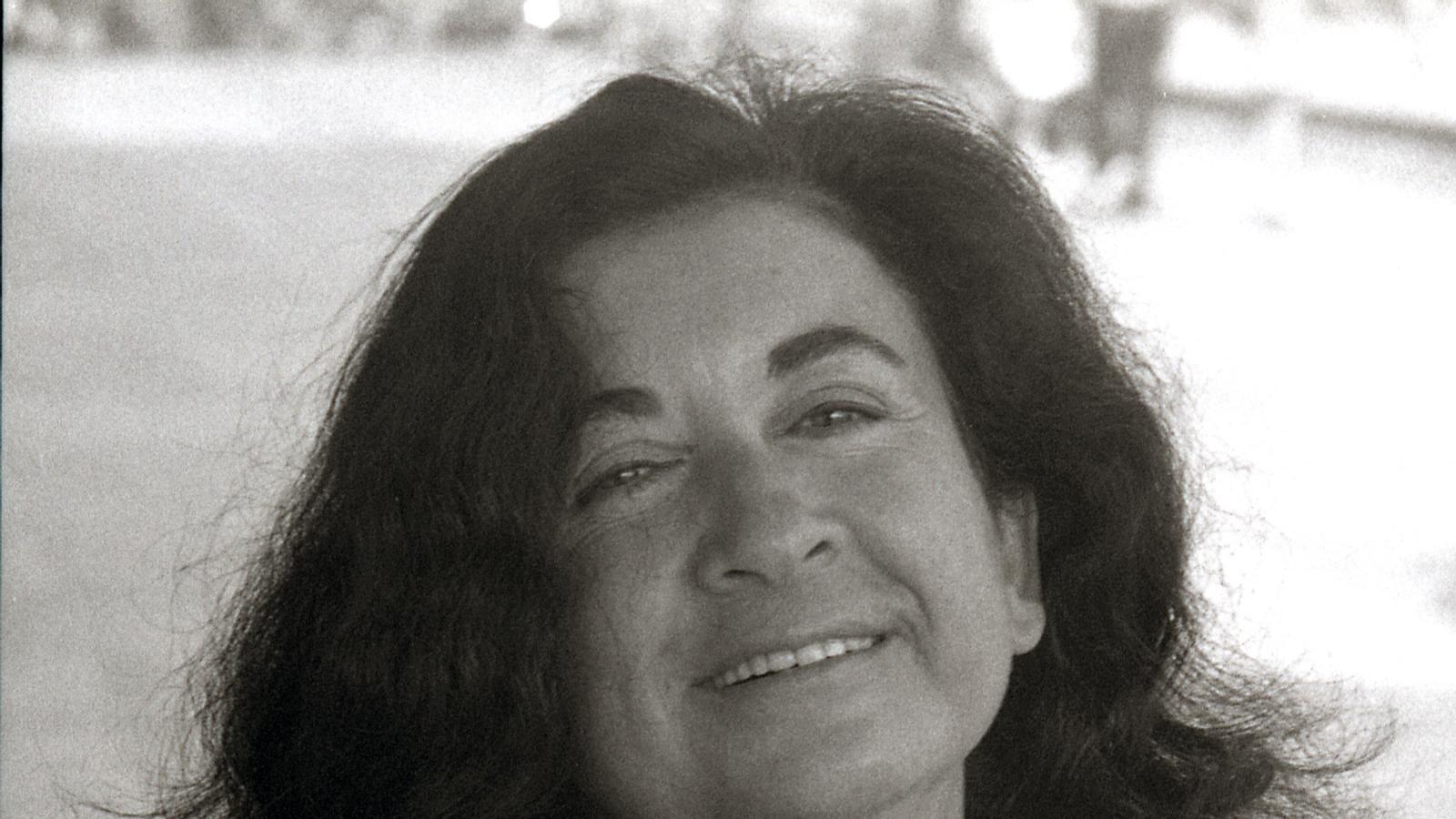

PalmaLet's do an exercise. If we refer to Concha Alós, who recognizes this name? And to introduce her, which title sounds more familiar to us: that of ex-partner of the writer and journalist Baltasar Porcel or that of double winner of the Planeta prize in the middle of the Franco regime (a merit that she alone holds, by the way). The moment of change she had to live through, the sexist punishment, and her Alzheimer's contributed to the fact that today we still do not study Alós the same way as her contemporaries of the Mid-Century Generation —that of the 50s or the Children of the war—, such as Carmen Martín Gaite, Ana María Matute, and Carmen Laforet, and much less than them, Camilo José Cela, Juan Marsé, and the Goytisolo brothers. Alós was born in Valencia in 1922, lived in Palma in the 50s, and died in Barcelona in 2011, where she would have ended up buried in a mass grave, had it not been for the fact that she had a very good friend: Maria del Mar Bonet.
“Concha was a friend of my parents and used to come to our house. She was not a mother, and it was as if my brother and I were her children. Later, in 1960, she left for Barcelona, where she lived with Baltasar Porcel. And when I went there to study ceramics, we would see each other at her place —first, in Vallvidrera and later, in Gràcia— with Toni Catany, whom she eventually became even closer friends with,” the artist recalls. “We were also united by painter and writer friends from the Barcelona scene of that time. It was a state of affairs that was part of the time we had to live through: the death of Franco, the path towards democracy, the Transition…,” indicates Bonet. In common, however, they also had censorship: “It was everywhere. The people who painted, who wrote, who made songs knew it, but we had our strategies”.
When both of them were still living in Palma, the singer's parents were a great support for Alós in the face of her separation from her husband, Eliseo Feijóo, director of the newspaper Baleares, where he was a colleague of Joan Bonet. Alós arrived in Mallorca with Feijóo in 1948 and, a decade later, left him to begin a relationship with Baltasar Porcel —who also worked at the newspaper as a proofreader—, at a time when divorce was not legal and adultery was a crime. “She fought to make a life for herself and get out of that marriage. She was able to do it that way: she separated and left, but he made it very difficult for her,” explains Bonet, who still remembers with joy the moment he saw the writer walk through the door with Porcel. Alós was nine years younger than her ex-husband, but 15 years older than her new partner, and that also influenced the relationship: “Concha helped him a lot in the publishing world. She had a background as a writer who was published,” he clarifies.
“She was a very cultured and very advanced person. She had a perspective that we still need today. I don’t understand how, awarded as she was, at a time when it was not common as a woman, she wasn’t given more justice as a writer,” the artist denounces. “Her separation took its toll on her, and afterwards she suffered from a very long illness, which left her without friends. When she died, Toni Catany and I found out that they wanted to bury her in a common grave, and we did everything necessary so that she would be buried all by herself,” he states.
Concha Alós reached a historic milestone and, even now, her trajectory seems inseparable from her sentimental life and the men who accompanied her, as often happens with female figures. For this reason, her biographer, the retired professor from the Jaume I University Amparo Ayora, has ensured that she has a story of her own that turns her almost into a feat. “She came from a working-class, republican family, from the lowest social stratum. Her mother and her grandmother were prostitutes. And the man who gave her his surname was not her biological father,” says Ayora. According to the researcher, it was her intelligence that catapulted her: she started by writing chronicles and articles in the newspaper Baleares, about fashion and fashion shows, and ended up being a two-time winner of the Planeta prize. Although the first time, with Los enanos (1962), the prize was contested because Plaza & Janés claimed the rights to it —Alós had submitted the manuscript to the publisher and at first they rejected it for having ideas that were too socialist—, two years later she won it officially with Las hogueras (1964).
Writer and feminist in the 50s
Along with her life, Ayora has researched her work, framed within the social realism genre: “The realist novel serves as a historical document. It was very faithful: it uses exact locations and names of real people”. All of this has provided her with enough knowledge to reflect on the decline of her figure: “The main reason that explains it is the fact of being a woman and speaking as clearly as she did —on topics such as female desire, abortion, and prostitution. The change in literary trends also affected her: she was criticized for writing in a commercial way, for Planeta, and that Alzheimer’s had affected her —even though it did not manifest until she was 90. But a key figure in her decline was Porcel, for whom she had translated books into Spanish and had acted as a literary agent, introducing him to everyone. He not only left her —to partner with Maria-Àngels Roque—, but after separating, they stopped asking her for collaborations and she did not write again for La Vanguardia, where he held a lot of power. The articles were a source of money for her and, even, she fell into financial difficulties. Concha went from being at every fair, signing at Galerías Preciados, and being a prize jury member to disappearing from the literary scene”.
Ayora highlights the weight of sexism in her life: “All her city changes are marked by her relationships with men. She leaves Valencia for Castelló because of her mother's husband's job change. After marrying Eliseo Feijóo, she moves to Mallorca because he is transferred. And, finally, she ends up in Barcelona for Baltasar.” Nevertheless, we find the feminist discourse both in her books and in her life story: “It is as if she were saying ‘life has hit me so hard that I have learned to defend myself all on my own’,” maintains the researcher, who has accompanied her like another friend from a distance, albeit in time, and who has been the last one to rescue her completely. Once the concession for the niche that Maria del Mar and Joan Ramon Bonet had provided for her had expired—and on the verge of ending up in a mass grave again—Ayora made the necessary arrangements with the Castelló City Council so that Concha Alós’s remains would end up in the place where she grew up. Thanks to her, since 2022, it has been possible to visit her grave at the city's Old Cemetery, which has been turned into a small memorial.
Cultural Alzheimer's
The genealogy of women like Concha Alós would not be possible without friends like Maria del Mar Bonet nor researchers like Amparo Ayora, but neither without new generations of writers who keep her legacy alive, as Llucia Ramis has done. For the 2024 reissue of Las hogueras –on the 60th anniversary of its publication–, Seix Barral commissioned the prologue from Ramis, who had already championed Alós's figure on a TV3 program and in an article in La Vanguardia. “In Las hogueras everything is there: the identity of Mallorca, the language, mass tourism, elitism, the territory, female desire… And all this at a time when it was not spoken about. She had that perspective that remains relevant today,” points out Ramis, who describes this “cultural Alzheimer’s” towards Alós as a “lack of respect”.
“Memory has been respectful to Baltasar Porcel and not to Concha Alós. I believe that not having known anything about her has made us know an incomplete Porcel and ignore that she was present in many aspects of his work,” she adds. “If we had given relevance to this work, perhaps things would have been different for women. It is as if we were always starting over,” laments the author, who attributes it “to the literary system” and also to the fact that “feminist works were belittled”. Be that as it may, Ramis clarifies that Alós has “a universal perspective”, only that “we are accustomed to the male perspective and voice”, and insists that she saw “what would be the great literary themes and still are”. “A writer can do two things: go down to posterity or transcend their time. And Concha transcended her time,” she concludes.
She published in Spanish, but taught in Catalan
Although Concha Alós only published in Spanish, her biographer, Amparo Ayora, assures that she used Catalan in her day-to-day life. “She considered that she did not have enough training to write in Catalan, but she did translations from one language to the other,” she points out. Likewise, when she worked as a teacher in the 50s in Can Picafort and Santa Maria, “she had to teach classes in Catalan, in a mixture of dialects, because the poor children did not understand any Spanish at all.” Ayora's research will be published this autumn in book format with the title Las ciudades de Concha Alós, with the Valencian publisher Vincle.
