Did Odysseus pass through the Balearic Islands?
Numerous are the links between the Archipelago and Homer's tale that Christopher Nolan's film has brought back to the fore

Palma“Speak to me, O Muse, of the man of many turns, who wandered far...”. No one would ever have thought that the Odyssey, a 2,700-year-old classic, would unleash heated controversies on social media, as it is doing, thanks to Christopher Nolan's recent film adaptation. For the islanders, there is still another point of interest in Homer's story: whether its hero, Odysseus – or Ulysses – passed through any of the Balearic Islands, during his decade of journeys across the Mediterranean, after the Trojan War – ten more years – to return to his home island, Ithaca. Perhaps he did?
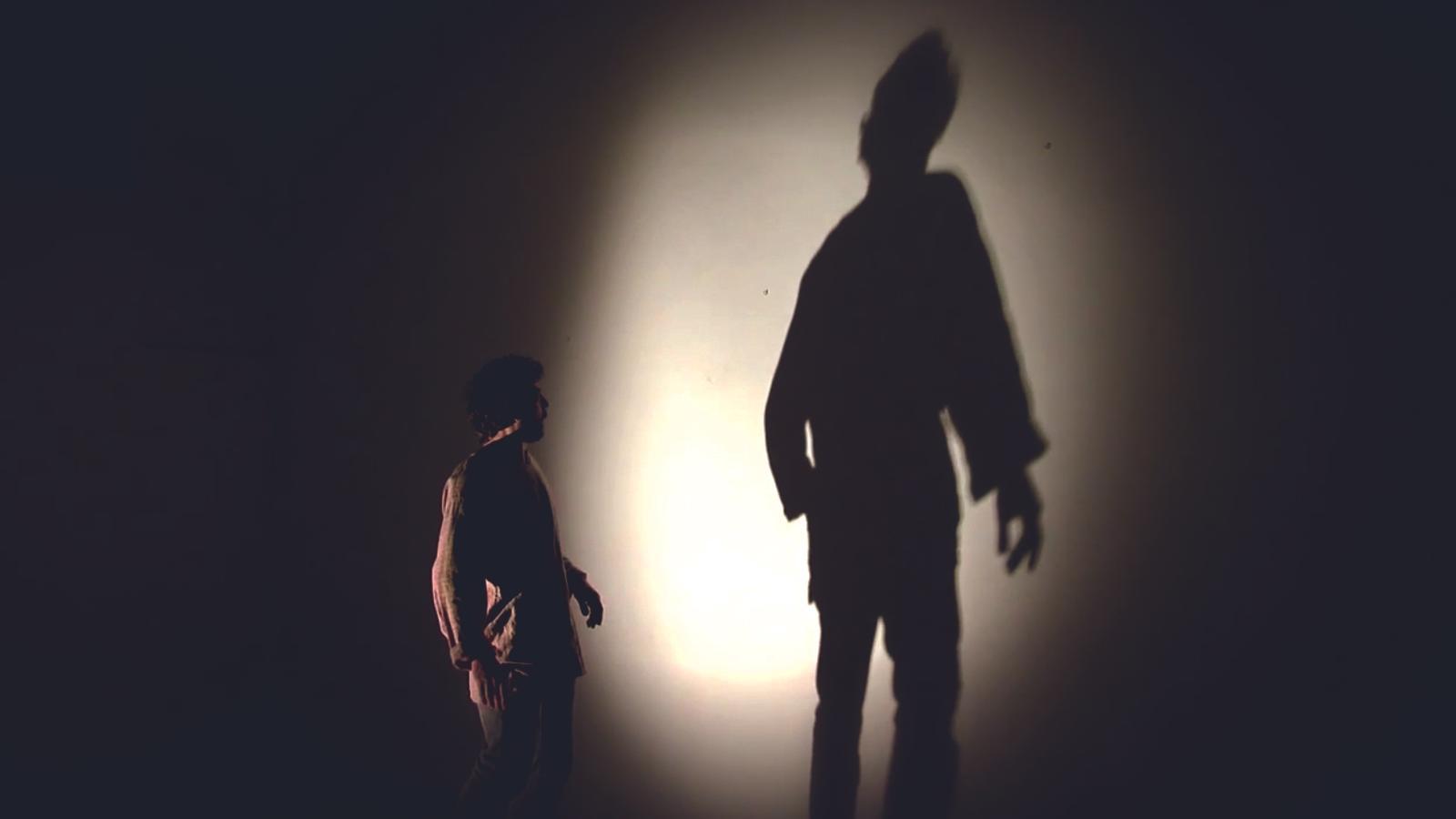
Of Nolan's film, they say that one of the most impactful scenes – and it's almost three hours long – is that of the land of the Laestrygonians. In any contemporary Catalan translation of the poem, the reader can verify that it occupies barely two pages. The Laestrygonians were man-eating giants, with a very bad temper, who not only captured some of Odysseus's companions as the main course for dinner, but also hurled enormous stones at the rest, destroying several ships. Of course, they fled in a hurry.
Homer describes the Laestrygonians' harbor as “magnificent, enclosed on both sides by cliffs,” with a narrow passage for ships. “It is indeed suggestive,” admits historian Miquel Àngel Casasnovas, to identify it with one of the Archipelago's ports. Based on the description, it would probably be the port of Maó that best fits the description.
But don't go yet, there's more. According to the map drawn by Simeon Netchev, of the World History Encyclopedia –following Peter Struck, of the University of Pennsylvania, the island of Aeaea where the sorceress Circe turned Odysseus' companions into pigs –pardon me–, corresponds to Mallorca. According to Vilaweb, the map elaborated by Gisèle Mounzer following the Homeric narrative coincides in situating Circe's island in Mallorca, while Ogygia, the land of Calypso, the nymph who fell in love with Odysseus and offered him immortality –which he refused because he longed for his home–, would be none other than Ibiza. To top it off, there is a small island in the municipality of present-day Ithaca, Greece, which is called Drakonera. Yes, with a k. The adopted Majorcan, Ludwig Salvator of Austria, dedicated two books to Ithaca, one about summer and another about winter.
Descendants of Trojan warriors?
These links of the Archipelago with the Homeric narratives go back a long time. Classical authors such as Scylax of Caryanda, Strabo, and Apollodorus affirm that the first islanders were descendants of ancient Greek combatants from the Trojan War, from which Odysseus was returning to Ithaca. Troy is also a cloud with the appearance of a ghostly city that appears from time to time and which they say can be seen from Felanitx and Artà.

The coincidences between some of the traditional Mallorcan folktales collected by Antoni Maria Alcover and some of the episodes of Homeric narration are surprising, as Antònia Soler i Nicolau has shown. Thus, for example, the encounter of Odysseus with Nausicaa, a king's daughter, who goes to wash clothes by the sea with her friends, recalls the princesses who do exactly the same in El Castell d’iràs i no tornaràs.
The dangerous Circe, who exercises her enchantments over the men who arrive at her island – Mallorca? –, strongly recalls the protagonist of Els tres patrons, ‘the queen of Hungary’, and it is not without curiosity, by the way, that the wife of James I and mother of James II of Mallorca was Hungarian. The sorceress of Es set ceros turns men not into pigs, like Circe, but into deer. The clever brother of S’abre de música, sa font d’or i s’aucell qui parla uses not wax, like Odysseus' companions with the sirens, but cotton, so as not to hear a voice of malevolent effects.
Of course, the anthropophagous giants (“smelling human flesh, we'll eat some this week...”) powerfully recall the cyclops Polyphemus, who also ate some of Odysseus' companions. And like him, despite their strength, they are defeated by characters who, like Odysseus, use their wits, as in the case of Un geperut i un gegant and En Juanet i es gegant. In the Ibizan context, it is two clever brothers who trick the fearsome giant of Vedrà.
The links with the Balearic Islands do not end here. Sisyphus, to whom the paternity of Odysseus is attributed, was adopted as a symbol of the absurdity of contemporary man by the Nobel Prize winner in literature Albert Camus, of Minorcan origin, who also referred to the “simple greatness” of Odysseus, in choosing the return to Ithaca and not the immortality offered by Calypso. In Sant Lluís, Camus' grandmother's hometown, a small bronze figure was found, “a seated male figure with his head resting on one hand” and which, according to Joan C. de Nicolás Mascaró, “many decades ago was interpreted as the representation of the mythological hero Ulysses in a thoughtful attitude”. They call him thus, Ulisses pensatiu.
Homer in the caves of Artà
In short, was Odysseus in the Balearic Islands? It depends. If we accept that the one interpreting Odysseus is Odysseus. Kirk Douglas embodied the Homeric hero in Ulysses, a 1954 film by Mario Camerini and Mario Bava. And, of course, he was in Mallorca, at least twice: dining at the mythical El Patio restaurant in Palma and, many years later, in 1994, visiting his son Michael in L'Estaca.
Homer, on the other hand, would have been in person in Mallorca, according to Miquel Costa i Llobera in La deixa del geni grec (Fantasia de les coves d’Artà). In this classic of Mallorcan poetry, which has already become part of the island's legend, young Homer – who is not yet called by that name, but Melesigenes – falls into the hands of some fierce Talayotic people, who want to sacrifice him to the gods. The priestess Nuredduna, captivated by his poetic talent, saves his life, but he dies at their hands.
Homer himself, in Costa i Llobera's account, expresses how much the beauty of Mallorca reminds him of his Greece, with explicit references to The Odyssey: the waves resemble those on which the sirens travel; the fields, the island of Calypso... Of course, the allusion to the inhabitants, given that they are about to sacrifice him, is not so kind: he calls them “tribe of cyclops engendered”.
As Maria Rosa Llabrés recounts, the story of Odysseus, the Trojan War, and his long journey back to Ithaca have continued to inspire the authors of the Islands to this day. Llorenç Villalonga wrote the theatrical piece Achilles or the Impossible, in which an “atheist and relativist” Odysseus appears. Llorenç Moyà, fascinated by the classical world, is the author of the poetry collections In vain the ships open furrows for you, Ulysses... and Polyphemus, staged by the Mallorcan company Taula Rodona; a Ulysses for puppet theatre; and the tragedy The Return of Ulysses, with a Penelope disillusioned with her idealized absent husband. Robert Graves, a passionate admirer of Greek myths, forged an even more surprising hypothesis: that a woman (Homer's Daughter) was the true author of the Odyssey.
In the novel Ulysses at Sea, Baltasar Porcel updated the myth of Odysseus. The Mallorcan company Teatre de la Sargantana has produced Ulysses Centelles' Odyssey, with dramaturgy by Pere Fullana and Carme Planells, in which a descendant of the Greek hero recovers the classical story in our time, in a Mediterranean with new conflicts: tourist saturation, pollution, migration, and economic overexploitation. Carlos Garrido has transformed the Homeric tale into a monologue: I, Odysseus, starring Rodo Gener. Garrido himself will perform another Homeric monologue, The Secret of the Odyssey, on the 22nd at 10 p.m. at the Rívoli cinema in Palma.
Miquel Rayó, in Homer's Staff, continues The Odyssey where Homer left it: Ulysses – the Latinized name of Odysseus – is the son of Telemachus and grandson of Odysseus, who, already very old, loses his mind. Ulysses' dog is named Argos, like Odysseus' dog, who recognized him upon his return to Ithaca; Polyphemus is a grumpy salt worker; and other characters are named Circe, Calypso, and Nausica. Homer himself pays them a visit.

As if all this were not enough, probably the person who knows most about the Odyssey in the whole State is from Majorca: Carlos Garcia Gual, Professor of Greek Philology and member of the Royal Spanish Academy. This year a new edition of his Spanish translation of Homer's poem has been published, and he is the author of related studies, such as La deriva de los héroes en la literatura griega or Sirenas. Seducciones y metamorfosis.
In short: each generation makes the Odyssey its own, now through cinema, in a new version that has generated as much fervent praise as furious criticism, due to its supposed infidelity to the original text. Do you ask if Odysseus passed through the Balearic Islands? With ten years of wandering around the Mediterranean, from island to island, perhaps the strange thing would have been if he hadn't.
Odysseus and Penelope, the woman who waited twenty years for his return, have given their names to two affections related to migration, this phenomenon that is so talked about now, as if humans hadn't been doing it all their lives. Antoni Janer Torrens refers to the Penelope complex, that of "those women who hope to marry the love of their lives after they have spent a long time abroad for work reasons", a wait that sometimes "lasts longer than expected and ends with a definitive goodbye". Also to Ulysses syndrome, "the feeling of extreme stress that some immigrants feel in the host country", due to their difficulties and conflicts.Probably they were not called that yet, but surely the islanders who had to emigrate over decades must have gone through similar things. From Formentera alone, around 1900, 25% of the population left for America, according to Jaume Verdera. The vast majority were men, so it was known as "the island of women", because of those who, like Penelope, waited for the return of their men or fiancés.Benet Albertí registers how some women from the Islands, like the queen of Ithaca, spent long years without knowing anything about their emigrated men. This is the case of Maria Serra, who had no news of hers for six years; Margarita Tous had not heard from hers for ten years; and Antònia Colom did not know where in America her husband had ended up.
Information elaborated from texts by Miquel Àngel Casasnovas, Carlos Garrido, Antònia Soler i Nicolau, Maria Rosa Llabrés, Antoni Janer Torrens, Miquel Àngel Llauger, Maria Antònia Perelló Femenia, Joan C. de Nicolás Mascaró, Matías Vallés, Benet Albertí i Jaume Verdera.
