What do the prehistoric tombs of Mallorca hide?
An excavation at the Son Sunyer necropolis searches for burials from 3,500 years ago that could be preserved intact and provide new data on Bronze Age funeral rituals
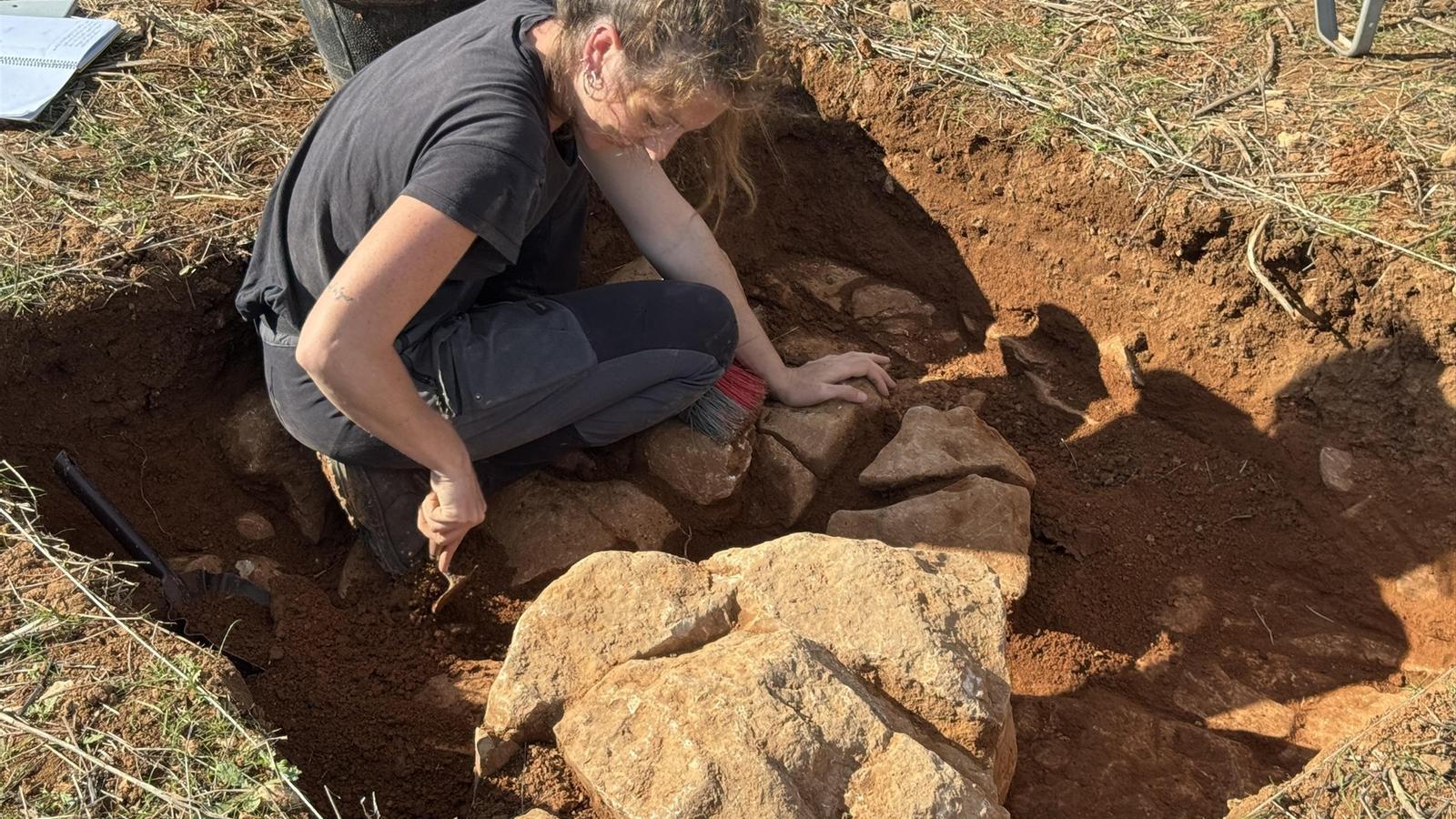
PalmaAn archaeological research team will resume excavations this October at the Son Sunyer necropolis, in Pil·larí, with the aim of discovering what is hidden in the tombs from about 3,500 years ago. Researchers will search for burial remains that have been preserved without alterations, a finding that would allow, for the first time, the study of a Majorcan hypogeum using scientific methodology.
The necropolis is formed by nine hypogea, artificial caves carved into the rock that were used as funerary spaces during the Bronze Age. The new campaign will begin on October 19th and will focus especially on the SSU9 hypogeum, discovered in 2024 and studied since the following year.
Archaeologists Pau Sureda, from the Spanish National Research Council (CSIC), and Jordi Hernández, from the Catalan Institute of Classical Archaeology, will direct the work in the central chamber and in two of the structure's niches. The goal is to locate burial levels that have not been altered with the passage of time. If it is confirmed that they are preserved intact, the remains could provide information about funerary practices, the construction of these caves, and the communities that buried their dead there.
The intervention will also include probes in other sectors of the necropolis, selected based on previous studies with ground-penetrating radar, to check if there are still unknown hypogea.
The search for metallurgy from 4,000 years ago
The October archaeological campaign also includes work at the Velar site, in Santanyí, where researchers are looking for evidence of metal production from about 4,000 years ago.
Excavations began on October 12 with the intention of expanding the studied areas and locating traces of metallurgical activity. The 2025 campaign had already documented well-preserved archaeological levels from the end of the third millennium before our era, which suggest that the site could be one of the best-preserved open-air sites of this period in the Islands.
Now, the team wants to find remains similar to those identified on the surface during the 1980s, to deepen the knowledge of metal production in prehistoric Mallorca.
The research also extends to the Serra de Tramuntana, where the 2025 work allowed for the first time the dating of slag deposits—residues of metallurgical production—from approximately 3,000 years ago. These findings can help to understand the role of metals in the social changes that occurred during the transition from the Bronze Age to the Iron Age.
The first results of the Velar excavations will be presented in November at the Santanyí Local Conference.
