Jèssica Ferrer: "Poetry is useless and necessary in this system of war"
Poet

-
CAT -
CAST -
DE
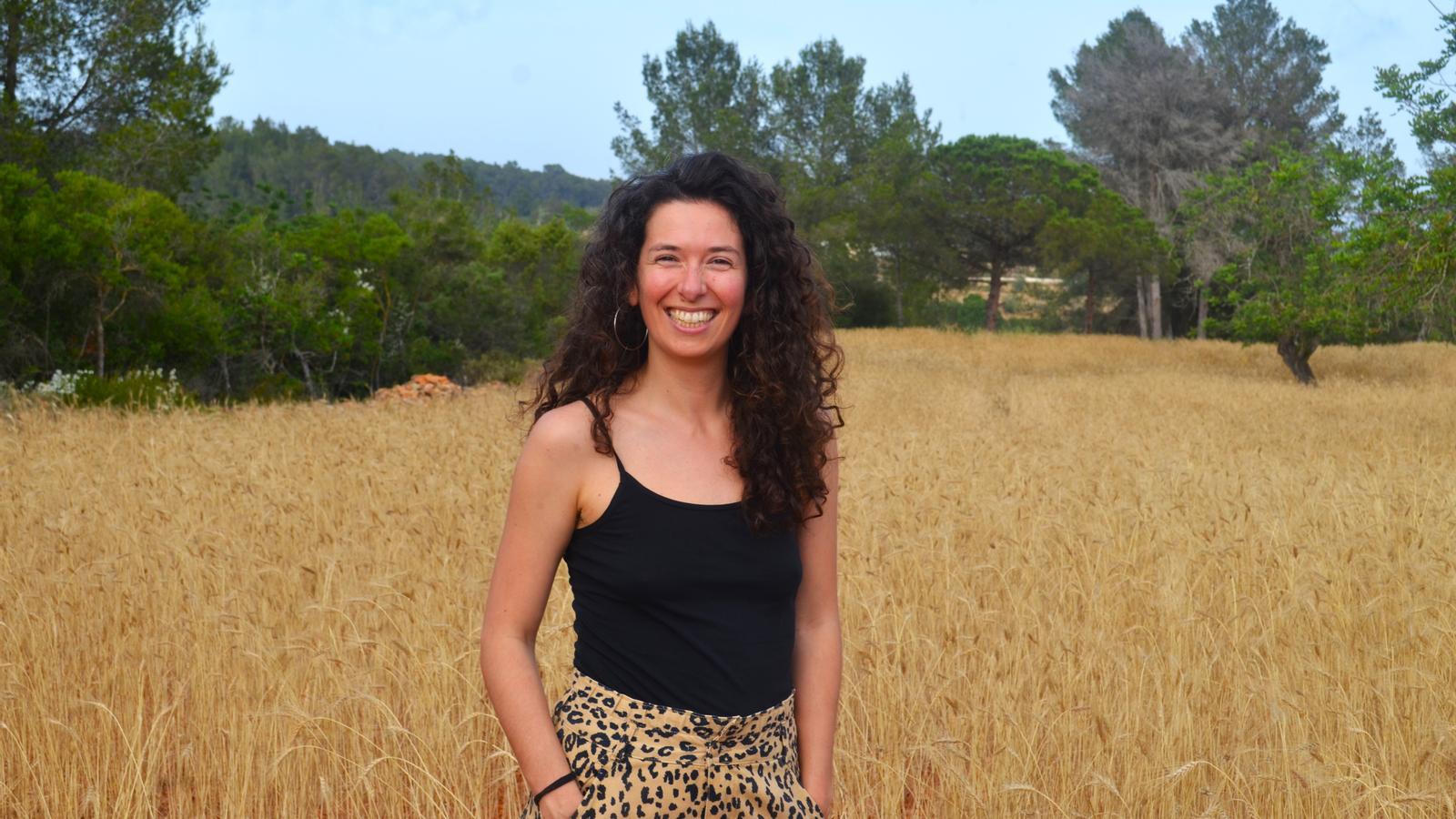
IbizaThe exoskeleton is not the title of a zoology book. Or is it. It is the title of Jèssica Ferrer's latest poetry collection, a work that won the Maria Mercè Marçal prize and has just arrived in bookstores. In her first book, Som aquí, Ferrer described massacres from the pig's point of view; now, in an exercise that lies between entomology and metaphysics, she speaks of the limits of the 'I' and the 'we' using the exoskeleton as a metaphor; the exoskeleton is the external skeleton found, for example, in ants. Between Som aquí (2022) and L’exoesquelet (2026), Ferrer has also had time to publish Fissures (2023), which constitutes one of the most dazzling careers in Catalan poetry in recent times. Jèssica Ferrer was born in Ibiza in 1993; in addition to writing, performing with Ses Honorables Virtuts Il·lògiques, and promoting the publication of Revista 078, in the summer she cultivates the garden and collects carob beans.
The exoskeleton is not the title one expects for a book of poems.
— It's clear. It's not that I do it on purpose, but I have a tendency to incorporate elements from some study or science into my poetry, which in principle have nothing to do with poetry, but have to do with what obsessed me at that moment. When I was writing the book, this very idea of an exoskeleton was very present, this part of an animal that is the animal itself: when the animal dies, the exoskeleton does continue. I was interested in it as a metaphor for the bond between people, between an individual and any entity of which they are a part: a couple, a family, a community... This forces you to give up parts of yourself.
You always present yourselves as a poet and a farmer, two very lucrative activities.
— Ha ha ha! Yes, I have to say that I am more of a summer farmer than a winter one, because in winter I do very little work; on the other hand, in summer we grow vegetables and gather carobs, of which there are many at home. People must be able to find a way to dedicate themselves to work that they like, but that perhaps is not so lucrative.
What has it meant to win the Maria Mercè Marçal prize with L’exoesquelet?
— Many things. To begin with, winning any award is always a confidence boost; writing is a very solitary activity, and receiving that feedback and that recognition gives you more strength. For me, moreover, it is a special award, because I admire Maria Mercè Marçal and because the format of the award has improved in recent years; a lot of publicity is given to it and, on top of that, at least half of the jury are women, and they are poets whom I read and admire very much, and that is also very positive.
In Catalan, there is no shortage of poetry awards.
— It is true that there are many. I think they are interesting. I am a beneficiary of the awards. With Som aquí I already had one, and the second book, Fissures, I published because it was a finalist for another award, and it has been the same with the third. For me, awards have been the way in to publish. When you look for a publisher and nobody knows you, they all say no. Awards are the possibility of being published without having to know people. Obviously there are all kinds of awards, some are very good and some are not so good.
It is really difficult to keep up with publishers. Do you think too much is published, in Catalan?
— Let's see, I don't think so, quite the opposite; in fact, I think one thing that has been happening lately is that we have, for example, very good translations. The work done by some independent publishers is very good. Obviously, in general, the publishing market is quite crowded; you go to a bookstore and every week you find a lot of new releases. And it is also true that we are experiencing an editorial boom, linked to self-publishing, which should be considered whether it is really necessary.
You have launched Revista 078, as an alternative in Catalan to traditional local media. How is the initiative going?
— It's a project that has us very excited. Personally, I'm very happy about it, because almost everything I do is solitary work, and the magazine is teamwork, and in that sense it's very nice, to see that four people can agree and move this forward. It serves to build self-esteem for Ibiza, with a critical attitude, but also to build community. The magazine gives us a sense of positive rootedness in our island. I think Catalan and independent contemporary culture are complicated, in Ibiza, a small place where people who want to do innovative things often have to leave. We have an activist part, we don't want to fall into pessimism. Is Catalan doing badly? Perhaps, but right now we can't afford to be pessimistic, so we have to move forward with a magazine and, yes, let it be in Catalan.
In the last poem of L'exoesquelet you wrote: "Because the world is catching fire / because the fire burns our feet". What place does poetry have in an increasingly violent world?
— Let's see, I believe poetry is absolutely useless, and that's why it's necessary. Not just poetry, but many arts and even crafts, any activity that is done today and is not productive for this economic system, for this war system. Just by not being productive, it gives us another perspective. Poetry is a very strong tool to invite thinking differently; in the end, I believe poetry is made of language, and with language you can do whatever you want differently; you open up the possibility for the reader to think in another way, a key to imagine other possible worlds, different from the one we live in.
