The PISA results portray an educational system in permanent storm: it is not one column that trembles, but the entire building
The Balearic Islands worsen in Reading, Mathematics and Science while classrooms face more diversity and vulnerability, changes in assessment and new habits marked by screens, in a school that accumulates too many open fronts at the same time
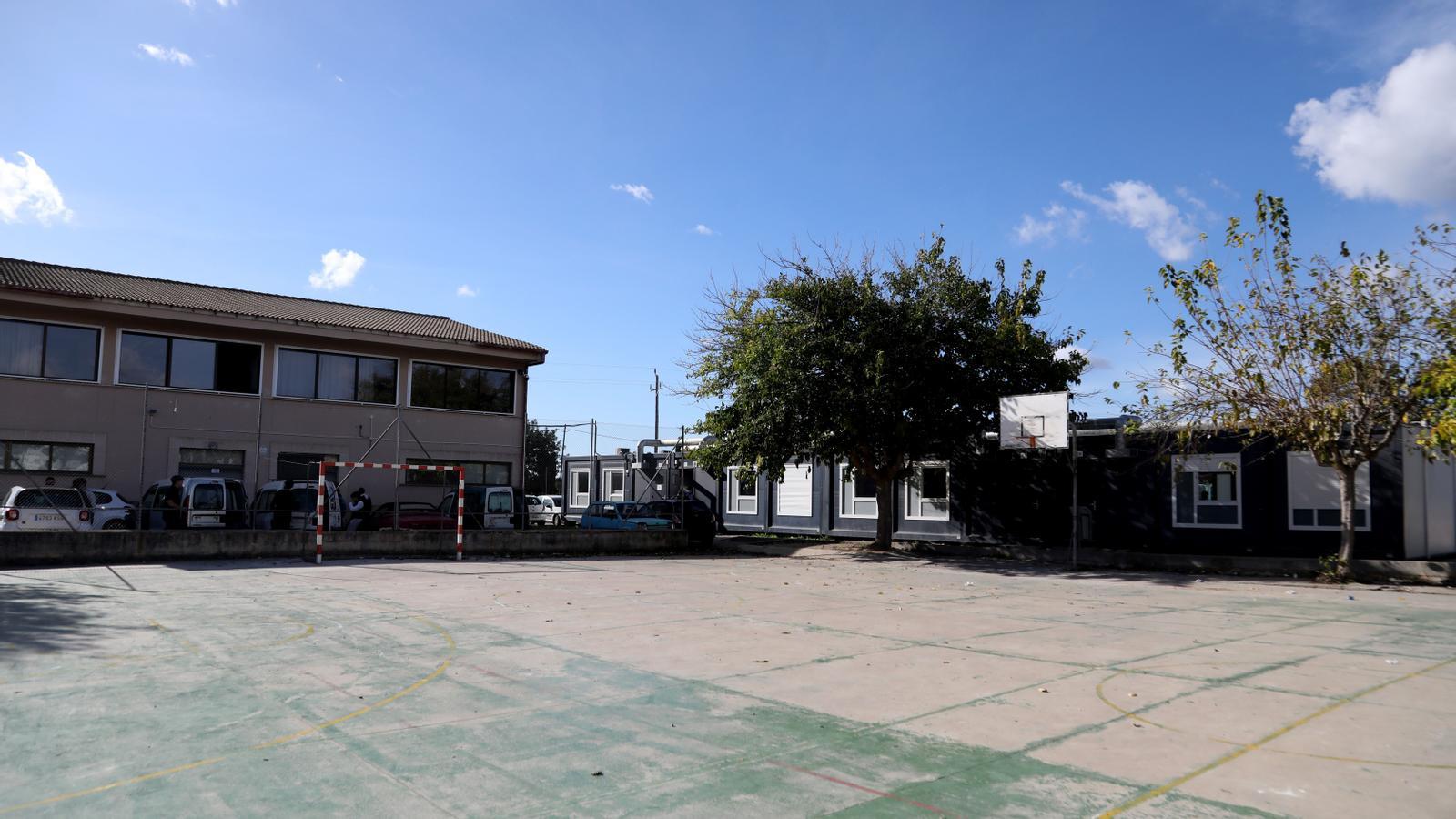

PalmaThe Balearic Islands obtain worse results than Spain, the European Union average, and the OECD in the three competencies evaluated by the PISA report corresponding to the tests carried out in 2025. The situation is especially worrying in Reading Comprehension, where the Islands fall to 441 points, 31 less than in 2022, but the decline is also notable in Mathematics, with 449 points (-22), and in Science, with 471 (-9). In tests where a difference of 20 points is approximately equivalent to one academic year, the magnitude of the drop is difficult to ignore. More than half of the students do not reach, for example, level 2 of scientific competence, the threshold that PISA considers basic. The data, in themselves, do not explain why this is happening. But they do force us to look at what has changed inside the classrooms and also outside of them.

Because today's students are not the same as those from ten or fifteen years ago. Classrooms are more diverse, there are more students arriving in the education system during the school year, more situations of socioeconomic vulnerability, and also new habits of learning and information consumption. During the 2025-2026 school year, 3,801 new students were incorporated into schools in the Balearic Islands. This is not a figure that allows attributing poor results to them (it would be a conclusion as easy as it is wrong), but it does describe a reality that centers must absorb, often with limited resources and an added difficulty: teaching and evaluating students who may not yet master the language in which they are taught (neither Spanish nor, of course, Catalan).
The PISA tests confirm a significant difference between native and immigrant students. Before taking the socioeconomic situation into account, the gap is around 48 points. When the effect of the socioeconomic level is discounted, however, it is reduced to about 29 points. This is significant because it indicates that a significant part of the differences has to do not simply with the student's origin, but with the conditions in which they live and study. And here another of the great problems of the Balearic Islands appears: the socioeconomic level of the students is lower than that of the Spanish, European, and OECD average.
Failing, complicated
The point is that this reality coincides with a profound transformation in the way of teaching. The LOMLOE has introduced an evaluation and promotion model in which the student's competencies and progress have a central weight. Repeating a year has become an exceptional measure and promotion and graduation decisions depend on a global assessment of the competencies and objectives of the stage. This does not mean that a student can automatically graduate with serious deficiencies in any subject, but it does mean that the system has left behind a conception more based on the number of failed subjects and on repetition as a correction mechanism. Teachers indicate that they have felt disrespected by other colleagues on the faculty when they have decided to fail a student, as if it were something serious to tell a family that their child does not meet the minimum level of a subject.
This change has been highly questioned by a part of the teaching staff, who consider that the evaluation has moved too far away from the concrete knowledge that the student is capable of demonstrating. It is also here that one of the underlying discussions that the PISA results bring back to the table appears: to what extent can an education based on competencies be developed if the students do not have a solid base of knowledge upon which to build them?
The response from Antoni Vera's Department of Education is already underway. The Government has made an explicit turn towards reinforcing basic learning and has recovered knowledge as one of the axes of the curriculum. The new curricula have increased the weight of Mathematics and languages, have significantly reduced the hours of free disposition in Primary school, and have also reinforced Environmental Studies. In Secondary school, Mathematics will now have four weekly hours in all ESO courses. The Department, moreover, has limited the use of screens: their individual use is not allowed in Preschool nor in the first three years of Primary school, and in the fourth year, it is limited to one hour per day. Vera has defined this as a commitment to recovering a solid base of knowledge and returning it to the center of teaching.
It is too early, however, to know if this bet will work. The new curricula began to be rolled out in the 2025-2026 academic year and the students who have followed them have not yet passed through the entire educational system. The PISA results we now know are, therefore, largely a snapshot of a set of previous models and at least two state educational laws of different political stripes. If the Ministry is right and recovering hours of Mathematics, reinforcing reading and writing, giving more weight to content and limiting screens really improves learning, PISA will not be able to demonstrate it from one year to the next. It will take years to know if this bet yields results.
And here is one of the most interesting questions that the data leaves on the table. For years, the educational debate has often revolved around whether it was necessary to abandon traditional formulas and move towards more competency-based methodologies, more projects, more digital tools and an evaluation less focused on the exam. Now, however, the Balearic Islands find themselves with a generation that has grown up surrounded by screens, social networks, short videos and constant stimuli that have undermined their capacity for concentration and attention. It cannot be stated that this alone explains the PISA decline, because the data does not allow such a relationship to be established. But neither can a question that is increasingly present among teachers and families be ignored: what is this permanent exposure doing to the adolescents' capacity for concentration, long-form reading, complex writing and sustained effort?
Is it possible that some of the formulas that for years have seemed old-fashioned are starting to make sense again? A book, a long explanation, taking notes, memorizing certain contents, reading for a while without interruptions, doing exercises repeatedly, or facing an exam may seem like outdated tools in an educational system that has sought to evolve towards other methodologies. But if the problem is, in part, that students increasingly have more difficulties maintaining attention and consolidating knowledge, perhaps these tools are not as obsolete as has sometimes been thought. Time will tell. But the dissociation of children begins very early, even before they enter the classrooms. Seeing babies who do not even know how to speak with their parents' mobile phones in their hands is now commonplace, but it remains surprising. And this, the school neither can nor will be able to reverse.
Office regulations
Trying to curb pedagogical reform, an idea that has as many defenders as detractors, does not in any case mean simply returning to the educational system of the past. Neither a textbook solves the diversity of a classroom nor does adding more hours of Mathematics guarantee that students will learn more. The problem is much more complex. A school must attend at the same time to students with very different levels, newcomers who do not yet master the language, students with learning difficulties, and families in very diverse socioeconomic situations. And it must do so while curricula, forms of assessment, digital tools, and social demands on the school are changing. Teachers cannot do more than what is legislated by people from an air-conditioned office, while they and the students melt or are cold inside old and poorly insulated buildings.
The school also cannot cope with the gurus of "when I went to school there were 40 in class and there was no problem." They often forget that back then there were also students with autism, ADHD, other neurodivergences, or disabilities (and none who did not speak Spanish or Catalan). The difference is that back then they were put into the 'dunce battalion' and that was it. They were not attended to. Now, they are. Also, no one dared to give their opinion with such joy about the work of professionals as happens now, when the pseudo-professors of Education at a bar counter with a beer in hand lash out at the school. Now it seems that everyone knows about it.
The PISA results show that socioeconomic differences exist, but also that they do not explain everything. In the Balearic Islands, there is a difference of about 67 points between the most advantaged and the most disadvantaged students, which is lower than that of Spain, the OECD, and the European Union. And the difference in results between public and private schools is also reduced considerably when the socioeconomic profile of the students and the centers is taken into account. The problem, therefore, is not only who arrives in the classroom, but what happens inside that classroom and what tools the teacher has available to help all students move forward.
There is, furthermore, another reality that is often hidden behind the figures: the effort that teaching entails today. The teacher must not only explain content. They must prepare materials, adapt activities, cater to different levels, provide individualized follow-up, assess competencies, coordinate with other teachers, and manage a much more heterogeneous classroom. In some schools, the textbook has lost weight and has been replaced by materials created by the teachers themselves, projects, and digital resources. This change may have pedagogical advantages, but it also entails a workload that is not always seen when talking about educational results.
There is not a single person responsible
PISA does not allow us to know which of these factors weighs more. And it would be a mistake to turn an international test into an explanation of everything that happens inside a school. The results are cold, the analyses, warm. But it does allow us to confirm that something is not quite working: the Balearic Islands are not only below Spain, but also below the OECD and the European Union in Reading, Mathematics, and Science (this has always been the case). And the problem is especially evident in Reading, where the 441 points place them among the communities with the worst results.
Now the Ministry has launched a new, but paradoxically very old, bet: more knowledge, more hours of Mathematics, more hours of languages, more content, and fewer screens. It is an educational hypothesis as legitimate as any other, but not yet a conclusion. And the turn arrives while the system drags one of its most evident shortcomings: the lack of teachers. In Ibiza, for example, Education has difficulties covering positions and has opened the door for teachers of various specialties to be able to teach certain subjects if they have some training link. In the most extreme cases, the positions are transformed into area positions –by branches of knowledge–, so that a Social Sciences teacher can end up teaching Catalan without having completed the four years of specific university training in this language. The coming years will have to tell whether Antoni Vera's turn is capable of reversing a trend that has not been built in a single school year, nor in ten, and that will hardly be reversible if action is not taken on all fronts. Because what happens inside the classrooms is only part of the problem: the educational system also gambles its future outside of them.
What does seem to be the case is that the Balearic Islands need something more than arguing about whether the fault lies with the LOMLOE, the LOMQE, the covid pandemic, mobile phones, teachers, families, or students. There is too much unproductive political noise. The PISA reports put an accumulated problem on the table. Now it remains to be seen whether the change of direction undertaken by the Department of Education is capable of solving it. And to know that, we will still have to wait a few more years in which the educational system would continue to coexist with the structural evils (and the infrastructure problems) that plague it and that no Government has yet managed, for the moment, to truly resolve.
