Cristina Lladó: "I wouldn't have wanted to go to the Baccalaureate of Excellence"
Third best grade in the Islands in the PAU 2026

-
CAT -
CAST -
DE
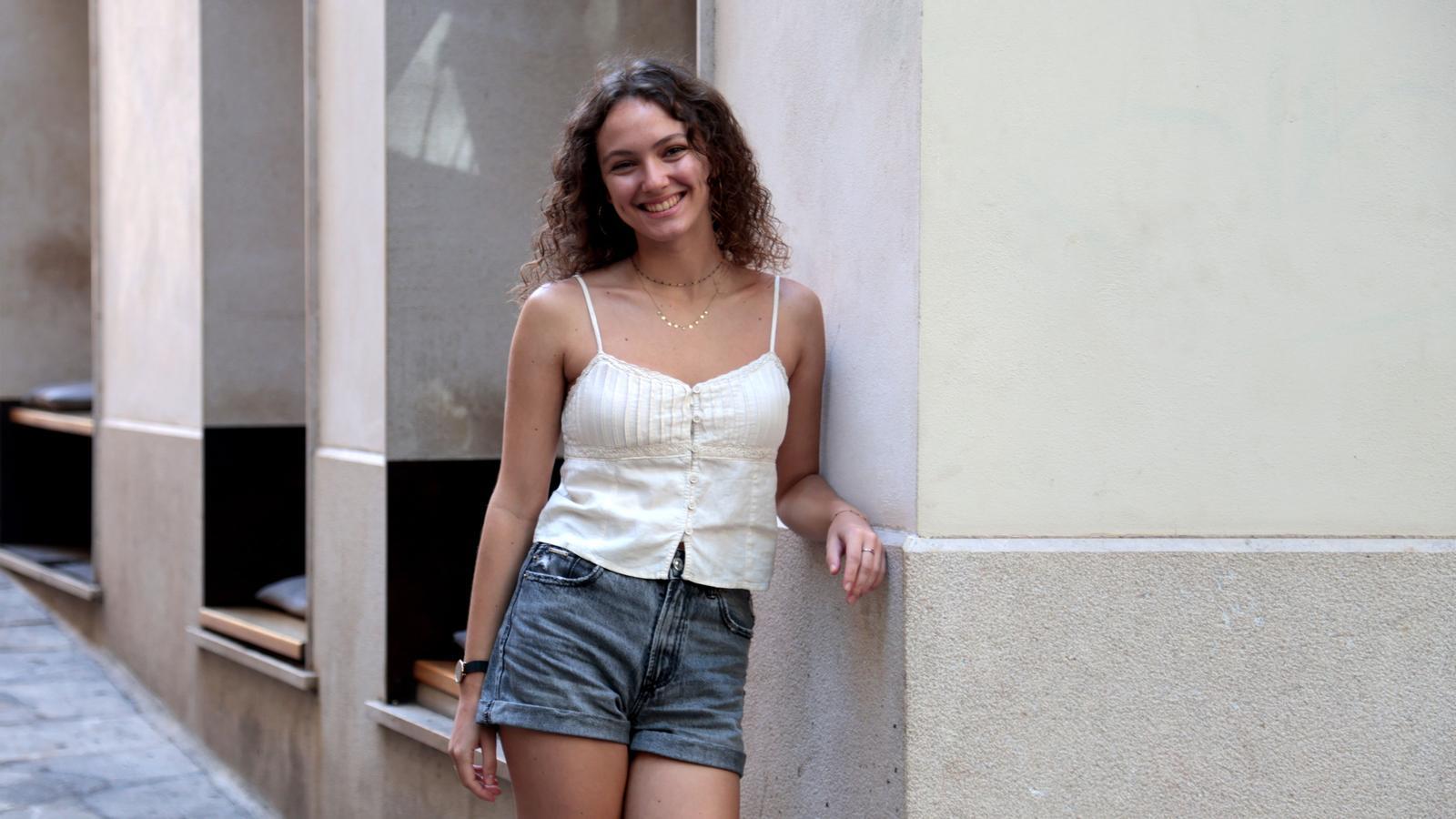
PalmaCristina Lladó (Palma, 2009) is the third best grade in the PAU in the Balearic Islands (9.706), the second best in Mallorca. After excellent results, she reflects on the preparation for the selectivity exam, defends the role of public education in Catalan, and argues why she does not share the model of the new Baccalaureate of Excellence that the Ministry of Education will implement.
When you were told your PAU grade, what was your first reaction?
— First I looked at it all by myself and it impressed me quite a bit. Then I calculated the admission grade, because I want to study Mathematics, a degree with a very high cut-off grade. Afterwards, I communicated it to my family and my closest people. The first person I told was my older sister. She was at home and she was one of the people I most wanted to know.

After leaving the last exam, did you think you might be among the top grades?
— My last exam was English and I left with very good feelings. It is the subject that goes best for me, I know the language very well and I even had time left over. Nevertheless, I did not expect to be among the best grades. I thought I had done well and had expectations of obtaining good results. Of all the exams, I left satisfied and with the feeling that I could not have done them better, but I did not imagine that I would have done so well.
How did you experience the three days of the PAU? What is the first memory that comes to your mind?
— It's the morning of the first day. We were going to the University with my mother by car, listening to music and singing. I especially remember that moment, because they were the last days of this whole process. I felt that the work was already done and I was happy to have gotten that far. I was clear about what I had to do. If I had some time before the exams, I took the opportunity to review, but I also talked with my classmates. After the tests, I asked for the grade to be recalculated, because there was a material error, and the access grade rose by two tenths, to 9.706. The admission grade is 13.482.
What importance do you think it has had to have studied in a public center and in Catalan?
— I chose to go to IES Joan Alcover. I came from Sagrat Cor, where I was very happy, but there was no Baccalaureate. I chose Joan Alcover for several reasons: because it is a center in Catalan and because it has a very good reputation for the scientific Baccalaureate, which I wanted to pursue. Also, because it has a lot of cultural life and a very active Catalan Department. For me, it was very important to be able to live my culture and in my language, and this also implies being able to study in Catalan.
The next academic year will start the new Baccalaureate of Excellence. If you had had this option, would you have liked to take it?
— Honestly, I would not have wanted to go to the Excellence Baccalaureate. I believe it is very important that students with high abilities have good support, and I myself am grateful to have had it. However, I do not think the solution is to create a separate high school. I consider it very enriching to meet diverse people and not be surrounded only by people with the same characteristics. It is positive to have friends with similar interests, but the Baccalaureate is also a very important stage to meet different people and broaden horizons.
Do you think the PAU really reflect a student's knowledge?
— An exam cannot go well if the student does not have knowledge, but the way of expressing it also influences, that the corrector understands what you mean, the ability to remain calm and keep a cool head. There is also an element of luck: that there are no errors in the correction or, simply, who corrects, because ultimately there is a person behind it. In addition, social factors also influence. A good part of the result depends on having a family behind you who supports you and allows you to dedicate time to studying. People who have to combine studies with work have even more merit if they manage to get good grades.
What do you think has been the secret to achieving this result?
— One of the things I was most grateful to have done during the course was to prepare my notes as the year progressed. Afterwards, when it came time to study for the selectivity exams, this made my job much easier. It's true that it's a course where you have less social life, but I think it's very important not to completely give up on leisure, friendships, and sports. Everything that contributes to having good mental health also helps you perform better.
Have you had to make resignations?
— I really enjoy reading and, during my two years of High School, I practically only read the mandatory reading books. Now I've gotten back into it. I like classics, especially Jane Austen, on whom I focused my research paper, but I also really enjoy fantasy.
How do you envision your university future?
— I want to study Mathematics at the UPC. The first year I will go to a student residence and, from the second year, we will see if I continue or if I move to an apartment. I also considered staying at the UIB, especially because I could continue living at home, as it's a significant change. But one of the main reasons why I finally decided not to do so is that, even though I live in Palma, I don't live in the center and getting to the university every day takes me an hour and a half.
What would you say to a student who will have to face the PAU next year?
— Study intelligently and strategically. You need to know which subjects require more work and which may carry more weight in the final grade, and keep that in mind from the beginning. Preparation doesn't start weeks before the selectivity exam. You must prepare your study material throughout the course and study in a way that allows you to consolidate your knowledge. From the very first moment, you must have your priorities clear.
