Mallorca, getting out of the labyrinth (The essential change of the productive model)
-
CAT -
CAST -
GER
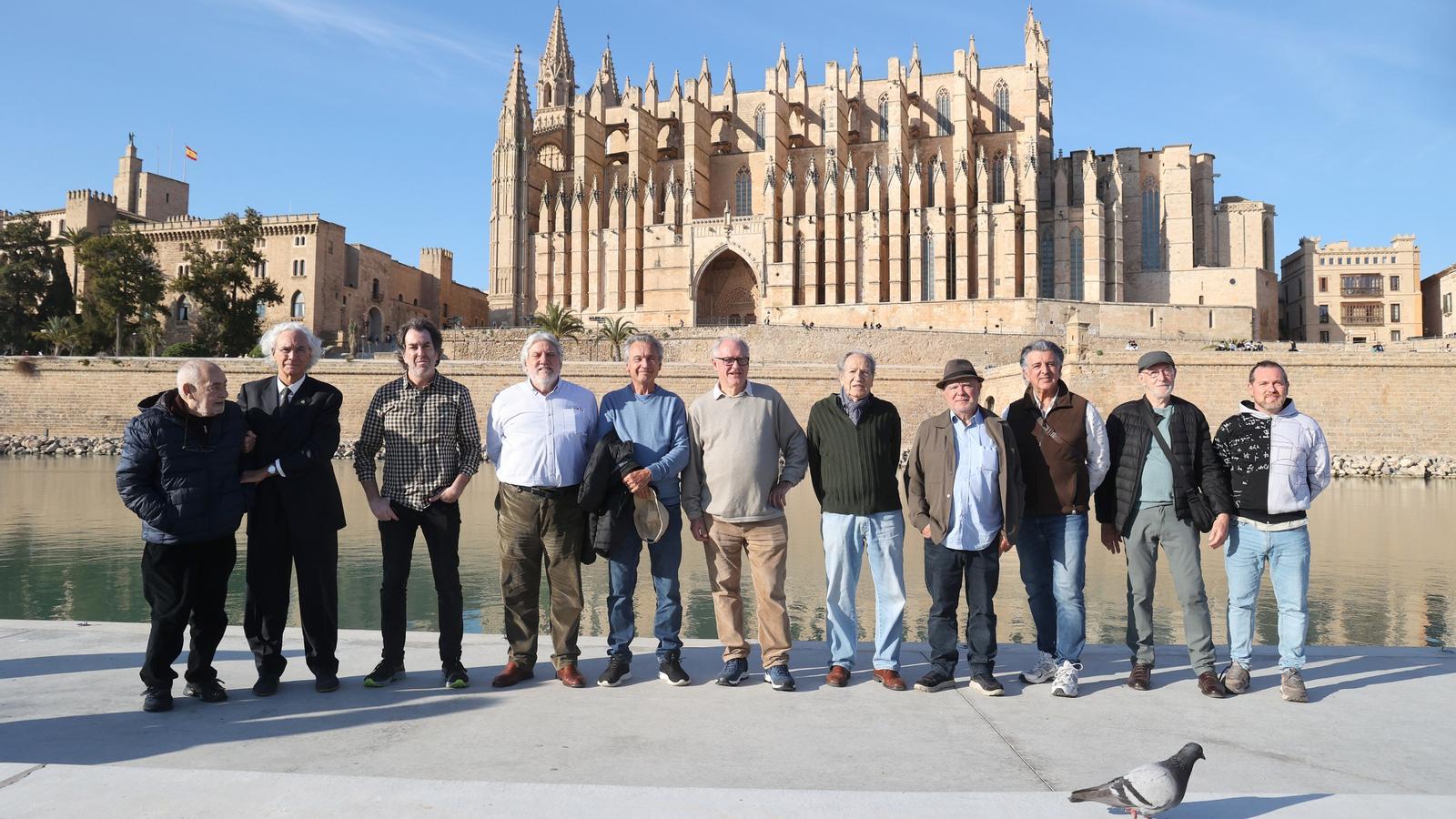
The media play a primary social role and, moreover, hold high democratic value because they contribute to the formation of public opinion. Based on this premise, out of a sense of responsibility and moved by feelings of esteem, respect, and service to the land and citizens of Mallorca, a group of contributors from the three print dailies published on the island (ARA Balears, ‘Diario de Mallorca’ and ‘Última Hora’) have come together to publish this article. The aim is to call upon all political parties, the bodies with the power to modify the current state of affairs – particularly, self-governing institutions and town councils –, as well as, in general, all economic and social powers, capable of conditioning and influencing decision-making, for a radical, progressive, and measured, yet firm, change in the current economic model.
Mallorca is in a critical situation. Indeed, the current production system in our land has led to the impoverishment of our physical and cultural habitat, and nothing suggests, quite the contrary, that there is a determined will to rectify this course. The last seven decades, more or less, have been characterized by the dominance of the false paradigm of unlimited growth of all constants linked to mass tourism (with construction as an added effect). But, necessarily, for mere survival, this model must reach the end of its life cycle. It is not a matter – it is important to clarify this first of all – of questioning the economic relevance that tourism holds for us as a central element for the creation ofemployment and business opportunities. It is, above all, a matter of observing that exacerbated liberalism, the lack of long-term public planning, and the absence of consideration and reflection on our collective future have led us to this moment of stagnation
The symptoms of the ailment that affects us are well known. One could even say that they have come to be accepted, as a careful analysis of our reality, by everyone. We would mention four symptoms, all four interconnected: overpopulation, the excessive number of tourists, the unbridled exploitation of the territory –and, more particularly, of rural land– and, finally, the marginalization of the Catalan language. Firstly, Mallorca endures an index of human pressure (the ratio between the surface area of a place and the people who inhabit it) that is completely excessive, and forecasts suggest that in the next ten years the increase will be at least two hundred thousand people, mostly arriving from outside (that is, we are not talking about natural growth, but about migration). Obviously, the labor force that arrives in Mallorca does so because of the economic activity maintained here by the two practically monopolistic production sectors, tourism and construction, in permanent boom. It must be said that this migratory dynamic coexists with a gradual and impoverishing expulsion of local talent unrelated to the two mentioned sectors.

Secondly, it must be pointed out the exponential and ceaseless growth of travelers/tourists arriving in Mallorca, a reality objectively reflected by the numbers provided by Aena, the owner and operator of the Palma Airport. That this past year 2025 has closed with a figure of 33.8 million passengers and that this represents an increase of 1.5% compared to the previous year is, due to its sheer excess, an unacceptable amount. Thirdly, that the territory has to endure more aggressions – until when?–, that infringements of the territorial planning regulations have been legalized and that massive construction is projected on rustic land and surrounding urban centers, constructions that, in turn, will consume more natural resources and require more public and infrastructure services, constitutes the umpteenth aggression to the territory, but also to common sense. The expropriation of the use – not the ownership – of empty homes of large holders, many of whom are in the hands of investment funds or banks, and the reconversion of obsolete hotels would be the rational and useful options if the objective of reducing the problem of housing shortage is truly pursued.
Reason indicates that it is inevitable that tourism and construction will decrease
and that all oversized magnitudes will diminish. Decreasing will require diversifying the economy with alternatives such as fostering knowledge, technological innovation, cultural industry, research, the care economy, local production, the social and solidarity economy, and value-added services... Governing – do we have to remember?– means making decisions, including difficult decisions, of high commitment. But what gives true meaning to the act of governing is the pursuit of the citizens' well-being. This well-being, understood not only in economic terms, but also in terms of tranquility, peace, unhindered mobility, enjoyment of nature and cities, guarantee of the survival of cultural and linguistic references, and the traditional way that Mallorcans have used to relate to our natural and human environment.
Finally, we have mentioned theminorization of the Catalan language as an eloquent symptom of the degradation of our cultural ecosystem. The fullness of the country's language and its general social use should be considered, once and for all, as priorities of public (and also private) action. The Catalan language,
for Majorcans, is not only its historical and characteristic speech, rooted here for eight centuries, which is why it demands to be respected, protected, and fostered, but it should constitute the meeting point for all islanders as a linchpin of coexistence.
If we have agreed that the current productive model must be changed, it is time to move from the verbalization of the problem to the materialization of verifiable actions in the direction of reversing our regrettable current reality. However, it is necessary to clarify that any policy that is intended to be implemented aimed at recovering our collective dignity and well-being will require decisions to be agreed upon, to be the result of consensus. We demand, therefore, consensus, deep agreements, and long-term visions for our future that set aside the meanness of momentary gain with no other ambition than a pyrrhic victory over the opponent. After all, because our future as a collective is at stake, without nuance, we emphatically demand a high sense of responsibility and that our gaze be placed only –only– on Mallorca. The article is signed by: David Abril, Antoni Aguiló, Celestí Alomar, Martí Ávila, Sebastià Alzamora, Rafel Borràs, Margalida Capellà, Francesc Casadesús, Lourdes Duran, Pere Estelrich, Àngels Fermoselle, Sebastià Frau, Jaume Garau, Antoni Janer, Gabriel Janer Manila, Maria de la Pau Janer, Miquel Àngel Lladó, Miquel À. Llauger, Cristina Llorente, Laia Malo, Pere Joan Martorell, Biel Mesquida, Antoni Mir, Cati Moyà, Felip Munar, Neus Picó, Climent Picornell, Mateu Picornell, Rosa Planas, Pere Antoni Pons, Margalida Ramis, Nanda Ramon, Joan Riera and Antoni Tarabini
