I weave and the spider dances
Literature allows us to unpick and re-sew the world. It allows us to undo the meaning of today to imagine a more habitable tomorrow

-
CAT -
CAST -
GER
PalmaAt all times it is relevant to read a praise of literature like the one Santiago Alba Rico makes in the pages of his latest book. He draws maps for us to travel to different “literary countries”, but he does not do so as a literary critic, but as a storyteller. It is the wonder of literature, books allow us to retell their stories again and again, sometimes faithfully, sometimes with betrayal. In fact, not ceasing to talk about books, including those written a long time ago, is what makes them continue to address us. Alba Rico puts six pairs of authors in dialogue, creating a kind of genealogy of his sensitivity as a reader. Kafka and Potter, Melville and Hergé, Dickens and Cervantes, Dostoevsky and Hašek, Shelley and McCullers, Austen and Proust. We have a book of books in our hands.
When we read, we always do so from a tradition, but not only that, also from a context, from a generation, from a community. We do so from a reading background that is a mixture of obsessions and chance. These wanderings have placed in my hands, in the last week, two books that I would like to force into dialogue: Canto jo i la muntanya balla, by Irene Solà, and Punto de araña, by Nerea Pallares. I believe that, right now, there is a constellation of women who use the same loom or the same thread, it is like a generational revolt. They have moved me and I want more.
The unexpected, tragic death is the starting point of both works. They show us how fragile death, spread under the sky or out at sea, is the reverse or obverse of lives that fiercely implore to make their way. Literature, a deep anthropology, is the imaginary structure that helps us to draw futures, at any time. It traces a horizon, a tomorrow, a hope, which is stitched to tragedy, sometimes remote, sometimes ineffable, but always too human.
Walt Whitman argues that literature is the art of being able to be all women and all men and all things. The two novels force us into this displacement intensely, from the voices that carry the narrative. A chorus of poetic beats pushes us with the force of the crowd. The characters parade under the attentive gaze of multiple narrators, who disconcert us because they emerge where no one expected them. Thus, in the two fables, we can be the lightning and the mountain, Sió and Jaume, the roe deer and the rifle. We can be the three spiders, Ariadna, each of the lacemakers of the Costa da Morte. We are the wild storm and the water women. The witches, the living, the dead.
Earthquake of identity
Literature is the seismic force of identity, an experience that allows us to summon other lives into our own, so small without the stories of others. Books do not make us more ecological, more feminist, they do not make us better people. But they do hurl us against difference, opening windows or cracks through which fresh water, clearer light, enters. In the house of fiction, be it the Pyrenees mountains or the port of Camariñas, we learn to coexist with alterities, we embrace other desires, other bodies, we steal worlds that give meaning to our own.
Solà and Pallares seek the periphery, the voices from the margins, and make them the center, the soul of living. Death appears absurd, capricious; bonds strange, precious; forgiveness, longing, grief, sculpt all corners, because we are finite beings. Nature is immense and sometimes stronger than civilization. The sea, rabid, bites the coast and transforms it. The mountains, firstborn of unfathomable mythologies, give birth to roots. The patriarchy and the civil war crack the fabric. Women are those who mend their own lives and make all lives possible, even though too often they are in the wings of this precarious theater, because their stage has been stolen.
These are the threads that weave the two works. Poetic, laden with fascinating symbolism, they drench us with moving myths and legends, arrived from very far away. Irene Solà praises poetry, which "must be as free as a nightingale. Like a morning. Like the fine evening air." Perhaps nothing is more serious than poetry, it is play and it is laughter, it proclaims life and listens to "the thin whistle the world makes." Nerea Pallares invokes the power of language, of words, to make and unmake the world. Language gives existence, and those of us who have always known how to weave it are women, heirs to the three Fates. Women must teach to re-sew the world, so that everyone learns to speak differently, to be differently.
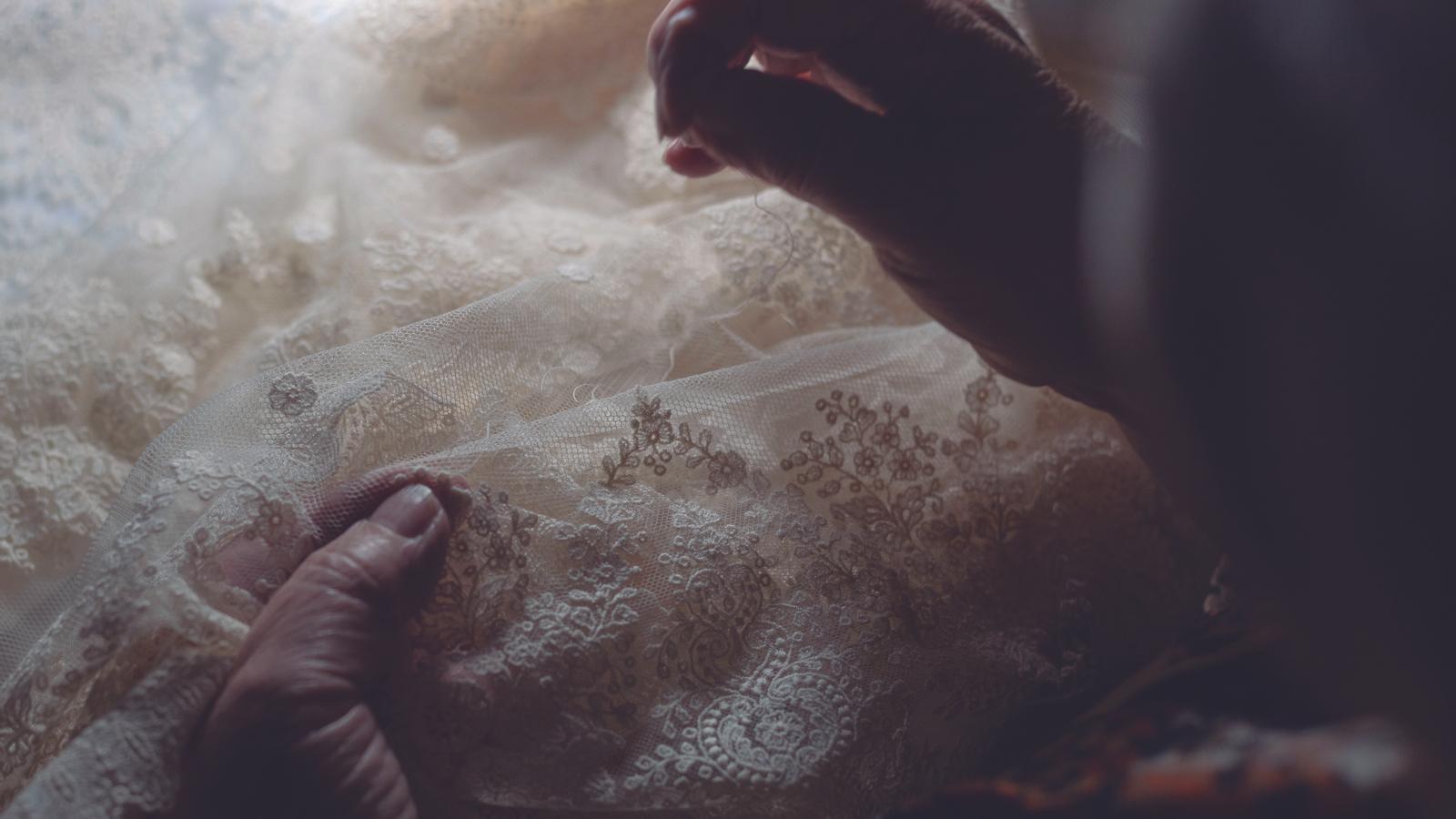
Thus, literature allows us to unweave and re-sew the world. It allows us to undo the meaning of today to imagine a more habitable tomorrow. Irene Solà and Nerea Pallares know this. One, a mysterious weaver, the other, a subtle artist spider. They ponder, like the Fates, to weave the web for tomorrow. They cast their gaze backward, peering into the shadows of the past. Of the new spring, they know where the seed hides.
Nevertheless, literature spins, spins, literature will spin.
