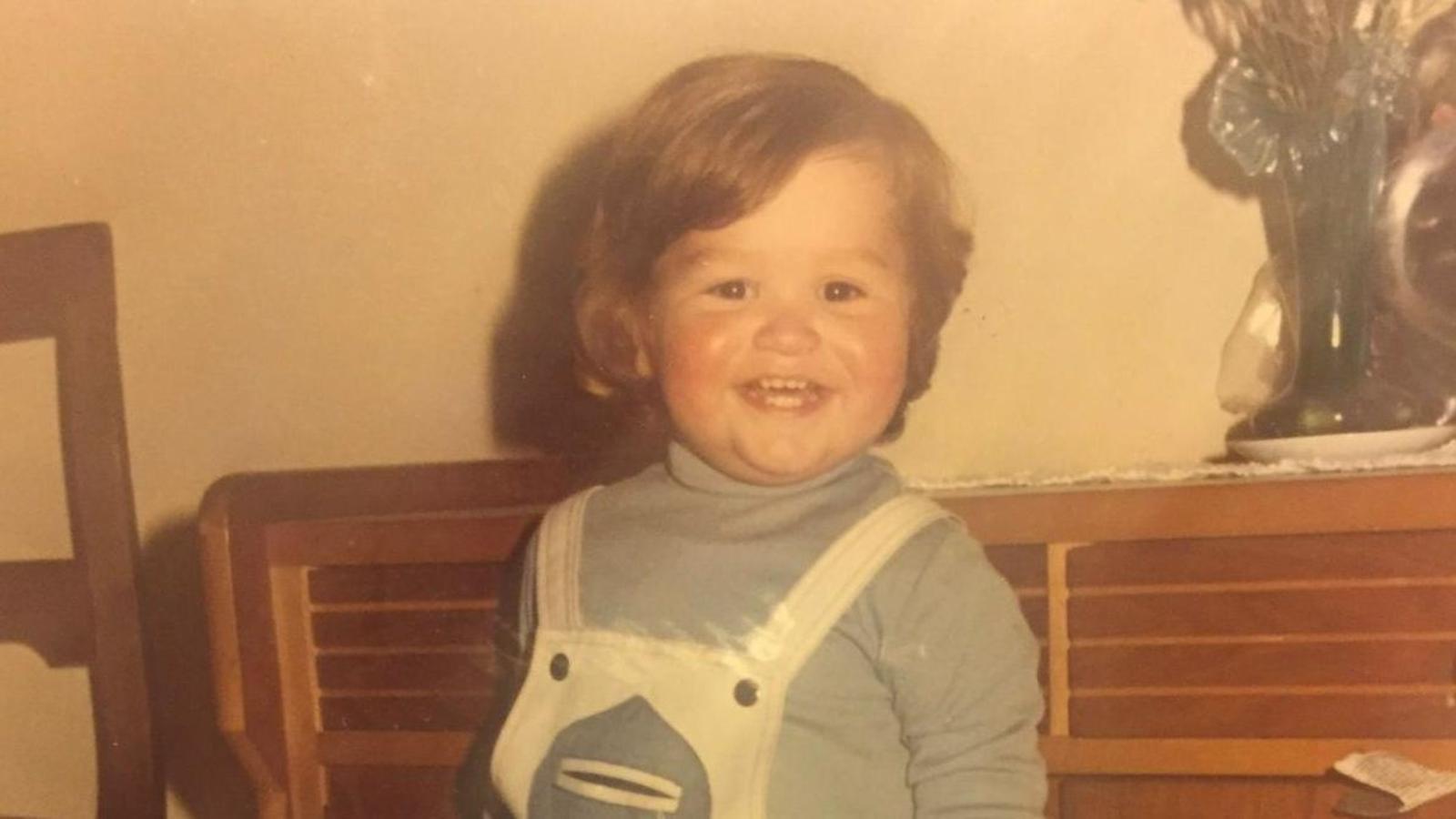
How he was, Miquel Oliver, according to his mother: "As calm as he, there has been no other"
Joana Gomila, mother of the politician and mayor of Manacor, explains to us the best-kept secrets of her childhood

-
CAT -
CAST -
GER
PalmHe did his military service with little enthusiasm. He studied Systems Informatics at the UIB. At 15 years old, he became so passionate about volleyball that, when he was already living in Palma, he would return to Manacor once a week to train. At only fourteen months old, he already spoke clearly. He wasn't one of those children who get tangled up with their words: he quickly developed the ability to express himself with precision. Joana Gomila, mother of the mayor of Manacor, Miquel Oliver Gomila, tells us this. It's hard to get words out of Joana. At the end of the conversation, she reveals why: “A mother always speaks well of her children. What else are we going to say? And I… I don't just want to praise him.” There will be some, but not that many.
Miquel Oliver was born in Manacor the year Las Grecas released the album Gipsy Rock, which includes the hit ‘Te estoy amando locamente’, and Los Diablos were singing ‘Acalorado’. It was 1974. Joana was a new mother with Miquel, who was what is called a ‘trick child’ (because he is so easy to look after that everyone gets curious urges to have one): “He was a quiet and observant child who never caused much trouble. There has never been anyone as quiet as him. He was a sleepyhead, didn't cry much, and had a calmness that set him apart”.
As when he was a year and a half old and his brother Toni arrived, Miquel started school very early, at Sant Francesc de Manacor. He then continued at Simó Ballester, and Joana says he had no reluctance to go to school: “Quite the opposite. He did the work they assigned him and you never had to beg him,” she recalls. As a child, he already showed a clear inclination for “being handy”: “He would spend hours assembling and disassembling gadgets, testing wires and light bulbs, and fixing, or breaking, any object that fell into his hands. He also liked to draw and paint,” says Joana, who to sum it up says that “he was entertained by anything.” His mother still keeps a small drawer full of wires, tools, and little parts with which Miquel used to spend his time as a child.
One place where he loved to spend his hours was on the family farm, in Son Macià: he would spend entire afternoons observing and chasing little animals and birds. “He knew them all, the birds' songs,” she recalls. He even insisted that his godfather and his father keep the garrigue (scrubland) clean when they neglected it. And, like any kid, he also liked to play in the street with his friends, whatever the game, although he preferred his friends to come to his house to play with “things”.
When asked if Miquel ever showed interest in politics, Joana immediately says that at home “politics has never been discussed” and that when he said he would be a councilor, “it was a great surprise.” Nevertheless, she highlights Miquel's great sense of justice and his desire to help others. To explain this, she tells an anecdote: “He never told me this, I had to ask him if it was true. When he was 16 or 17 years old, he was riding his Vespino around Manacor and saw a group of young people surrounding a man. He thought they were beating him, and he didn't think twice: he stopped the vehicle to intervene. But the situation was not what it seemed: those boys were helping the man, who was ill and suffering some kind of attack. My son's gesture shows his impulse to help in the face of potential injustice, even at the risk of assuming one.”
Joana admits it's not easy to have a politician son: “I would have liked it more if he hadn't gotten involved,” she confesses. But the feeling that predominates is pride. “My children are responsible. What more can I ask for?”. She knows, however, that public exposure has a price: criticism from people who don't know what they are really like. “This is what hurts me,” she states.
