Three years of Prohens' balances in Government: between Catalan and Vox
The PP fattens the electoral machinery in the final stretch of a legislature marked by tensions with the far-right and discursive turns
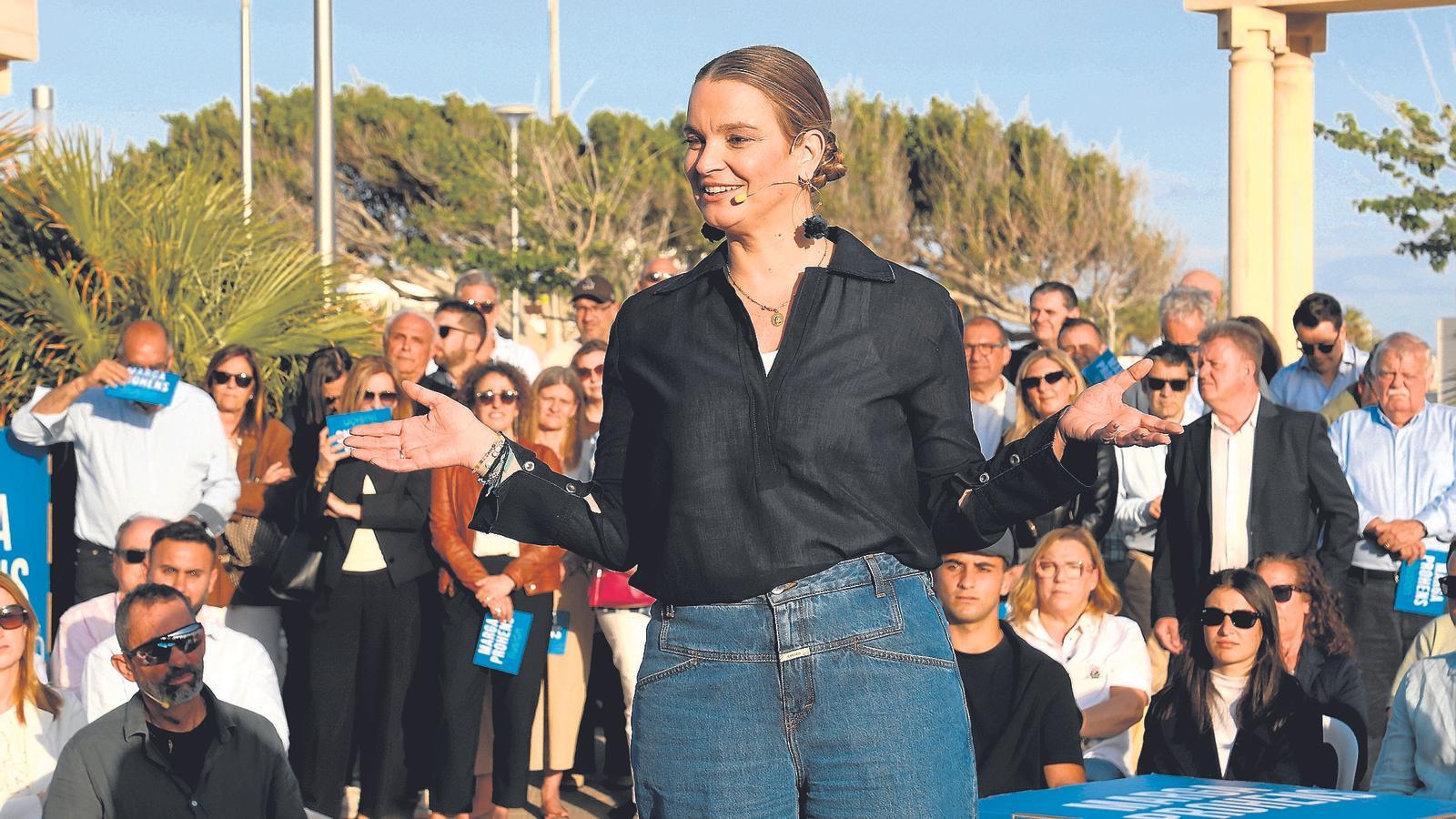

PalmaThe PP and Vox pact in the Balearic Islands had just been signed when Marga Prohens gave an order that, over time, has become an internal benchmark of her term. It was October 17, 2023, and Parliament was debating a non-binding proposal (PNL) from Vox with no legal effect on Catalan in schools. Despite its symbolic nature, the text specified a point of the agreement between the two parties that the PP had deliberately left open: how the free choice of language should be applied. When Prohens opted to abstain, the initiative failed and the first crisis with her partners opened up. The clash resulted, shortly after, in Vox's rejection of the incoming government's first spending ceiling. "We lost a fundamental law over a PNL," recalls a Popular Party source ironically. Now that the PP is once again revving up its electoral machinery, party sources recall this episode as one that best explains the first three years of the legislature.
"That decision was difficult," recalls this source: "We expected Vox to ask us to apply the free choice of language later, to corner us near the elections." Instead, they did it "all of a sudden," which forced the PP to show its "red lines" on linguistic matters (keeping the Statute, the Law of Linguistic Normalization, and the Decree of Minimums intact) and evidenced a climate of tension from the beginning of the term. In these three years, the PP and Vox have approved measures to reduce the presence of Catalan in the public sphere: from healthcare to the requirement for teachers in hard-to-fill positions, including the Language Choice Plan in schools. But, beyond specific decisions, the "tone of the legislature has been marked," recalls this source: the PP has strived to show that, on language, it does not think the same as Vox, recalls this source.

“The balance of the Prohens Government in terms of language is difficult to assess, because it is highly conditioned by the expectations that existed”, points out political analyst Toni Forners. “The fear that, with the influence of Vox, Prohens would repeat the linguistic policy of the José Ramón Bauzá Government has meant that, in practice, many decisions have been perceived as less harsh than expected”, he explains. In the PP's internal narrative, Prohens has managed to “deactivate the opposition's criticism” in this regard.
Tourism: the great unfulfilled promise
The Government promised anti-saturation measures that it has not applied
Prohens has managed to maintain internal unityPersonalism, a tool for control
Prohens has managed to maintain internal unity
The constant clashes and realignments with Vox have strained the Government, which on several occasions has had to resort to the left to overcome paralysis. However, they have also consolidated a centralized leadership model. “I wanted to avoid the rooster coop of the Bauzá era, with tug-of-war between councilors,” express sources close to him.
The popular [party member] reshaped the Executive without internal challenge, maintaining party cohesion during delicate moments. One of the most significant occurred in 2024, when the extension of the budgets was announced, amidst a crisis with Vox. The Executive assumed a scenario of legislative deadlock, while the debate within the party grew regarding a possible early election. In this context, the most prominent mayors of the PP stepped forward to convey to the leadership their willingness to go to the polls. "They were ready to mobilize," recalls a source close to the leadership. This reinforced Prohens' negotiating position at a time of maximum tension with her partners.
The 2025 budgets, key
Getting the accounts approved has avoided early elections
The ghost of the early election disappeared when the PP managed to approve the 2025 budgets, although it did so half a year late and at the cost of significant concessions to Vox. “If we hadn’t managed it, we would have had to go to elections,” points out a party source. The new accounts gave the PP some breathing room. Political scientist Guillermo Bezzina points out that this oxygen bubble has allowed Prohens “to distance herself from the other PP barons, who have had to go to elections”. “She did well, because the dependence on Vox would have been greater,” he says.
However, the points of this latest agreement with Vox continue to set the Government's priorities, from the repeal of the democratic memory law to anti-immigration policies. “Immigration has become the main point of confrontation with Pedro Sánchez's government, even more so than the distribution of economic funds,” explains Bezzina. Despite the president's efforts to distance herself from Vox, she has ended up converging with its agenda on immigration.
