"I've burned myself. Come": twenty years helping families leaving Mallorca due to serious illness
The Association for Help to the Patient's Companion (ADAA) wins the ARA Balears Colonya Caixa Pollença Award for Social Action for accompanying families from the Islands displaced to Barcelona to receive medical treatment
-
CAT -
CAST -
GER
PalmaWhen a family from the Islands receives the news that they must leave their home and go to Barcelona for one of them to receive treatment, the illness stops being the only problem. Another race begins: finding a place to sleep, managing work, and learning to live with uncertainty. For more than 20 years, the Association for Aid to the Patient's Companion (ADAA) has been alleviating this burden with a silent and constant task that this year has earned it the ARA Balears Colonya Caixa Pollença Award for Social Action.

ADAA was born in Llucmajor in 2003, driven by a group of families who had closely experienced the uprooting and worry that accompanies a serious illness far from home. Among them was that of Jaume Cànoves, who underwent a liver transplant in 1997 and was the soul of the project. "The patient was cared for, but the companion was left helpless," summarizes Mercedes Alvarado, manager of the entity.
Alvarado recalls the early days, when there were families who slept in hospital corridors, who were unaware of their rights, or who simply did not have the strength to face the bureaucracy, a toll to be able to access meager aid. "If middle-class families like those first ones had had such a hard time with a relative admitted off the island, we had to do something," she explains.
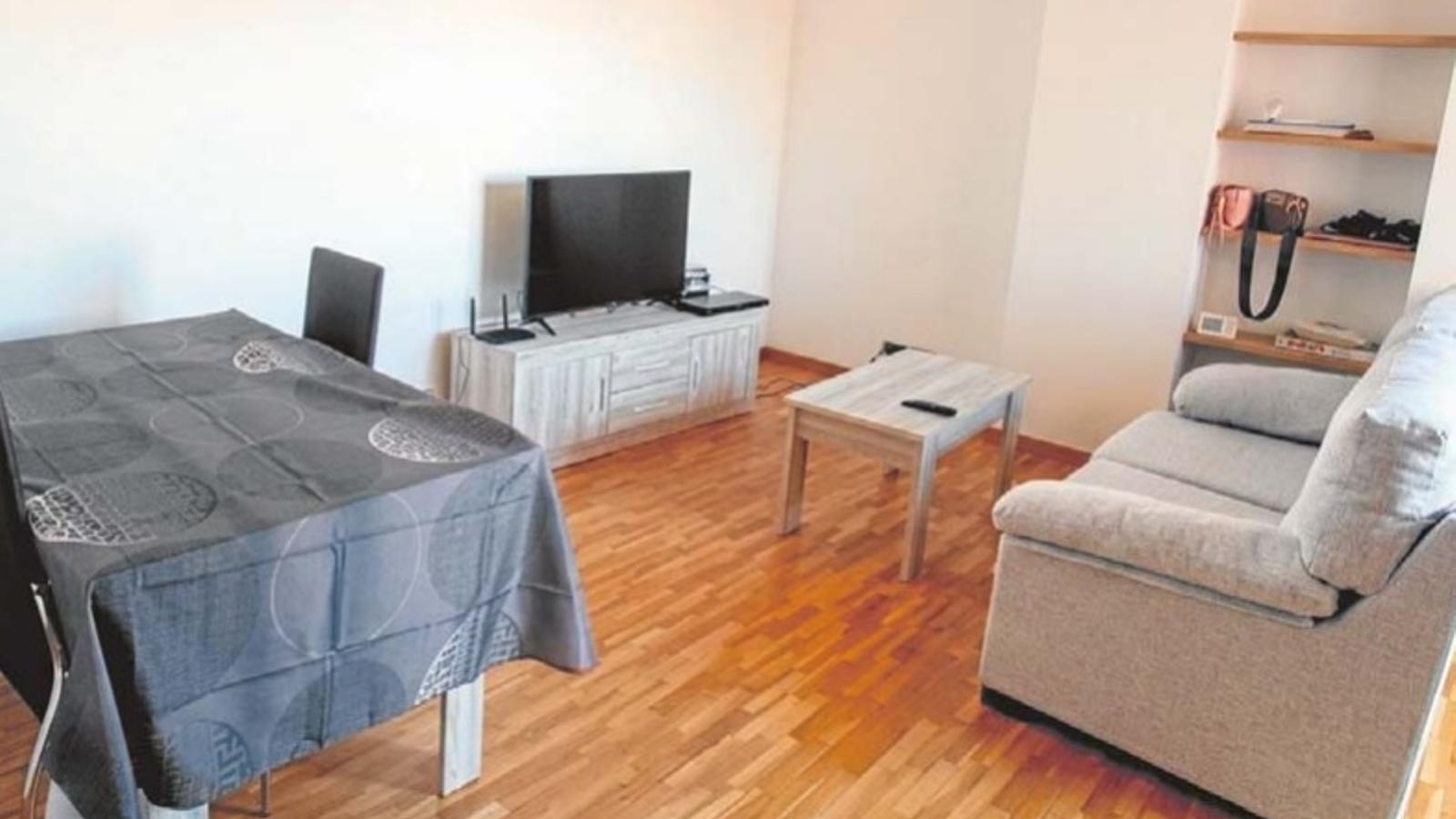
First they informed and helped process the allowances offered by IB-Salut. Then came the first charity event, a golf tournament in 2005 to raise funds. With those resources, they were able to rent the first apartment in Barcelona in 2007. Today, ADAA has fifteen homes: five directly managed – four rented at market price and one owned thanks to the legacy of Professor Josep Antoni Gomila Grimalt – and ten more shared with other entities. The model of their social action is simple: free accommodation near hospitals, psychological support, administrative help, and even meal tickets. "If the companion doesn't take care of themselves, we have two problems," summarizes Alvarado.
"I've burned myself. Come"
But ADAA cannot be explained solely by counting homes, members, or nights of accommodation. Its work is understood through individual cases. In fact, a beneficiary nominated the entity as a candidate for the ARA Balears award. Jaume recalls it was midday on a holiday when he received a call from his father. "I've burned myself. Come," he told him. When he arrived, there were already firefighters, police, and ambulances. His father had second- and third-degree burns over a large part of his body. At Son Espases they told him he had to be urgently transferred to Vall d'Hebron. His condition was very serious. "At that moment, the world collapses. What do you do? Where do you go? How do you manage it?", he recalls.
His mother and he took the first plane to Barcelona. They booked a hotel for three days, not knowing how long they would have to stay. “I thought: ‘What do I do about work’? How do we organize ourselves? It was all doubts,” he confesses. In the Burn ICU, they first spoke to him about a Majorcan association that helps families like his. ADAA responded. “They asked us how we were and what we needed. Nothing in return. Always with an open hand,” recounts Jaume. They were received by the social worker that the association has in Barcelona. Two days later they were already sleeping in one of the entity's apartments. They shared space with other people in the same situation as them. "Without knowing it, they became a small family," he explains.
During the month and a half that the father was admitted, they had free accommodation and meals. Also the support of the association's psychologist. “We have been cared for and accompanied. We have felt a humanity that is difficult to explain in words. ADAA not only gave us a place to live; it gave us peace of mind, support, and strength at the most difficult moment of our lives”.
Testimonials like Jaume's are the association's heritage, extrapolable to figures: 7,328 families attended since they started, more than 10,000 nights of free accommodation last year alone. More than 700 members pay an annual fee of 40 euros. Some have received the association's support; many others, not. “You don't have to become a member for us to help you,” clarifies Mercedes Alvarado. ADAA's budget is completed with charity events, donations, and an agreement with the Government that provides them with up to 265,000 euros. “The difference with other organizations is that we don't charge anything to those who need help.” In 2025, they received 280 applications; they were able to attend to 239; 526 people in total. The decision is made by an evaluation board based on criteria such as urgency and socioeconomic level.
Two years for a lung transplant
Mercedes Alvarado has been working there for years. She started as a volunteer – Jaume Cànoves was her father-in-law – and even today she gets emotional when talking about some cases. About a fifty-year-old woman who waited two years for a lung transplant and didn't make it in time. About the children she has seen grow up. About the families who return just to say thank you. "Those things touch you. There are people who tell us: 'You saved our lives.' And that's huge."
"We would be happy to disappear," she acknowledges, because it would mean that no family from the Islands would ever have to leave their home behind again due to illness.
