Red Eléctrica begins geotechnical studies to rule out impacts on Maristany
The company has reported that the project has entered the environmental assessment phase before the State, while the neighbors criticize these actions
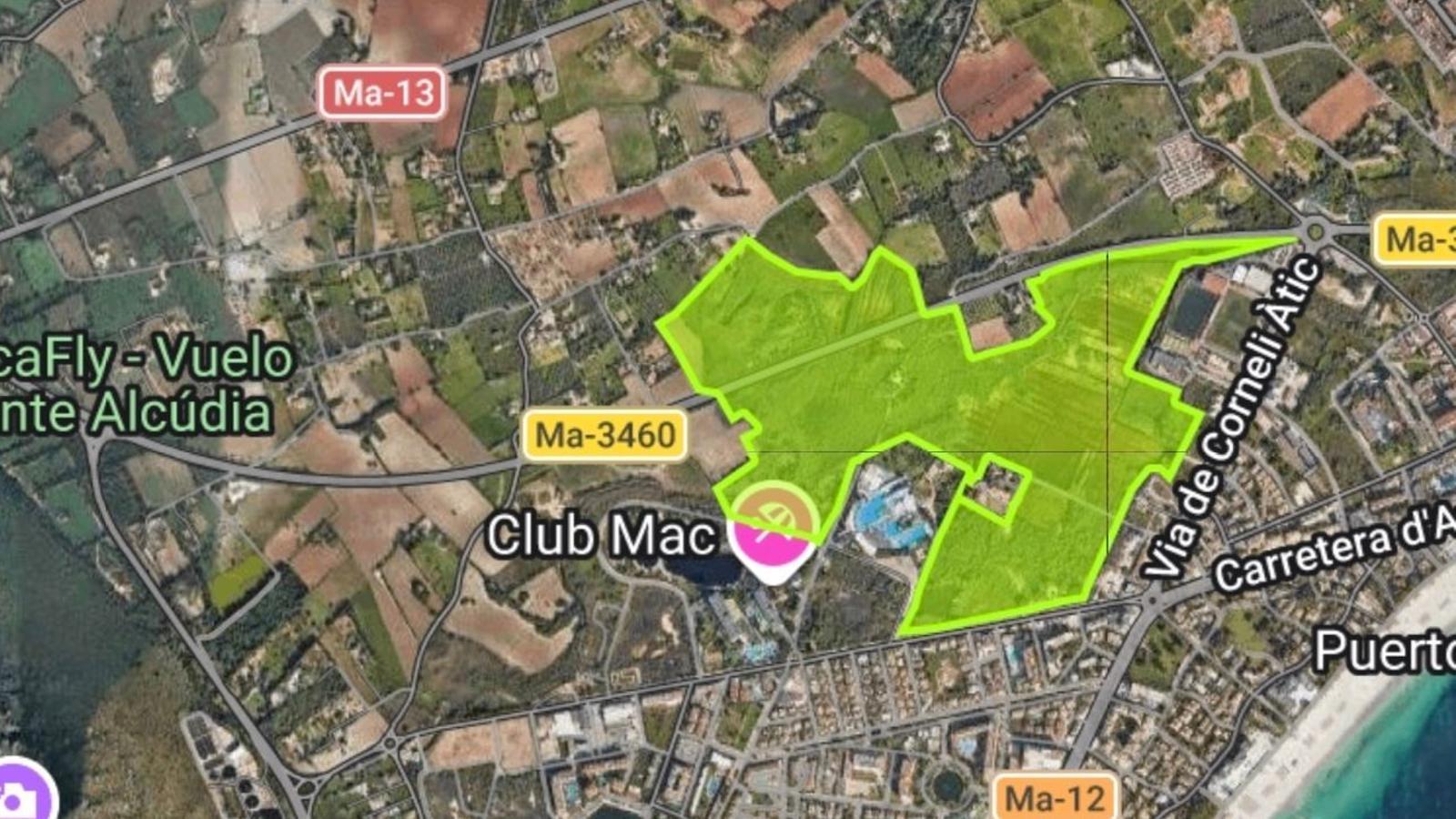
PalmaRed Eléctrica has initiated the technical work necessary to advance the environmental processing of the second electrical link between Mallorca and Menorca. Specifically, it involves surveys in Maristany, one of Alcúdia's main wetland areas.
According to the company, the electrical link project between the Peninsula and the Balearic Islands has already entered the environmental assessment phase before the Ministry for Ecological Transition and the Demographic Challenge. The actions initiated by the company in Maristany aim to confirm that the route will not affect this natural space, as agreed in the committee that consensually defined the cable's path.
The current work consists of three geotechnical soundings and several terrestrial electrical tomography surveys to characterize the subsoil and determine the viability of a directed horizontal drilling under Maristany. This technical solution, about 580 meters long and with a maximum depth of 18 meters, is what will allow the cable to cross the area without affecting its surface.
The tomography surveys have already been completed and the soundings will begin next week. According to Red Eléctrica, these are temporary actions with minimal impact on the environment, and once completed, the land will be restored to its original state. These studies are in addition to the archaeological surveys carried out in April at the indication of the Consell de Mallorca, which concluded that the project does not affect any cataloged heritage asset.
The company emphasizes that both the archaeological and geotechnical work are part of the actions prior to the final approval of the project and will serve to validate or, if necessary, adjust the final route before the environmental processing concludes.
Geological soundings
The announcement of the start of these geological surveys related to the project for the second electricity cable between the Peninsula and the Balearic Islands (Penbal-2) has once again ignited controversy in Alcúdia. The Association for a New Cable Agreement of Alcúdia (ANACA) has denounced that the preliminary works planned on several properties in the municipality are being promoted without the project yet having the definitive authorization from the Council of Ministers, a fact they consider particularly serious taking into account that the infrastructure is still pending environmental and administrative procedures.

According to ANACA, the company 4 Punto Sertec, subcontracted by Red Eléctrica de España (REE), has contacted several owners of affected land to inform them that the borings will begin next Monday. These are drillings up to 25 meters deep at various points along the planned terrestrial route for the cable.
The controversy lies not only in the advancement of the work, but also in how the relationship with the owners has been managed. According to ANACA, when one of the affected parties requested the documentation that should legally cover access to their property, the company's response was that it would be delivered at the time of starting the tasks. For the association, this procedure violates the rights of the owners and inverts the logical order of administrative guarantees. "First, permission is requested and the action is legally justified; then, if applicable, the work is carried out," summarize sources from the entity, who interpret this way of proceeding as pressure on citizens who question the project.
The complaint comes at a particularly delicate moment for the future of Penbal-2. The project continues in the environmental assessment phase before the Ministry for Ecological Transition and has not yet received definitive green light. Furthermore, part of the planned route in Mallorca affects the surroundings of the Special Protection Area for Birds (ZEPA) of Maristany, integrated into the Natura 2000 network, an area over which the Balearic Government has imposed conditions that have not yet been resolved.
The situation raises doubts as to the extent to which it is appropriate to advance field actions when essential aspects of the administrative procedure have not yet been resolved. Precisely this is one of the arguments that have fueled local opposition to the project in recent months.
On June 4, the plenary session of the Alcúdia City Council unanimously approved a motion in which it requested the Spanish government not to make any definitive decision on the route until the marine bionomic cartography is updated, a tool considered key to adequately assessing the environmental impact of the infrastructure.
Faced with this scenario, ANACA has recommended that affected owners not authorize access to the properties without first having received all relevant legal documentation and has announced that it is studying possible administrative and judicial actions.
Beyond the specific dispute over the soundings, the case once again highlights the tensions surrounding large energy projects in the Balearic Islands, especially when actions on the ground advance at a pace that, according to opponents, is not always accompanied by the required authorizations and guarantees.
