"If they had evacuated us in time, my father would be here now"
Carme Serra still has not been able to remove, eight months later, the rock that crushed her father while he slept in the family home at Cala Sant Esteve and, together with other neighbors, demands solutions from the administration that will allow them to return safely to their homes

-
CAT -
CAST -
GER
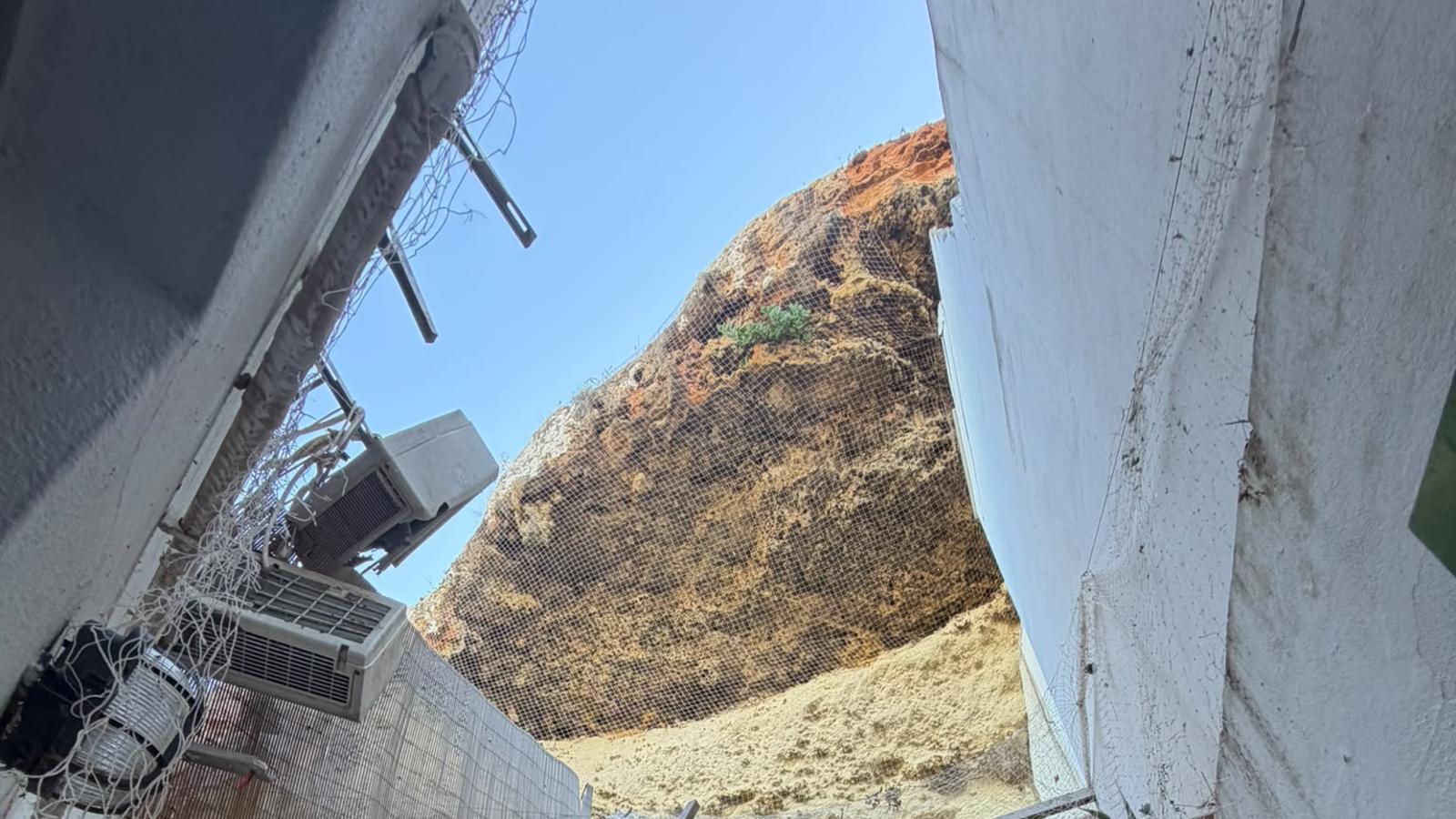
PalmaThis Sunday it will be eight months since a large rock broke off from the cliff of Cala Sant Esteve (Es Castell), collapsed the villa underneath it, and fell right on top of a 65-year-old man while he was sleeping. His wife, Olga, was left seriously injured by his side and has still not been able to overcome her grief. In fact, neither she nor her daughter Carme have been able to return to the house. “Everything remains the same: the rock, the debris, the damage… but we continue paying as if we were still living there,” complains the couple's daughter. This Friday, together with 13 other neighbors and in the presence of her mother, she appeared before cameras and journalists to draw the attention of political leaders and demand that the procedures and aid be accelerated so that everyone can return home.
“I, who was almost buried by the rock that killed my husband, want them to remove it so I can finish grieving, as I am psychologically devastated,” says Olga. The rock—her daughter comments—“we still cannot remove because they tell us there is a danger that, if we move it, something else might fall, and so we cannot escape the uncertainty.”
Although the Es Castell City Council initially offered them an apartment in Es Mercadal, almost 30 kilometers away, Carme's family—including two minors—decided to rent a home on their own closer to the town and take their mother to live with them. “We are still without aid, out of our home, and without knowing when we will return. We feel somewhat abandoned and unprotected. We can understand that what happened is an unforeseen event, but eight months have passed and we do not see it as normal that everything is the same as the first day. It is being very hard,” she explains.

Their case is particularly serious. When they receive the administration's permission to act, the Serra family will have to take charge of the reconstruction of the house but, also, of the proportional part of the consolidation of the cliff, if it is proven that it is land they own. However, the topographic study that the family commissioned from a specialist has certified that the landslide comes from the estate above, a plot of land owned by the company Cala Sant Esteve SL, of the well-known Grífols family, which since 2017 has been buying 53,000 square meters of protected land around the cove. Its administrator, Raimon Grífols, says that his goal is to “preserve this space and ensure the landscape integrity of the area”, but among the neighbors, many do not see it clearly.
The neighbors also suspect the origin of the landslide. It occurred just five days after the sewage works began in the cove and, as they say, “everything was shaking. You couldn't even keep your mobile on the table because it would fall to the floor”. In fact, they recall, the works stopped after the tragedy and, when they resumed, they stopped the vibrations inside the houses. “If before starting the works they had seen that the rock was in bad condition, they would have evicted us, but my father would be here now”, laments Carme.
To support their family and others also affected by the risk of landslides, a part of the 105 residents in Cala Sant Esteve has decided to set up a platform. And one of the first steps, advised by their lawyer -former deputy Cristina Gómez- has been to send a burofax to the individuals and those responsible for the different administrations to prevent the fulfillment of their legal obligations from expiring after twelve months.
“If we are sending the burofaxes, it is because we have the right to legally protect ourselves from the statute of limitations and because we want to convey to everyone our concern and the helplessness we have felt for eight months,” explains Eugènia Ortiz, one of the platform's spokespersons. Most of its members are owners of the houses in the area marked in red, where the administration does not allow them to return to live until the relevant consolidation works are carried out. Only one villa, right next to the one that suffered the landslide, remains inhabited. This Friday, children could even be seen and heard playing and swimming in the pool. A pensioner has also returned to live in one of the affected houses, “because he has nowhere to go and no option to pay rent elsewhere.” The houses in the orange zone, further away, can be inhabited, but they are not allowed to go out into the patio or garden to prevent danger.
Mayor Lluís Camps denies having abandoned the neighbors and that the works had anything to do with the landslide since, if that were the case, they would not have been resumed. He states that the area was safe when the work began and that studies have ruled out a cause-and-effect relationship with the accident.
The City Council has tried to mediate and keep the neighbors informed at all times, not only from Cala Sant Esteve but also from Fonduco, where landslides were also recorded, although without personal tragedies.
Good proof of the “municipal good intention” is that the affected parties have been summoned on October 6th to a meeting so that the technicians hired by the City Council can explain the preliminary project with the actions that must be carried out to consolidate the cliff and so that all the neighbors can return home. Their idea is for each one to pay proportionally according to their impact and for the same company to be hired in order to reduce costs and speed up the entire process.
Likewise, the City Council will reserve an item in next year's municipal budget to finance the necessary executions and thus not have it fall individually on each owner. It will also seek funding from other administrations to involve them. In this way, the initial amount remaining from the 250,000 euros contributed by the Island Council at the beginning will be increased. Most of it has already been invested in paying for the necessary geotechnical studies and in covering the temporary accommodation of some of the affected families.
