Local groups denounce that Mallorca Live uses them as a local quota to access public subsidies
A compilation driven by Neura questions the conditions of local artists, the role of public subsidies, and the impact of mega-festivals on the cultural fabric of Mallorca
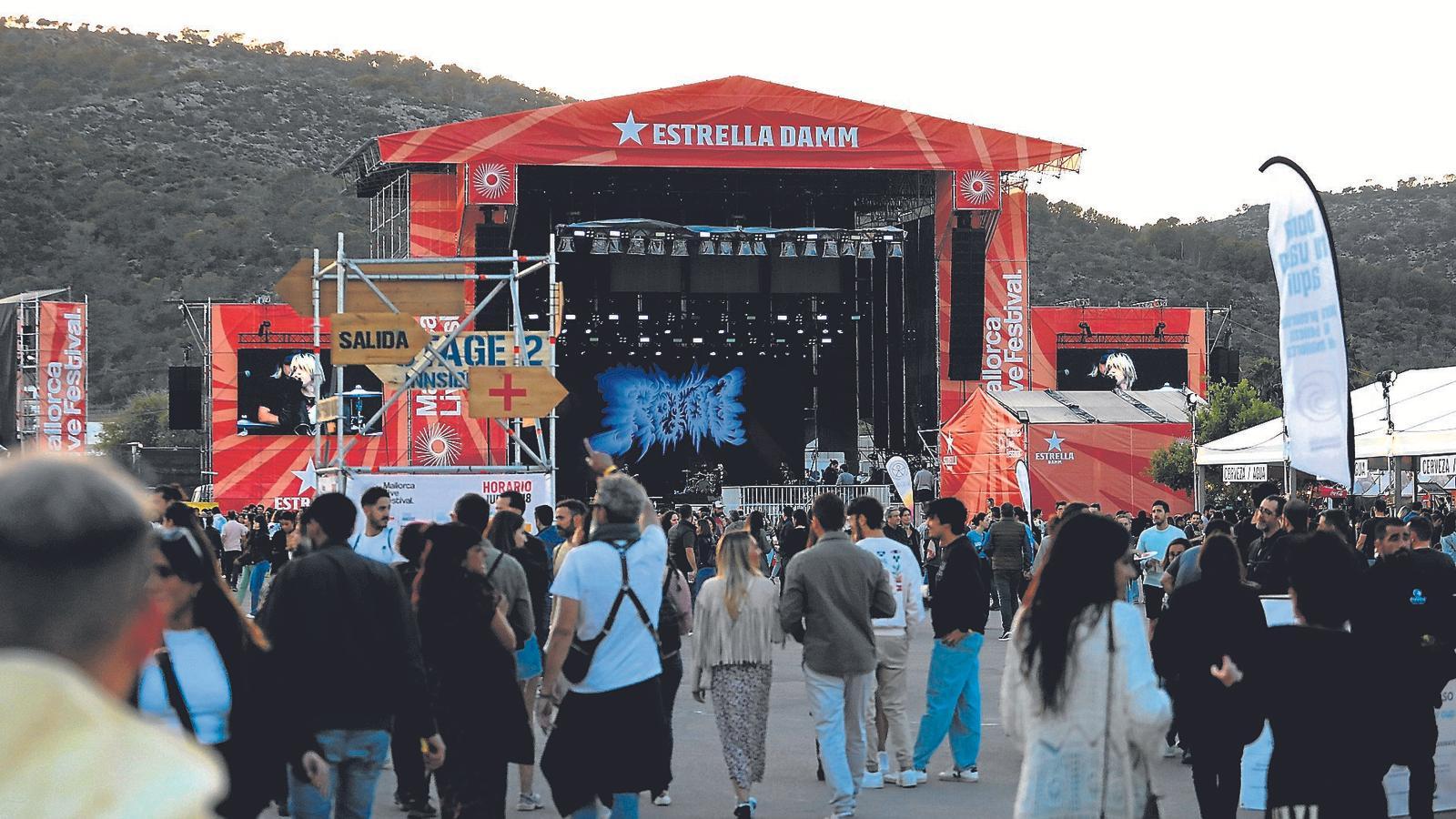

PalmaThe Neura collective has made public a collection of testimonies from musicians from the Islands who question the model of the Mallorca Live Festival and denounce that the festival uses local artists as a "quota" to justify public subsidies while reserving secondary spaces in the programming for them, with low fees and few opportunities for real projection.
The initiative is part of a critical campaign regarding the role of large festivals within Mallorca's tourism model. According to the participating artists, the Mallorca Live acts not only as a musical event but also as a territorial promotion tool aimed at tourist consumption.
The testimonies, disseminated by Neura, collect experiences from musicians who have performed at the festival in recent years and point to issues such as precarious working conditions, the lack of prominence of island artists within the programming, and the use of their presence as an argument to access public funding.
"On the one hand, subsidies, and on the other, tax breaks. Double extraction of resources and zero investment in public infrastructure," points out one of the texts collected by the collective.
"We were the first and they hadn't even opened the doors yet"
The Manacor band Reïna performed at Mallorca Live in June 2022, when its members were just over twenty years old and had just released their first album. According to them, they accepted an offer for less than 500 euros gross with the expectation that playing at a large-format festival would help them consolidate their career. The reality was different, they point out.

"We did sound checks on a tiny stage, far from the big stages we had imagined," they recount. The concert was scheduled for 6:15 p.m., before a significant portion of the audience arrived. "There was absolutely no one. A record of zero people," they remember. The musicians explain that they didn't realize until the moment they went on stage that their concert practically coincided with the venue's doors opening.
A recurring criticism among witnesses is that emerging bands accept precarious economic conditions driven by the illusion of being part of a large-scale event.
For his part, musician Daniel Gómez, linked to projects like Saïm, Nita, and Jorra i Gomorra, maintains that large festivals fuel the idea that participating represents a step forward in an artistic career, but he believes the real impact is limited. "Participating in these festivals doesn't serve to take another step up in your career," he states. According to his experience after performing there on several occasions, the recognition that local bands obtain is mainly symbolic and temporary. Gómez argues that large festivals "serve to absorb resources from the territory" and that local artists end up acting as a legitimizing element of a model focused on attracting audiences and investment.
Other testimonies point directly to the working conditions. The Amulet group denounces that, during the 2022 edition, the festival imposed a contract on them with no room for negotiation and that they ended up performing for free in two programs associated with Mallorca Live. "They didn't even ask us about our fee," they assure. They also consider that their lack of experience in the sector was taken advantage of to obtain unpaid performances. "Wanting to play doesn't justify exploitation," they conclude.
Secondary stages and testimonial presence
Another of the criticisms shared by musicians is the placement of local artists within the programming. Singer-songwriter Jorra Santiago recalls his participation in the festival in 2019 with Jorra i Gomorra. He explains that the treatment received was correct and that they even enjoyed the experience, but considers the problem to be structural.
"Local bands, as they are wrongly called, are given the worst slots and placed at bad times," he states. According to the musician, the presence of island artists is necessary for the festival to be able to demonstrate support for the local scene when applying for public grants. Musician Caspary expresses a similar perception, assuring that bands from the Islands tend to be concentrated in the early time slots on the different stages.
"The few local bands are programmed to open different stages, and by 7 PM, music in Catalan has already finished," he laments. According to him, this situation conveys the feeling that island artists are part of a testimonial presence rather than a central artistic commitment.
However, the collective that has promoted the initiative maintains that macro-events contribute to the island's touristification and that culture is subordinated to tourism promotion interests. They believe that public resources should be primarily allocated to concert venues, self-managed spaces, stable programming, and cultural projects rooted in the territory.
