The 'boom' of pets in the Balearic Islands: more animals, more veterinarians and fewer children
The census of pets grows 16% in two years up to 404,489 specimens, a fact that experts attribute to the cost of having children, precariousness and the need to create bonds
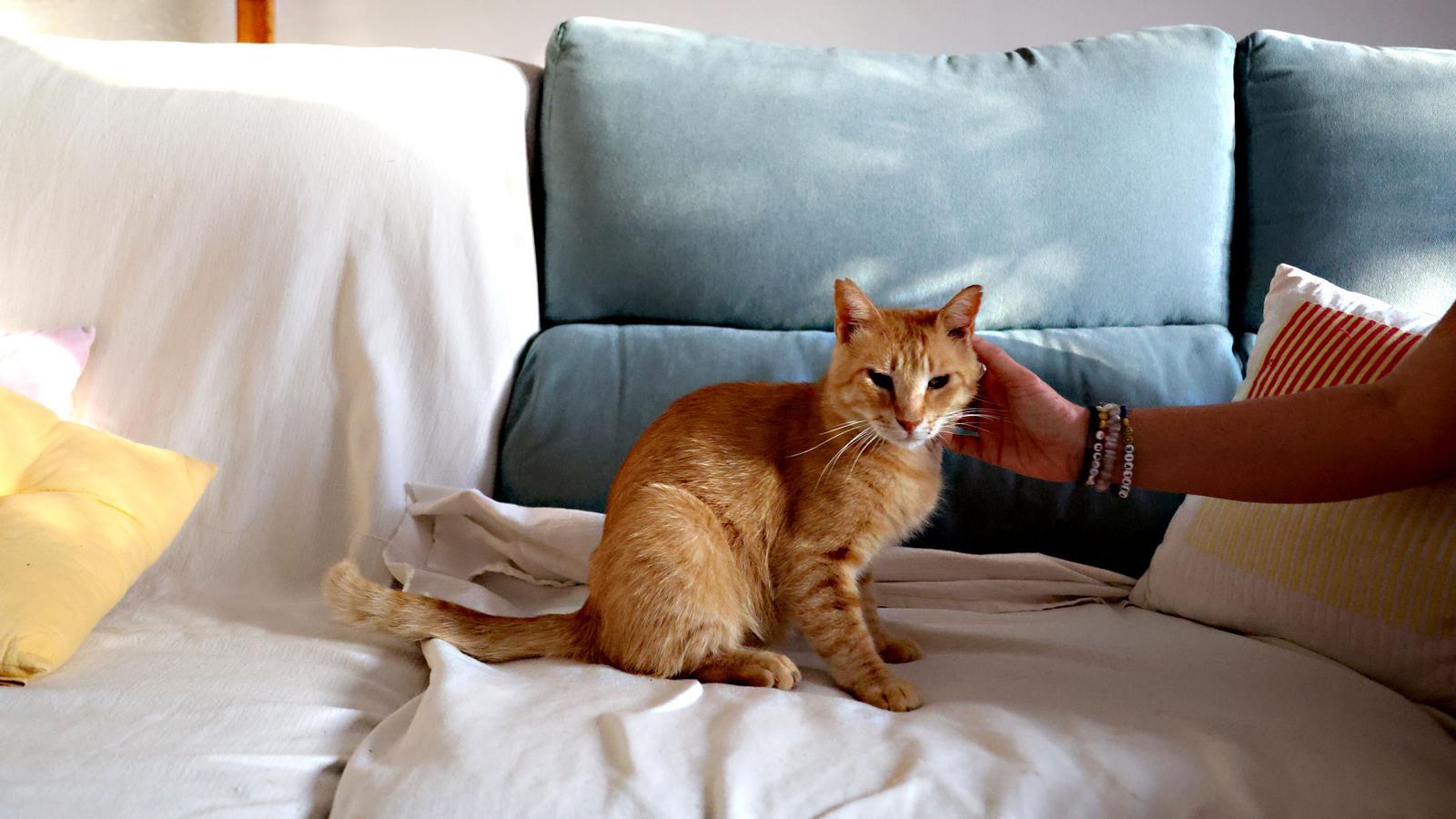

-
CAT -
CAST -
DE
PalmaDogs and cats stopped being simple pets a long time ago. Today they are part of many families, occupy a central place in homes and, in numerous cases, become the main recipients of their owners' care and affection. The Balearic Islands are a good example of this. The Archipelago already registers 404,489 pets, including dogs, cats and other species, a figure that far exceeds the population under 18 years of age, which stands slightly above 200,000 people. That is to say, there are practically two pets for every minor.

The trend continues to accelerate. In just two years, the number of registered animals has increased by 16%, with 55,785 new identifications, according to data from the Official College of Veterinarians of the Balearic Islands. In parallel, the business surrounding this phenomenon has also grown: veterinary centers have gone from 186 to 196 in the same period, an increase of 5.4%.
Of the more than 404,000 registered animals, 312,832 are dogs, which represent 77.3% of the census, while 89,808 are cats (22.2%). The rest corresponds to ferrets and other species. Only between July 2024 and July 2026 were nearly 56,000 new animals identified, an evolution that, according to the president of the College of Veterinarians of the Balearic Islands, Ana Sancha, responds both to the real increase in pets and the obligation, in force since 2023, to also identify cats with a microchip.
Animals against precariousness
However, behind these figures there is a much deeper social transformation. The sociologist and professor at the UIB, David Abril, believes that the increase in pets is closely related to the material difficulties faced by the new generations. "It is very expensive to have a child. If the age of emancipation is already set at thirty-something, imagine considering having one. It is much cheaper to have an animal than a child," he summarizes.
Abril also speaks from personal experience. He has three children and four dogs, but he argues that more and more people reach the pet before motherhood or fatherhood, because it is the option they can afford economically. Keeping a dog, he explains, costs about ten euros a week in feed and a few more euros in treats, an expense incomparably lower than the expense involved in raising a child. Housing, job insecurity, and the delay in emancipation create a scenario in which many young people indefinitely postpone the decision to have offspring. "Young people, out of a question of materiality, have animals, because it is what they can afford," he states.
But the explanations go beyond the economy. The sociologist maintains that today's society is increasingly individualistic and that personal ties have also weakened. In this context, pets cover an emotional need. "We are social beings and we are programmed to care. When this need is not directed towards children or other relationships, an animal fills that void," he explains.
They are family
This change has also translated into a different way of understanding the relationship with pets. If a few decades ago many dogs lived in the yard or fulfilled surveillance functions, today they occupy a central place in many homes. There are more and more owners who consider them one more member of the family and take care of them with a dedication that often reminds of that which was traditionally associated with children: they take out health insurance for them, adapt their vacations to their needs, celebrate their birthdays, or do not hesitate to assume significant veterinary expenses. This humanization of animals also explains the increase in the spending that many families allocate to them. Abril believes that this phenomenon responds, in part, to the emotional gaps left by the current social model. "Pets are a kind of placebo," she summarizes.
The transformation is also reflected in the veterinary sector. Currently, the Balearic Islands have 196 veterinary centers, 10 more than two years ago. However, the growth is much lower than that of the number of pets, a fact that is already causing tensions in the sector. According to Ana Sancha, the main problem is not the lack of clients, but the lack of professionals. Although Spain is one of the European countries with the most Veterinary faculties (the UIB does not have one), it is difficult to find specialists, especially in clinic and field veterinary medicine. In the Balearic Islands, this difficulty is even greater due to the insularity, the cost of living, and salaries that, she assures, continue to be low within a healthcare profession. Many professionals trained in the Islands end up leaving to find better job opportunities.
Currently, 584 veterinarians work for others, while 204 work as self-employed. More than half of the professionals, 58%, are dedicated to companion animals, a figure far above that of those who work with production animals or exotic species.
More insurance
The increase in the number of pets is also driving new services. Health insurance for animals, practically non-existent a few years ago, is increasingly attracting interest among owners. Sancha explains that many people are already looking for policies that cover both civil liability and veterinary expenses, a trend that is expected to intensify with regulatory changes. Despite the perception that taking an animal to the vet is expensive, the president of the College maintains that prices have not increased significantly and that they remain well below those paid in countries like the United Kingdom.
For Abril, however, the increase in domestic animals has a less friendly side. The rise in pets coexists with abandonments. "Just as you used to get tired of your girlfriend or boyfriend, now you get tired of the dog. You buy it because it's cool, to take a few photos, and then you abandon it," she laments.
The data show that the Balearic Islands have more and more pets, but they also depict a society that is changing. The rising cost of housing, the difficulty of moving out, low birth rates, and the need to create bonds explain in large part why dogs and cats occupy a space today that goes far beyond that of a simple companion animal. For many people, they have become another member of the family and a reflection of a new way of understanding care, coexistence, and affection.
