The Council will have to compensate the developer of the Guix urbanization
The sentence prohibits payment for the main project, but orders compensation for five adjacent plots with building rights
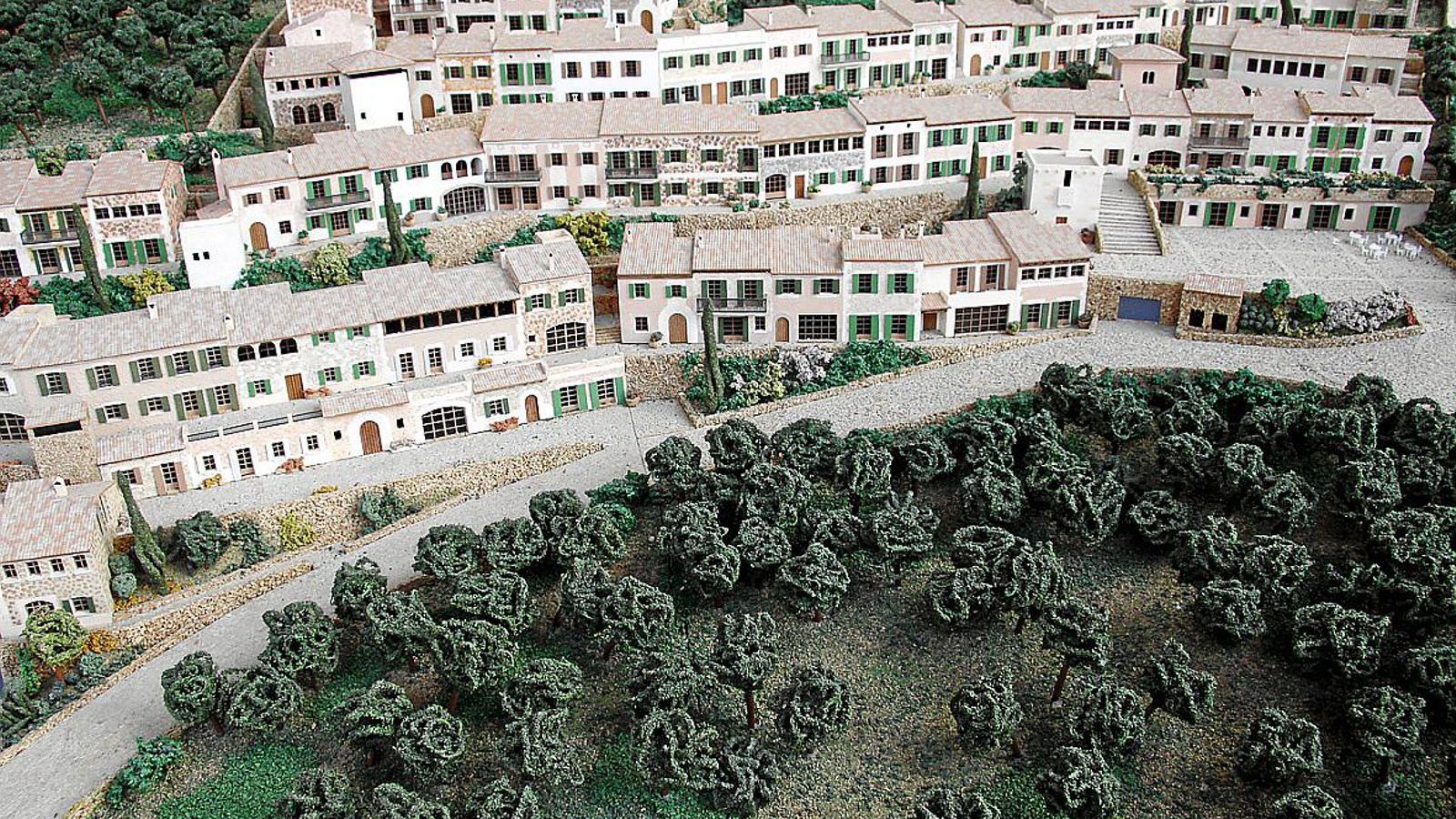

PalmaContrary to what the courts had stated in the first instance, the Consell de Mallorca will have to compensate the developer who had a license to build a housing development in El Guix (Escorca). The Superior Court of Justice of the Balearic Islands (TSJIB) has partially upheld the appeal of the developer Urnova regarding the long urban planning dispute of El Guix, which triggered the controversy over the impact of a set of chalets adjacent to the Lluc monastery. The court recognizes the company's right to be compensated for five plots of land affected by the urban planning declassification that was carried out to prevent construction in such an emblematic location. The court, however, rejects the bulk of the compensation requested, corresponding to the main housing construction project that was never executed.
The ruling, issued on March 9, partially revokes the decision of the court of first instance. On the one hand, it corrects the initial decision and considers that Urnova did have the standing to claim patrimonial responsibility from the Consell de Mallorca. On the other hand, however, it greatly limits the scope of this claim.
The key point of the case is the distinction made by the court between two parts of the project. Regarding the so-called Aldea del Guix, where the developer intended to build more than a hundred homes and for which it sought significant compensation, the TSJIB rejects any payment. The magistrates conclude that the municipal license granted in 2006 was irregular because the land did not meet the required urban planning conditions — such as the availability of basic services — and the subsequent annulment cannot be attributed to the modification of the territorial planning.
In this regard, the court holds that, if there were any responsibility, it would lie, in any case, with the Escorca City Council, which granted the license, and not with the Consell de Mallorca, which years later declassified the land and protected it.

A long conflict
The Guix conflict has been ongoing for decades and the courts had already resolved its main core. The Consell de Mallorca declassified the area in 2010 and the TSJIB and the Supreme Court subsequently endorsed this decision, arguing that the land lacked the necessary urban services and that some of the existing ones were insufficient or irregular. The judges also highlighted the environmental value of the area, located in the Serra de Tramuntana, and the need to preserve it.
However, the new ruling introduces a relevant nuance: the fact that the declassification was legal does not automatically exclude the right to compensation, especially in the case of the five adjacent plots. The chamber recalls that this type of decision can generate patrimonial liability when it affects specific consolidated rights, especially in cases where individuals have acquired land or have acted based on the current planning.
Within this framework, the court partially rules in favor of Urnova regarding the plots located in the so-called extensive area A that the company had purchased. It considers that the declassification of the land may have frustrated a legitimate urban development and recognizes the right to compensation. However, the ruling does not set any specific amount. The compensation will have to be determined in a later phase, based on the economic valuation of the land. With this resolution, the TSJIB partially closes the debate: it dismisses the million-euro claim linked to the overall urban project, but opens the door to limited compensation for a part of the affected land.
