The doctors' strike maintains a high follow-up according to the union, but Health "has no data"
The strike has had an incidence of approximately 80% among the staff of hospital outpatient clinics and around 50% in Primary Care

-
CAT -
CAST -
DE
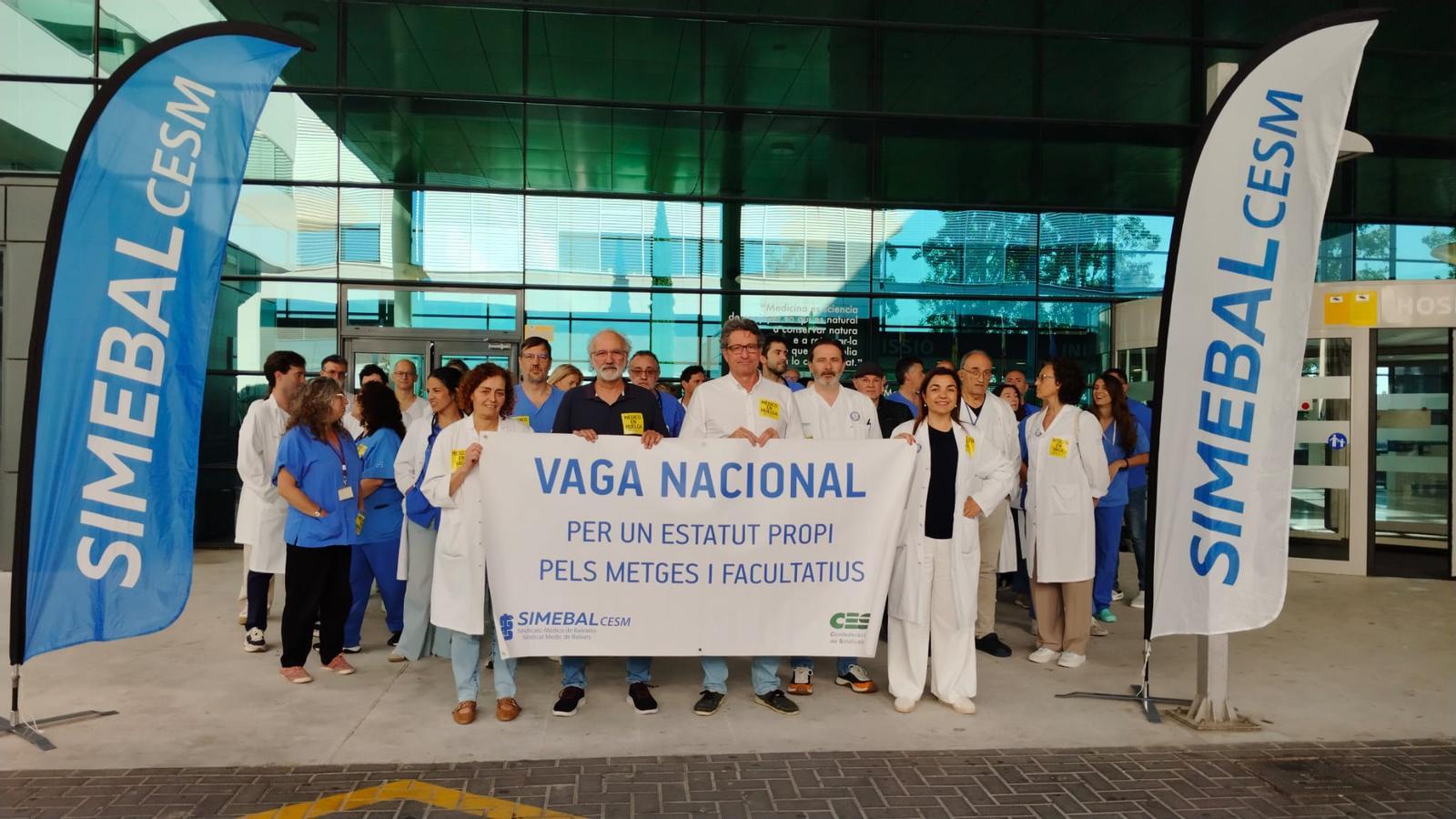
PalmaIn the first three days of the fourth week of the doctors' strike against the reform of the "Estatut Marc" (Framework Statute) promoted by the Ministry of Health, the follow-up of the stoppage has once again been significant. According to data provided by the Simebal union, the mobilization maintains high participation among health professionals, while IB-Salut assures that it does not have official figures on the follow-up of the protest but does have data on the impact of the mobilization. In the first two days of the stoppage (Monday and Tuesday), 109 operations have been suspended; 2,856 consultations and diagnostic tests and 2,940 primary care consultations.

According to union estimates, the strike has had an incidence of approximately 80% among hospital outpatient staff and around 50% in Primary Care. Support for the call has been particularly visible in some strategic hospital services, where participation has risen to 90%, as is the case with Anesthesiology, Radiology, and a significant part of scheduled surgical activity.
Regarding Medical Intern Residents (MIR), strike follow-up remains stable at around 65%, a figure that, according to the organizers, evidences the existing discontent also among professionals in training. The unions insist that the protest reflects the accumulated fatigue of the medical collective due to working conditions they consider insufficient and demand a deeper reform from the Ministry that guarantees real improvements in working hours, on-call duties, and remuneration.
The protest is part of the discontent of a portion of the medical collective regarding the reform of the "Estatut Marc", the regulations governing the working conditions of healthcare staff in the National Health System. The unions denounce that the Ministry of Health's proposal does not respond to the main demands of the professionals and that, in some points, it does not represent an improvement compared to the current situation.
Rejection of 24-hour on-call duties
One of the main criticisms focuses on the duration and organization of the working day, especially regarding the 24-hour on-call system, which doctors consider excessive and poorly compensated. The collective demands an effective reduction in the care burden and more adequate recognition of actual working time. They also lament the lack of salary increases commensurate with the level of responsibility and training required by the profession, as well as rest conditions after on-call shifts that they consider insufficient in many cases.
Another axis of the conflict is the claim for a specific statute for the medical profession, differentiated from the general regime applied to the rest of the health personnel. Professionals argue that their clinical responsibility, the degree of demand, and specific training justify differentiated regulation. Unions also warn that current conditions favor work overload and hinder the retention of professionals in the public system, in a context marked by increased mobility towards the private sector and other countries. The strike will culminate on Thursday with gatherings and demonstrations in various parts of the State, while negotiations with the Ministry of Health on the future of the reform continue.
