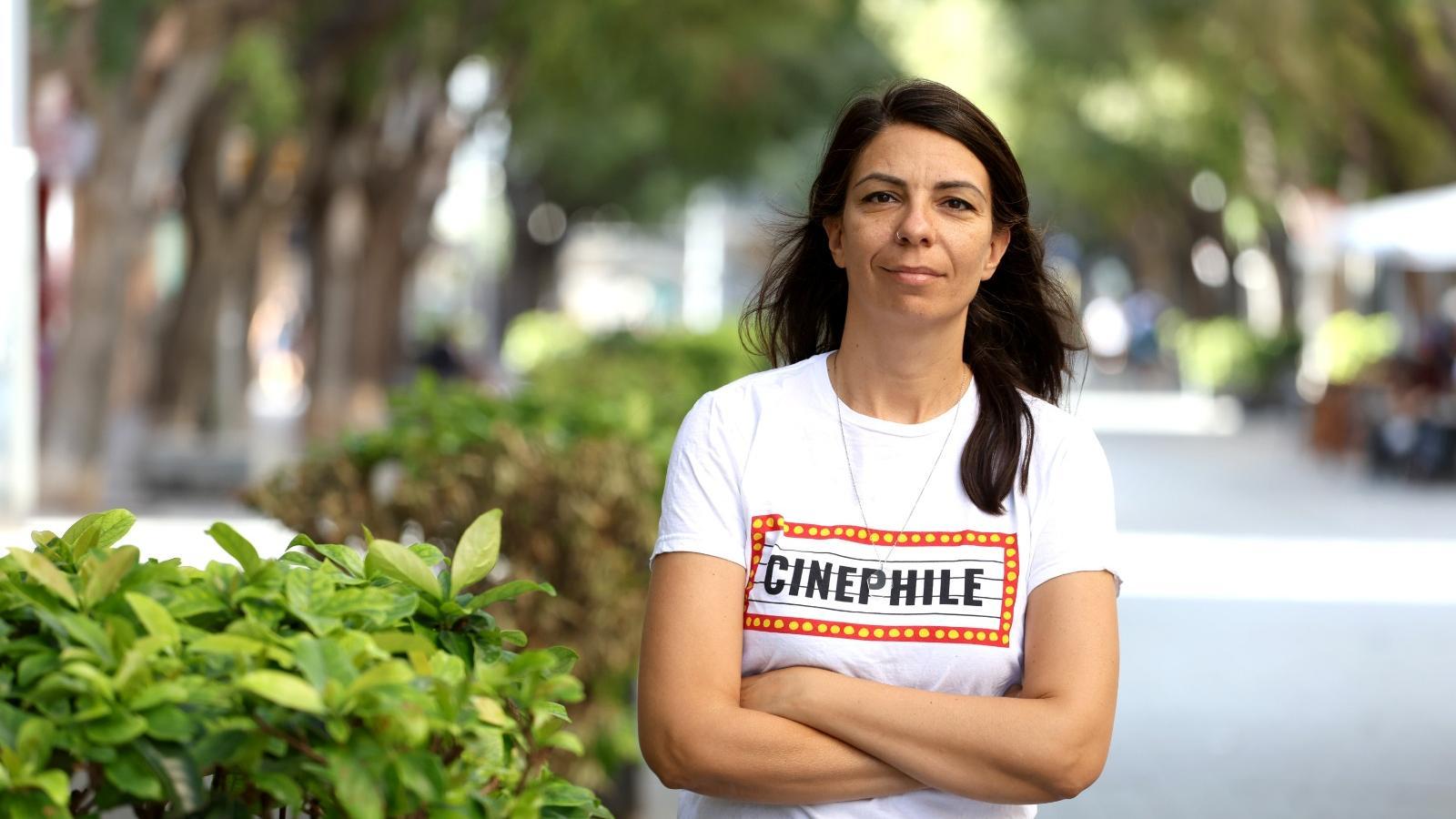
Marga Melià: "We have been pioneers in the disaster, but we can also be so in the response"
Filmmaker
-
CAT -
CAST -
GER
PalmaSupporting Paradise is a literary and cinematographic work that already accumulates several lives. The publisher Lunwerg published the first edition of this book of conversations with twenty Majorcan artists in 2011 and now Lleonard Muntaner has reissued it. The documentary, premiered this 2026 at the Atlàntida Mallorca Film Fest, recovers interviews filmed in 2012 to portray the loss of identity, the destruction of the territory, and the contradictions of tourist Mallorca. The film confronts those warnings with the gaze of a new generation of creators. We talk to the director about the creative process, about cinema as a space for dialogue, and about the defeat, indignation, and hope that cross the social context in which it has been premiered.
Supporting Paradise was born from the conversations you held between 2009 and 2010 with about twenty Majorcan artists. What were you looking for back then and at what moment did you discover that, beyond art and creation, all those voices were also speaking about an island that was beginning to disappear?
— I conducted the first interviews for the book Suportant el paradís which has now been reissued by Lleonard Muntaner and was published in 2011. They were in-depth interviews with twenty artists, which is more than those who appear in the film. In the book, I had more space, and I approached it as a way to bring together in space and time a series of creators who interested me and who had in common that they were born or lived in Mallorca. We talked about their life and work, their trajectory and training... they were timeless interviews, which did not focus on a specific moment. During the conversations, I realized that they all had a lot to say about Mallorca and about how the island they had known was disappearing. How they had been witnessing the loss of identity, the destruction of the territory, and the reflections on how we had sold ourselves until reaching where we are now. Everyone, practically, shared this thread, and it seemed very interesting to me to focus exclusively on this part.
The book was published in 2011, but the interviews filmed in 2012 remained stored for more than a decade. Why could the documentary not see the light then and what made you decide that now was the time to recover it?
— This, really, was my first audiovisual project. The interviews that appear in the documentary are a second batch that we recorded in 2012 and were already focused exclusively on this topic. At that time it was more difficult to make cinema, there wasn't much funding, and the issue of the tourism model wasn't a topic that was on the table like it is now. It is true that they made statements that seem made today, except for some topics like housing, which was harder to foresee. But in the collective sphere, we hadn't reached the point where we are today, where society is more receptive. In 2024, with the first major demonstrations against the tourism model, I saw that the time had come to recover the project. With Agustí Torres and Xisco Martorell, we had long thought that we had very valuable material that had to be shown, and in 2024 I said to myself: "Either I make the documentary now or I will never get to make it".
This was your first project as a director and, paradoxically, it is the last one you have released. How has the film changed during these fifteen years and how has the filmmaker who finally finished it changed?
— Just as I say that society was not so predisposed to connect so strongly with this message, neither was I. Now I have more awareness than when I recorded the interviews in 2012. Back then I knew we were on the wrong path and heading towards disaster, but I didn't see as much urgency as they did. On a professional level, it has also been good for me because at that time I had no audiovisual experience and I hadn't yet directed or edited anything. In this time, I have also been able to learn editing, which has allowed me to edit the documentary and that makes me very happy. Therefore, I believe the project arrived at the right moment both collectively and personally regarding my professional career. The people who approached the project at the beginning found it very complex on a narrative level, but over the years it has come to me very naturally to structure it by placing myself as the narrator to explain this story. By placing myself in it, it is better understood that it is intended to be a more emotional account and not so journalistic.
When you retrieved the recordings, were you surprised to see to what extent some of those reflections had been premonitory? Was there any voice or statement that acquired a completely new meaning in 2026?
— While it is true that I had not forgotten them and I was clear about the general message, when I looked at them all carefully, it was indeed shocking that they seemed to have been recorded now. Except for the issue of housing, where at that time we were emerging from the 2008 crisis and the context was a bit different, all the reflections are the same as the ones we make today.
The documentary incorporates current footage and voices from a new generation of creators. What do artists like Miquel Barceló, Carme Riera, Agustí Villaronga, and Toni Catany share with younger creators such as Júlia Colom, Laura Gost, Clara Ingold, and Xanguito? And how has their relationship with Mallorca changed radically?
— The choice was difficult and I would have liked the young generation to appear more, but I could not make the film longer than an hour and a half. The first criterion for selecting the new creators was that they had produced some interesting work or that it had reached outside of Mallorca and that their trajectory made them suitable for this project. I also wanted them to be representative of different arts. The interviews of one and the other are separated by fourteen years and it is true that some terms like gentrification were not used. I believe the young people highlight these two aspects more: gentrification and the housing crisis. Moving out, renting or buying a house in 2012 were not such evident problems as they are now. It is also true that the artists I interviewed in 2012, due to age and historical moment, have not experienced the precariousness that the current generation must live through.
— However, one positive thing that I have observed is that the former had to leave Mallorca for a long time, whether to study or to complete part of their career paths, while those of today perhaps have not needed to be away for as long. Of those interviewed in 2012, many have returned, but many were living abroad. On the other hand, those of today practically all live in Mallorca, although perhaps some spend time away. This has pleased me, even though it is still difficult to work from the island. It must be one of the few positive things about globalization, with its limitations, such as access to housing.
The project has also acquired an archival value because some of the people interviewed are no longer here. How did working with the voices of Agustí Villaronga, Toni Catany, or Cristòfol Serra condition the editing, knowing that they would no longer be able to review or continue that conversation?
— It is difficult to work with archival material, but I am very happy because both the Toni Catany Foundation and the families of Agustí Villaronga and Cristòfol Serra have approached me after seeing the documentary to thank me because they were unaware of this content. As a professional, I love conducting interviews and I am always very obsessive about being very faithful to the message that the interviewee wants to convey. This involves the editing process, because it is already a filter that you apply and there can be misunderstandings. In this sense it was more delicate because we are talking about people who are no longer here and you feel very responsible. With the rest, we have been talking before the premiere, many have come to see it and they have all told me that they identified with what was finally projected.
The film can leave an unsettling feeling: the warnings were already there in 2011, but they were not heeded. Supporting Paradise is the story of a collective defeat and of a harm that is already done and has no remedy?
— It is difficult to give an answer, because it is true that I ask myself many questions in the documentary, just as they are the questions that led me to write the book in 2011. The film starts from a question my son asked me in 2024 about why there were so many protests against tourism. My character is more about questioning things, about asking myself questions, rather than giving answers.
— It is true that the film has a tone of lament, of nostalgia, especially at the beginning. The music is also composed with this collective lament, but the other day I was reflecting on something that is very pertinent to the film, which is that by nature I have a dramatic and negative way of understanding the world, but over the years, maturing has led me to grow and realize that trying to see the world from another point of view and focusing on hope and what can actually be done is better on all levels.
Hope is a moral imperative.
— Yes, because otherwise we are heading for disaster. In the end, I think I end up positioning myself more to try to see what can still be done, because otherwise we end up in a complaint or a resignation that leads us nowhere and to no change. I think it is fine for us to complain and lament: you can become aware and miss what you lost, but then to talk about it, question things openly and finally act both on an individual and collective scale.
The fact that so many people today are indignant, are mobilizing, and are recognizing the problem is a glimmer of hope that did not exist fifteen years ago?
— Fifteen years ago Mallorca was not as bad as it is today, but it could have happened that we were just as bad and that people would not have protested. In this sense, the social mobilization that I see I think is very positive. I have an 8-year-old son and I am worried, for example, about the whole issue of technology. With him, I try to be aware of it and do small things like going to the library, to the theater, making small changes in our day-to-day life. And regarding gentrification, going to buy books at the bookstore in my neighborhood and not on Amazon. Small things, but they are changes. The dinners in the open air are ultimately that: people who have become aware of a loss and take actions accordingly. It is very cool and gives hope.
Is there still room to change Mallorca's course? What transformations would be essential and what collective sacrifices would we have to be willing to make?
— I don't know, but I think that if we don't think so, in some way we would resign ourselves and do nothing, which would mean that Mallorca could end up even worse. The only way to face the future with a little hope is to think that it is possible. Not just for the future of Mallorca, but for the whole world. Now we have to take the documentary on tour around the Peninsula and we can already see how gentrification exists not only in Madrid and Barcelona, but has reached towns in, for example, Cantabria. It is a problem that does not start today nor ends tomorrow, unfortunately it will last a long time unless everything explodes before then.
In a society increasingly marked by individualism, do you believe the capacity for collective organization has been recovered?
— The community is better now than it was fifteen years ago, even though at that time we were coming from the 15-M movement. Following the documentary, I have learned that there are other places around that say they have felt inspired by what has been done and what we are doing in Mallorca in the face of tourist saturation. Unfortunately, we have been pioneers in the disaster, but if we can also be pioneers with the initiatives to respond to the disaster, it is hopeful.
Is the difficulty in accessing some parts of the island also part of your personal experience?
— Yes. In the summer, my son hasn't gone to Caló del Moro, and that appears in the film. Now you go to the places you know and where you know that, more or less, you will be able to be there and park there. You can no longer simply say: "Let's show him how beautiful this place is," because often it is no longer possible.
How has the public responded to the film?
— It has been amazing. The first weekend it was only being screened at Rívoli and CineCiutat and it was the fifth most-watched film in Spain: a documentary in Catalan that was only in two theaters! We have held presentations and discussions at Rívoli and afterwards we started going through the towns: Manacor, Capdepera, Llucmajor, Pollença… Whenever we go there we hold a presentation and a discussion, and it is very enriching. We have also organized conversations about some of the aspects that the film deals with, with representatives from GOB, Ivan Murray, the platform Menys Turisme, Més Vida, Margalida Ramis, Xavier Pastor, Terraferida and people linked to culture such as Nadal Suau and Susy Gómez. We have talked about housing, culture, environmentalism and the history of social movements. All the people interviewed come from the cultural world and, therefore, the film offers the perspective of a specific sector. Academics do not appear in it. That is why we thought it was interesting to complement the screenings with experts from other fields. The film points out many topics that it cannot develop due to lack of time.
Therefore, does the subsequent dialogue form part of the film's meaning?
— Yes. The film aims to foster dialogue as a tool for individual and collective improvement. I love being able to converse and listen to the audience. For me, cinema is also that: trying to capture thoughts and feelings that I observe or that are transmitted to me, putting them into dialogue with the viewers, and listening to what they have to contribute. What has impacted me the most is seeing that many people leave moved. There are those who have cried, thanked me, or hugged me. It is very rewarding because, with all the limitations, you feel that you have managed to create a work that touches people. Cinema is that: provoking an emotional reaction in the viewer. It is exciting to share it with the audience, even if we are talking about a sad reality. There are people who come back to see it, recommend it, and talk about it.
What do you say to someone who expects Suportantel paradís to be an X-ray or a journalistic report on the tourist and territorial collapse of Mallorca?
— This is the film that I have chosen to make, but there are many other possible ones and some have already been made, such as Overbooking, from another perspective, and which I always recommend. I like to understand them as a set of works that try to capture the moment we have had to live through and raise questions. If Suportant el paradís has been able to act as a catalyst in a delicate moment, in which people are very sensitive and active, with their feelings on edge, it already has meaning.
What path will the documentary take now?
— The screenings and discussions will continue, which can be consulted at www.nuufilms.es. In October we are going to Oviedo, Santander, Madrid, Valencia and Barcelona; it is possible that in Barcelona it will be released in theaters and that it will also reach other parts of Catalonia. The film has had the support of IB3 and the Council of Mallorca. In 2027 it will be broadcast on IB3 and will reach platforms, although I do not yet know which ones. We are also looking into whether it can be broadcast on TV3.
