“I went out from donating bone marrow and I went to do the shopping”
Guillermo, 25 years old, explains the process: similar to a blood donation, with immediate recovery and a second extraction one year later
-
CAT -
CAST -
DE
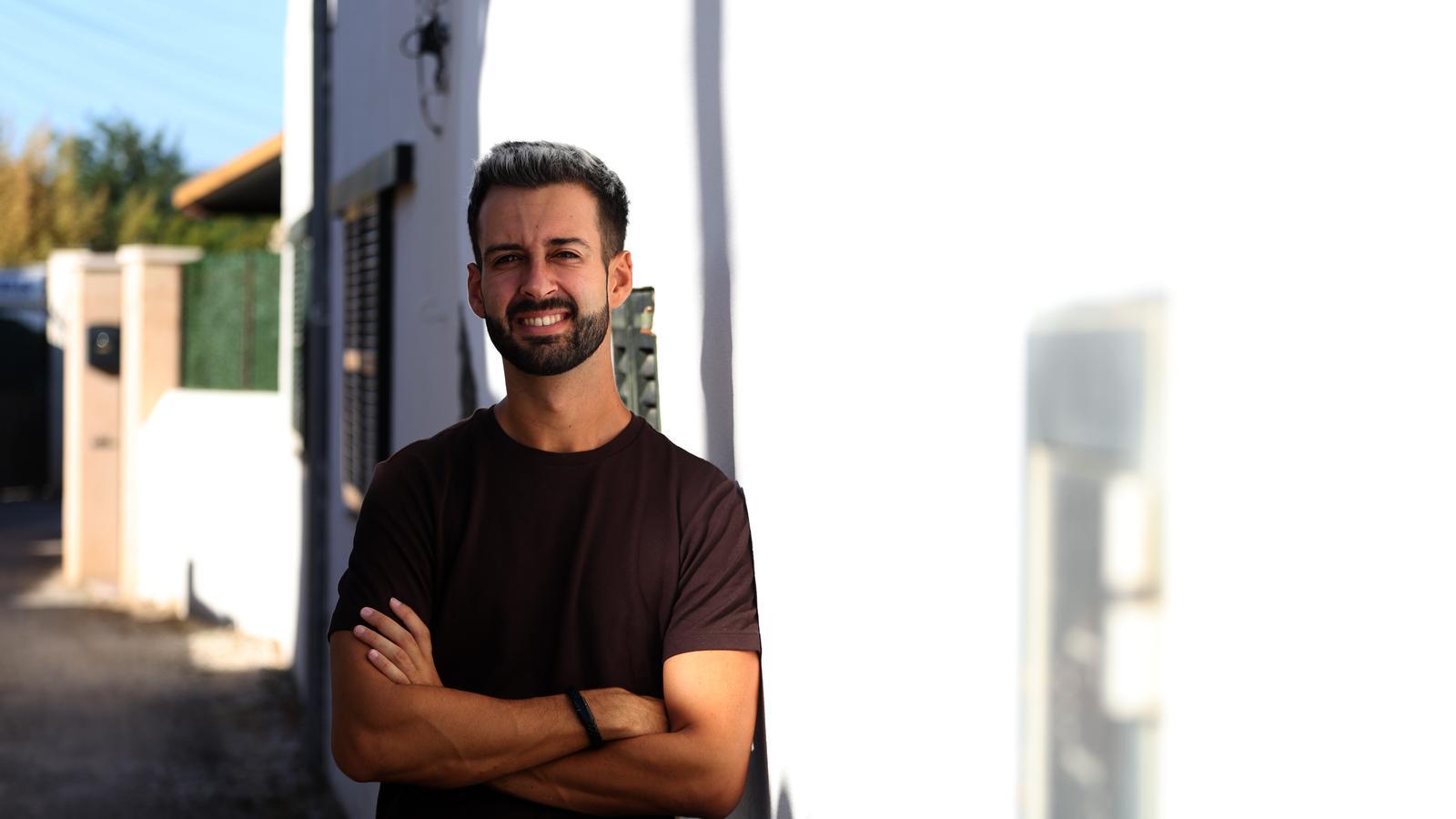
PalmaGuillermo donated bone marrow without going through the operating room or having to take days of rest. Contrary to what many people believe, this is what happens in most cases. "I walked out and went to do my shopping at Mercadona," he explains. He had spent three hours lying down with a needle in each arm while a machine extracted stem cells from his blood and returned the rest to him. "It was as simple as donating blood, just a little longer." He is 25 years old, is from Malaga, lives in Palma, and signed up in 2023 to the Bone Marrow Donor Registry (Redmo), which is managed by the Josep Carreras Foundation.
From his father, he learned the importance and the habit of donating blood, so donating bone marrow seemed like a natural progression to him. They explained the two possible procedures to him: direct bone marrow extraction—very rare—and apheresis, the blood extraction process he underwent. "I thought donating marrow was what I had always seen on television: the needle in the back. It is a misconception and the fear that many people have. I must say that I would have done it anyway, with one procedure or the other."
When he signed up, they only drew two tubes of blood from him to analyze the histocompatibility antigens, the genetic characteristics that determine if a donor can be compatible with a patient. That is how he became part of the Redmo worldwide database and, a year later, he received a phone call. "They tell you that it's rare to get a call. I have friends and family who, after many years, have never received a call. That's why I was surprised," he recalls. People between 18 and 40 years old can sign up, and they will remain available until age 60. "The probability that a registered person will be contacted is 1 in 250 each year. The probability of actually making a donation drops to one in 1,000," confirms the director of Redmo, Sergi Querol.
Guillermo only knows three things about the person to whom he donated bone marrow: she is a woman, she lives in Switzerland, and at that time she weighed ten kilos less than him. He does not know her age, the illness she suffers from, or her name. The donation is anonymous. This year they called him again. The same patient needed a second donation, this time of lymphocytes, and he accepted it again.
His story coincides with a change in trend in the Balearic Islands. New additions to the Redmo went from 44 in 2023 to 545 in 2025, twelve times more in just two years. According to the technical director of the Blood and Tissue Bank of the Balearic Islands, Teresa Jiménez, the increase is due to the recruitment work done by Xavi Ruiz, a worker who got involved in the dissemination on the four islands and reinforced coordination with the regional transplant managers. “When you have someone with time and the desire to act as a link, you get results,” justifies Jiménez. Currently, there are 7,609 people registered on the Islands and the goal is to achieve between 600 and 800 new registrations.
Lack of knowledge is one of the main obstacles to continuing to add donors: the belief that a lumbar puncture is necessary. The confusion begins with the name itself, but bone marrow is not the spinal cord. It is found inside the bones – with a structure similar to a honeycomb – and is, according to Jiménez, “the factory for blood cells.” There are the stem cells that produce red blood cells, platelets, and leukocytes.
Bone marrow transplantation is used to treat leukemias, lymphomas, bone marrow aplasias, and some genetic diseases. In a patient with leukemia, chemotherapy eliminates the malignant cells, but it also destroys the normal production of the marrow. The donor's cells must reach the new organism, take root, and begin to manufacture blood. “They take command. It is as if they were saying: ‘Now we are your marrow and we will produce your blood components’”, summarizes the hematologist.
The immune system attacks everything it recognizes as foreign. Therefore, the donor and recipient cells must be as similar as possible. “Compatibility is like finding a needle in a haystack”, points out Querol. Not even the more than 44 million donors registered around the world guarantee a match for everyone.
The Redmo is made up mostly of people of European descent. “Patients of African, Latin American, or mixed origin have more difficulty finding a similar genetic profile”, explains Querol. That is why it is not enough to increase the number of registered people: we also need people from diverse backgrounds. And the younger, the better. “Their marrow has a more suitable microenvironment to facilitate the graft in the recipient”, explains Jiménez.
Only about 25% of patients find a compatible person within their family. The remaining 75% must resort to the international registry. In the Balearic Islands, 92 hematopoietic progenitor transplants were performed during 2025. Those from unrelated donors went from 9 to 27.

When a possible compatibility appears, the donor is contacted again. Their health status is checked and new samples are obtained to confirm that they are the right person. Being registered does not imply having given up the right to decide: consent is requested again before each step and each procedure.
In 90% of cases, the donation is done via apheresis. For three or four days, a growth factor is administered so that the stem cells leave the bone marrow and circulate through the blood. Jiménez explains it like this: “It is as if we were telling the bone marrow: ‘Knock, knock, we need the stem cells to come out into the bloodstream because we want to collect them’”. Afterwards, the blood passes through a machine that selects these cells and returns the rest to the donor. Direct bone marrow extraction from the pelvic bones, under anesthesia, is reserved for a minority of cases.
Previous treatment
The first time, Guillermo had to administer a growth factor to himself for three days with a subcutaneous injection so that the stem cells would pass from the bone marrow into his blood. He had a bit of a headache for two days, but he was able to continue living a normal life. At the hospital, they pricked both of his arms. The worst part, he says, was staying still for three hours without having brought anything to entertain himself: “I’m a restless soul. I spent the whole time looking at everything.”
When he finished, he went home, ate, and went out with friends to look at clothes. They recommended that he not exercise or carry much weight for two or three days, but he was not particularly tired. For the second donation, he went prepared with headphones.
This time he had not had to administer any growth factor because the patient only needed lymphocytes. Guillermo does not know if she had relapsed or why she needed them. “I want to think that, if this time she only needed that, she is evolving positively, but I haven't been informed,” he points out. After the donation, the Blood Bank does a follow-up call to check how he is doing.
The donated cells regenerate completely. “The bone marrow is a factory that works at full capacity,” says Jiménez. The principle that guides the whole process is that “the donor enters the Blood Bank healthy and must leave it healthy because the most important thing is always their safety and freedom.”
Guillermo had wanted to study Medicine. The donation has allowed him to recover, in another way, that initial desire. “It makes me happy to know that, if I cannot help people by being a doctor, I can do it in another way.” He encourages family and friends to donate blood and bone marrow. When they tell him they don’t like needles, he replies that they have surely received harder knocks.
The bond with the recipient of his donation exists only in his imagination. “When you help one person, you help everyone. She must have family and friends. Knowing that I am not only helping her, but also her entire environment, makes me happy.”
For him, the proportion remains difficult to ignore: a few hours of his own time versus the years that another person can gain. “The process is much easier and less risky than many people think. In the end, you just have to be there for about three hours and you can extend someone’s life by many years or, even, save it.”
