Mix Manresa: "I all alone would not have arrived even to the airport"
-
CAT -
CAST -
DE
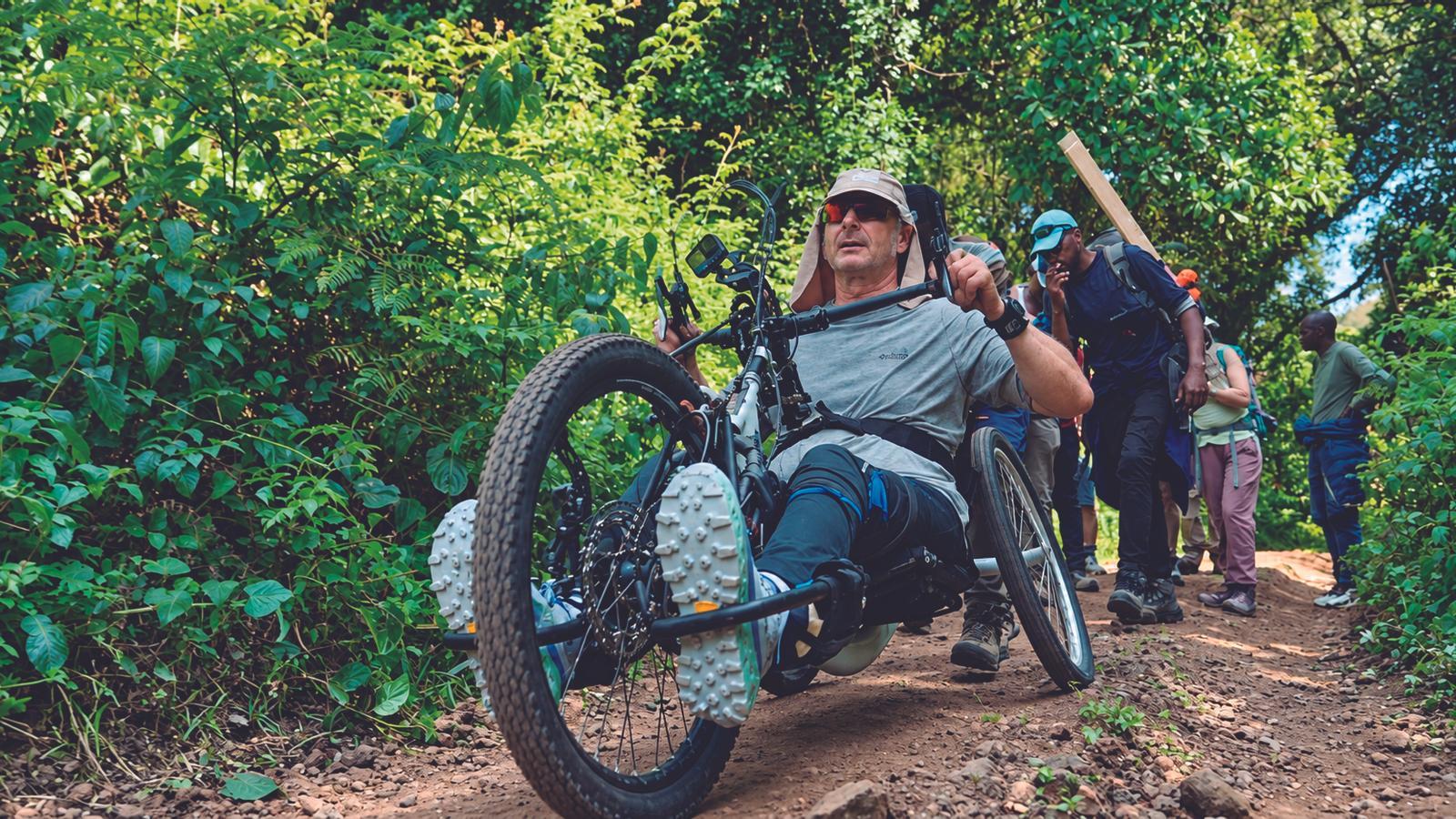
PalmaClimbing Kilimanjaro without walking is much more than a sporting challenge for Mix Manresa. In 2023, after a trip to Kenya, he began to shape a project that would take him to the 5,895 meters of the African summit with a handbike and that would end up involving a medical team, friends, sponsors, and production companies. The result is Hatua. Ascent to Kilimanjaro without taking a step, a documentary that explains the expedition, but also everything behind it: the preparation, the bonds created around a challenge of these dimensions, and the way Manresa understands disability.
How was the idea of climbing Kilimanjaro without taking a single step born?
— The idea started about ten years ago, talking with a friend. Years later, in 2023, I went to Kenya and there the possibility of climbing Kilimanjaro came up again. When I returned to Palma I created a project, a PowerPoint, and I started looking for sponsors. People started joining because it was a very exotic project: Africa, a handbike... That is how it all began.
At the beginning it was a trip with friends, but the project kept growing.
— Yes, as a result of looking for sponsors, a production company joined in, then a doctor and a physician... And a fantastic team was created. For me, one of the most important things that have come out of the project is precisely this team, in addition to the medical study and the film.
How was the preparation, especially considering that you did not know how your body would react to the altitude?
— I was very physically prepared. Every week I would do La Calobra, climb Sant Salvador four times, go to the Coll de Sóller... And afterwards I spent 26 days in Sierra Nevada, training at altitude and doing up to 1,000 metres of elevation gain daily. They also performed tests on me at EURAC, in Bolzano, simulating up to 5,000 metres. They told me that I was in very good physical and psychological shape. The only unknown was how my body would react to that altitude in a sustained way.
Throughout all this preparation did you ever doubt if you would achieve it?
— No. I was convinced that I would do it. Four other people had already done it by bicycle and I had to be very well prepared. I knew, however, that there were many factors that I could not control, such as a storm or any unforeseen event. In fact, my great fear was that the bicycle would break down. I thought: "You'll see, it will start to creak and here there will be no way to fix it".
The project ended up also becoming the documentary Hatua. How did you experience this change?
— At first, I wasn't very keen on making a film about it. The project was simply to climb Kilimanjaro. But the production companies, Leitmotiv and Born Films, suggested that the story had to go beyond the ascent and also explain what happened before, during, and after: where I came from, my life, and everything surrounding the project. In the end, we went with two cameras, drones, a doctor, a nurse, and a guide. I never would have imagined it would reach this level. And, although I am not very objective in evaluating the film, I have been told that it can help and motivate many people. In fact, people have written to me and invited me to go to schools and give talks.
Often, stories like yours are presented from the discourse of overcoming. You prefer to speak of normalization and acceptance. Why?
— I would talk more about normalization. I like the word 'overcoming', but I think this documentary should have more of this discourse. Regarding architectural barriers, for example, we should no longer just talk about building a ramp, but about universal design. The same goes for sports: we must talk about inclusive sports and normalization. And also about acceptance. Before overcoming, there is the illusion. You overcome it, you normalize it, and it ends up being part of your day-to-day life.
After everything that has surrounded this project, what would you like to remain of Hatua?
— For me, the most important thing is the human side of exploration, of the expedition and of the journey. And also everything that has been created around the project. Thanks to the team, the collaborators and the sponsors it has been possible. On my own, I would not have even reached the airport.
