The Mallorcan technology company Robot closes the sale to the Swedish group HMS for 21 million
The multinational commits to maintaining the headquarters, the brand and the jobs in Mallorca, while Bernat Bonnín and Jaume Simonet will continue at the helm until the end of 2027
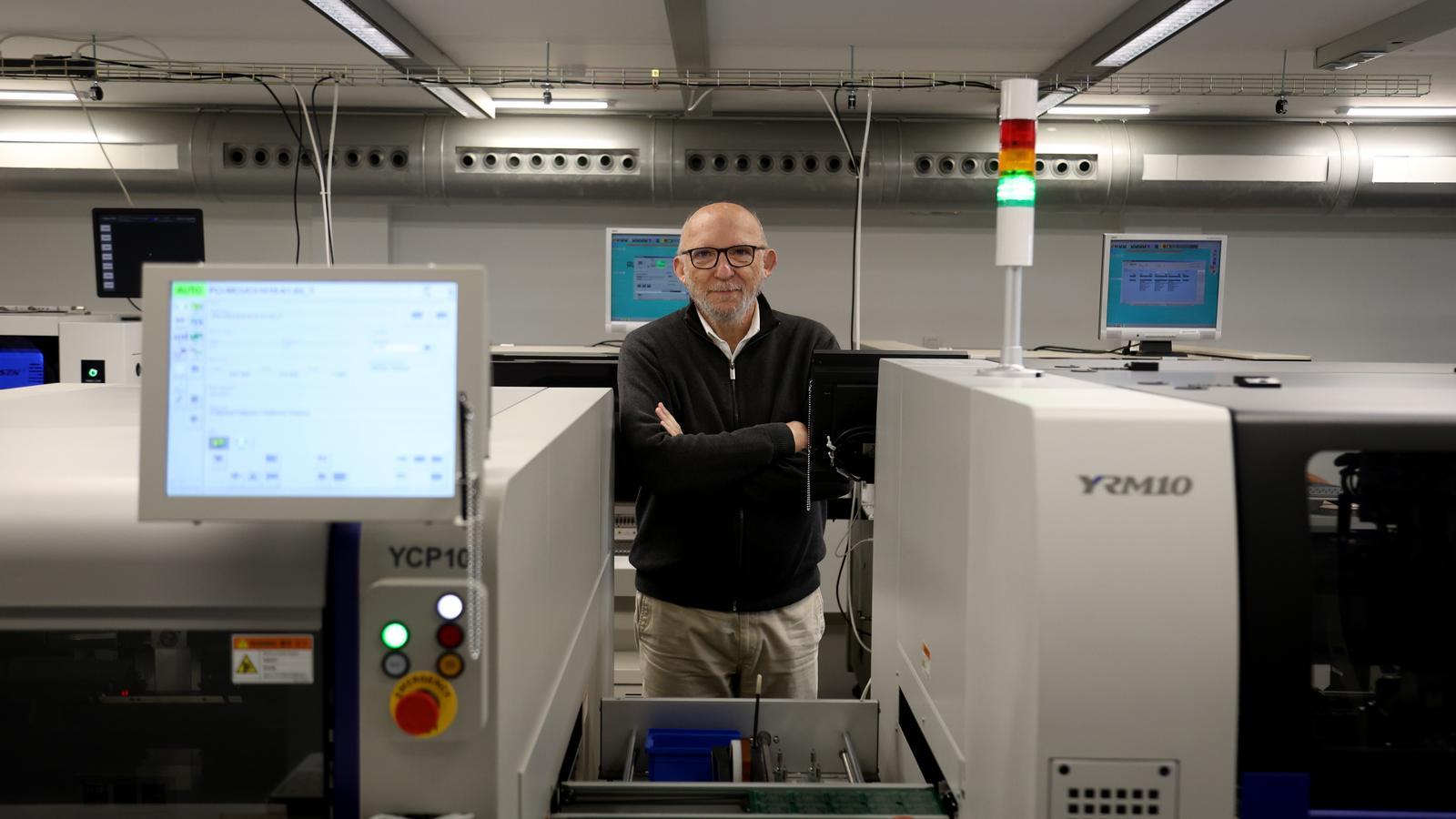

PalmaThe Majorcan technology company Robot, one of the most consolidated technology-based industrial firms in the Balearic Islands, is about to pass into Swedish hands. The multinational HMS Networks has launched an offer to acquire 100% of the shares of the company founded in Mallorca and specialized in building automation systems, especially for hotels. The operation values Robot at 21 million euros and, if completed, will also lead to its exclusion from BME Growth.
The operation is well underway. Bernat Bonnín, Jaume Simonet, José Alberto Antich, and Lorenzo Ramón Vaquer, who together control 77.69% of the capital, have signed an irrevocable agreement to vote in favor of the operation and sell all their shares to HMS. The Swedish group is offering 6.25 euros per share, which amounts to about 17.37 million euros for the total shares, while the enterprise value—which incorporates other financial magnitudes—has been set at 21 million. The offer must still be approved by the shareholders' meeting and complete the BME Growth procedures.
The agreement, as confirmed by Bernat Bonnín to ARA Balears, "is pending approval by the General Meeting," scheduled for October 16th. "It implies that Jaume Simonet (CEO until now) and I will remain until the end of 2027," he said. Only Bonnín's stake, which controls 42.6% of Robot with more than 1.18 million shares, is valued at the offer price at about 7.4 million euros. Simonet controls 15.38%; Antich, 15.53%; and Vaquer, 4.17%. All four have agreed to transfer their holdings in full, so the operation will cause a change of control of the company.
As confirmed by Bernat Bonnín to ARA Balears, "the company's commitment is to remain at the Mallorca headquarters, maintaining the names and the jobs," he assured. The acquisition comes, moreover, at a time of growth for Robot. The company closed 2025 with sales close to nine million euros and an EBITDA margin (operating profitability) of approximately 27%. HMS justifies the 21 million enterprise value by applying a multiple of 8.2 times Robot's EBITDA, which in 2025 was 2.56 million. The offered price represents a premium of 18.3% over the weighted average share price of the six months prior to the announcement.

From Mallorca to the world
Robot develops sensors, room controllers, and comprehensive building management systems that allow for the automation of facilities, climate control, and the reduction of energy consumption. It maintains its headquarters and production in Palma, at the Son Rossinyol industrial estate, and also has a subsidiary in the Dominican Republic. Its main markets are located in tourist destinations in Europe and Latin America. HMS, on the other hand, is a multinational with more than 1,100 employees, over twenty commercial offices around the world, and a turnover of 3.577 billion Swedish kronor in 2025.
Precisely this international network is one of the main arguments for the operation. HMS considers that Robot's technology complements its building automation division and sees particular potential to market the products developed in Mallorca in Asia-Pacific and the Middle East, two markets where Robot still has a limited presence. Bonnín argues that the integration will allow for accelerating international growth and opening opportunities that the company could hardly achieve on its own.
The sale has special significance in the industrial context of the Balearic Islands. Just a few months ago, in a report by ARA Balears on the progressive loss of weight of the industry in the Islands, Bonnín specifically cited Robot as an example of the difficulty, but also the possibility, of maintaining high value-added technological activity in Mallorca.
The founder explained at the time that one of the main problems for Majorcan technology companies was finding and retaining qualified personnel due to the rising cost of housing. Robot needed engineers and highly specialized profiles, but, as he warned, hiring them from outside the Islands was becoming increasingly difficult if the company could not also help them find a place to live. To this problem, he added the costs inherent to insularity.
Bonnín advocated, above all, for innovation as the only way a Majorcan industry could compete internationally. Robot had at that time, as he explained to this newspaper, 74 employees, 14 of whom were dedicated exclusively to research and development. These were workers who, in the businessman's words, were not manufacturing the product of the moment, but rather preparing what the company would produce in the future. “Innovation is the key,” he summarized.
Robot had maintained this commitment even in difficult times. Bonnín recalled that during the financial crisis the company was forced to reduce its workforce, but it preserved the team dedicated to innovation, a decision from which, he assured, they ended up reaping the rewards. He also warned against the temptation to compete solely on price: from Mallorca, with higher structural costs, there will always be some producer capable of manufacturing cheaper. The answer, he argued, could only be to add value, invest in technology, and differentiate the product.
The founder of Robot also rejected in that conversation with ARA Balears presenting industry and tourism as two opposing sectors. A good part of the company's clients are precisely hotels, to which it provides automation and energy-saving systems. The problem, he maintained, was the imbalance between the enormous weight of tourism activity and the progressive decline of the industry. Economic diversification, he argued, required companies capable of generating qualified employment throughout the year and investing continuously in knowledge.
Six months after those statements, the future of Robot lies in its integration into an international group. HMS assures that it wants to leverage the technology, the position in the hotel sector, and the team developed by the Mallorcan company to grow globally. In the statement regarding the operation, the Swedish group affirms that it expects to incorporate Robot's employees into its structure once the purchase is completed. The multinational currently places the firm's workforce at around 65 people, including manufacturing personnel.

