Sidonie: "If we had bet on commercial octopus, we would have a house in Mallorca"
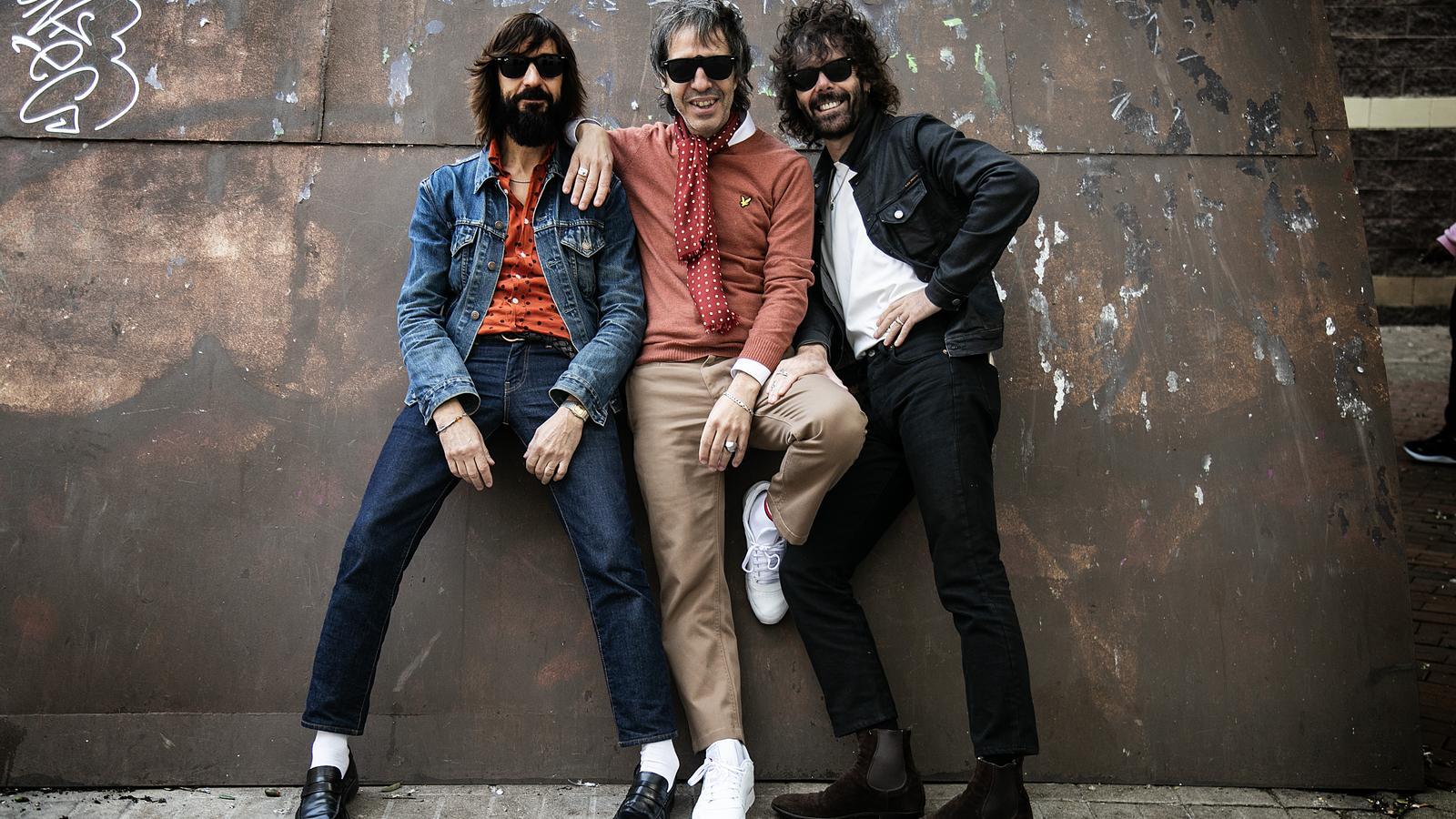
Marc Ros, vocalist of the Barcelona group

-
CAT -
CAST -
GER
PalmaSidonie is one of the benchmark bands of Spanish alternative pop with its own discourse that, over more than two decades of career, has evolved without losing its identity. Recently, however, the Barcelona-based group made an unexpected and significant turn: their latest album, Catalan graffiti (2025), is the first entirely in Catalan. On the eve of their concert at TribuFest in Felanitx, on Friday, May 29, their singer, Marc Ros, also talks about the life stage they are going through, their doubts, their successes, and the need to reconnect with music from a freer and more essential perspective.
What led you to make the move to Catalan at this point in your career?
— I am a Catalan speaker, but I had never sung so many songs consecutively in Catalan at a concert. And I realized that I breathe differently and even my body behaves differently when the air passes through my tongue and my teeth, because Catalan is a less percussive language than Spanish. Spanish is a bit more percussive, and after the concerts I found that I ended up more rested when I had sung in Catalan. With songs in Spanish, I tend to hit higher notes and push a little harder. I like both languages a lot, but with Catalan I feel more relaxed.
Was it an artistic or personal decision, or also a way to reconnect with your origins?
— When I was 16 or 17 years old, I made my first song and it was in Catalan. Then life took me to English, then to Spanish, and now finally to singing in Catalan. I would have done it much sooner, I had wanted to for a long time. In fact, I regret not having done it years ago. But well, it has arrived as it has arrived. It has also arrived when I have seen myself capable of doing it and had the strength to do it, because yes, sometimes I tried to make a song in Catalan, but they were very sloppy songs, shit songs that were worth nothing. And of course, I want to make songs worthy of my band. When they came out, we made them. Later rather than sooner, but in the end they came out.

Are you concerned about how your audience outside of Catalan-speaking territories might react?
— Yes, because we've already seen it. And we've seen that in general it's well accepted, but that there's a very small sector of our audience that hasn't accepted it well. Supposedly, they are given a certain open-mindedness for listening to Sidonie, but it turns out that no, that there's a small part that has responded very badly. In some concerts we've seen very ugly gestures related to Catalanophobia. Since we started recording the album, we were aware that part of our audience might reject it, or not listen to it as much, but we never expected them to come to the concerts and make violent physical gestures of rejection. This is very ugly and very disappointing. It's your follower who is letting you down. We are supposed to not listen to music by language. These people – who are very few, I insist – show that they are only guided by their phobia.
Do you think the change might open you up to new audiences or perhaps close some off?
— Hopefully new public spaces open up for us. Being able to sing and share spaces with the Catalan scene is already a joy, we are very comfortable within this scene to which we did not belong, because we are from Spanish indie. Thanks to singing in Catalan, we have reached homes in Girona, Lleida, Tarragona... where we didn't reach before.
How do you see the current situation of the Catalan music scene?
— Right now we are living a transformation towards a more organic style. A concert approach of you going with your Mac and doing playback no longer works. Now the bet is on live music, without pre-recorded tracks and without the voice going through autotune. It's amazing to recover this essence of music.
Have you had any doubts or internal resistance since you made the move to Catalan?
— Yes. Well, I have to admit that since we released the album Catalan graffiti we have been given awards, because the album is great. If we talk about the numbers, I mean the Spotify numbers, there has been a significant drop, but the band has a long career and this does not affect our status as a live band. So, let's say the band is holding up, there has been this drop that we already knew would happen, and it's okay, we'll try to fix it later.
Can you imagine making a whole album in Spanish again or has this change come to stay?
— I still want to write songs in Spanish, and in English, and in Catalan, and in Italian if I could.
How would you define Sidonie and your career?
— We are a pop band that helped pave the way in Spanish indie because we did a series of things that bands didn't do and that they later copied and started doing: a way of presenting ourselves on stage, of dressing, even how to produce an album... We know for a fact that many bands followed our path. I am very proud of the fact that many bands followed us, and we are also proud of this pop music that is based on melody, which is what Sidonie is, a band that tries to put melody above all else.
Looking back, what would you say has changed the most in your way of understanding music?
— Live performances have changed. We live off live shows, we live off concerts, and before we were louts who hadn't slept in three days and dared to go on stage. The concerts somehow happened, and people paid to see us. It's an extraordinary thing, but to me it seems like a lack of respect that I deeply regret. Now this has changed a lot, and it's a joy to see Sidonie live, because we are a band that gives its all at every concert and faces it as if it were the last.
Is there any mistake or decision from the past that you would do differently now?
— There is one that I have very marked and it is not having repeated the formula after the great success that was our album El Incendio. If we had done so, I would be rich now, I could even have a house in Mallorca [laughs]. Now, with time, I think: "Damn, I was in such a hurry to write songs moving away from commercialism.". El Incendio was an album that was played on Los 40 and placed us at the level of bands like Pereza and Canto del Loco. We were in that league, we could have continued there and very consciously we decided to move away from it and make a new product. Now I think it wouldn't have cost anything to make another album in this style and be more strategic.
—
How do you experience the relationship with the public after so many years on stage?
— We are lucky that our audience is elegant, sexy, respectful and knows that what they will find is something very well done and very serious. Sometimes it may seem that we do it easily or that we do it carelessly, but there is actually a lot of work behind it.
On May 30th you play at TribuFest, what does that mean to you?
— We love being called to do these types of festivals. There are places in the world that, when I step on them, when I am there, I feel better. And that, for me, happens in Mallorca. Furthermore, I have great esteem for the culture and history of the Balearic Islands. I read you a lot, from Ramon Llull to Biel Mesquida, it is a literature that fascinates me and perhaps my favorite is Joan Mascaró.
If you had to define this new phase with a single word, what would it be?
— 'Innocence'. I want to be happy and above all have fun.
What challenges do you set yourselves from now on as a band?
— One of the great dreams I have is to share the stage with Oasis. If we've already opened for the Rolling Stones, why can't we do it with Oasis?
