The deepest crisis of the GOB
A tense extraordinary assembly highlights the clash of two models in the entity and ends with the resignation of the president and ten members of the board
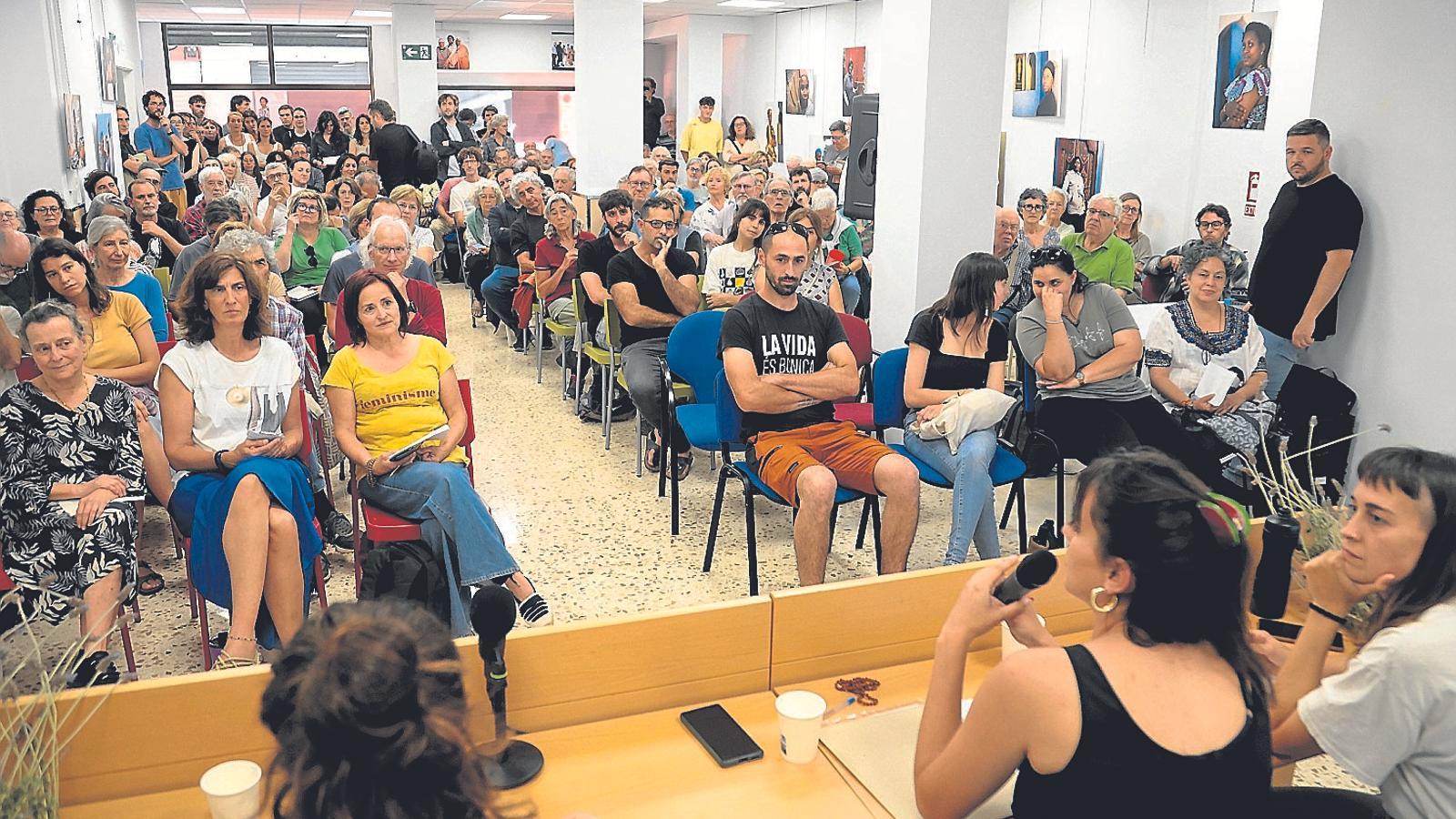

PalmaThe GOB, the most important environmental organization in the Balearic Islands, a national and international benchmark that has contributed to the preservation of emblematic spaces and the generation of environmental awareness in the Islands, is going through a major crisis in its Mallorcan section. The internal conflict of the board of directors ended on Friday with the resignation of the president Teresa Cuenet and nine other members. There are 13 officials left at the helm of the organization.
The conflict has been brewing within the organization for months, but it exploded publicly when the president called an extraordinary assembly to explain the situation to the members. According to the resigned members, the main problem has been an excessively harsh tone from the critical sector of the organization, made up mainly of historic militants such as Antoni Font, Aina Llauger, Xavier Garí and Joan Moranta, who have returned to the GOB's leadership because they believe that "the intensity of traditional campaigns in defense of the territory, presence and legal action, now somewhat more abandoned, must be recovered."
The resigned members point out that the situation was untenable, as the discrepancies and the way of approaching the GOB's model were not compatible between the two groups. For this reason, they have staged a collective departure. Now, the 13 remaining members assure: "We will continue working and we offer the members the possibility of continuing to participate, trying to face a moment when a strong and committed GOB is precisely needed," explains Aina Llauger, also a member of the board that remains within the organization.
The confrontation becomes evident
Some GOB members present at the assembly have explained to ARA_Balears that the departure of Margalida Ramis, spokesperson for the environmentalists for the last 17 years, "has made the confrontation, which has been going on for a long time, evident." "There were two irreconcilable models, and when Ramis left, the rest of the people who had more connection with her also did," assure some historic members, worried about the situation.
Ramis had already starred in a tense episode, which was the first time the confrontation within the GOB was glimpsed. She put together a candidacy for the presidency in 2023 and unseated Amadeu Corbera. In response to criticism that a worker should also be president, Ramis explained that she had assumed the presidency on a transitional basis with the aim of facilitating generational change and consolidating a new era within the organization.

But the internal debate on governance, professionalization, and the weight of the technical team with respect to militancy grew to clearly divide the organization. Friday's assembly was the scene of accumulated unease and a fracture between sectors that disagreed with both the leadership styles and the political strategy of the collective.
The clash occurred due to two opposing visions. On one hand, the sector aligned with Ramis, which advocates for a GOB with an ecosocial, feminist discourse and a "strong technical structure to face increasingly complex conflicts," in the words of Ramis's team. On the other hand, the critical sector, which called for resuming the monitoring of territorial conflicts, the historic presence of GOB in towns, and greater street action. This tension translated into the presentation of two candidacies for the presidency in 2024: that of Teresa Cuennet, the candidate who had the support of Margalida Ramis (who had been asked to step down to not be president and spokesperson) and her board, and that of Joan Moranta, who represented the will to redefine the entity's internal model and recover some lines of work from the past. A good part of the board members who entered alongside Joan Moranta were militants with many years of experience who no longer participated in the entity's day-to-day.
The extraordinary assembly of December 2024, where Moranta and Cuennet faced off and which was one of the most crowded in recent years, ended with the victory of the latter, but over time it has become clear that the crisis was not resolved, but rather deepened. The two GOB models coexisted throughout 2025, and at the general assembly in December of the same year, several more historic members joined.
Everything seemed stalled, according to militants present at Friday's assembly. When Margalida Ramis's departure from the entity was announced on April 29, the president convened an extraordinary meeting of members, that of Friday, to put the differences on the table.
The GOB publicly acknowledged Ramis's key role in some of the Islands' major environmental battles, from ‘Salvem la Ràpita’ to campaigns against tourist saturation and the defense of the ecosocial transition. However, his departure was also interpreted as the symbolic end of an era and confirmation that the crisis had not only been conjunctural, but a reflection of a deep debate about the future of organized environmentalism in Mallorca. Now, the 13 historical members of the entity have the task of continuing to fight for the defense of the environment, which has turned the GOB into a social benchmark.
