Jaume Oliver reinvents history with "a spy novel in a Palma that never existed"
His second book, with which he won the last Ciudad de Palma Novel Prize, "is an alternate history set in a dystopia," while also being "a vindication of the city and of historical memory."
-
CAT -
CAST -
DE
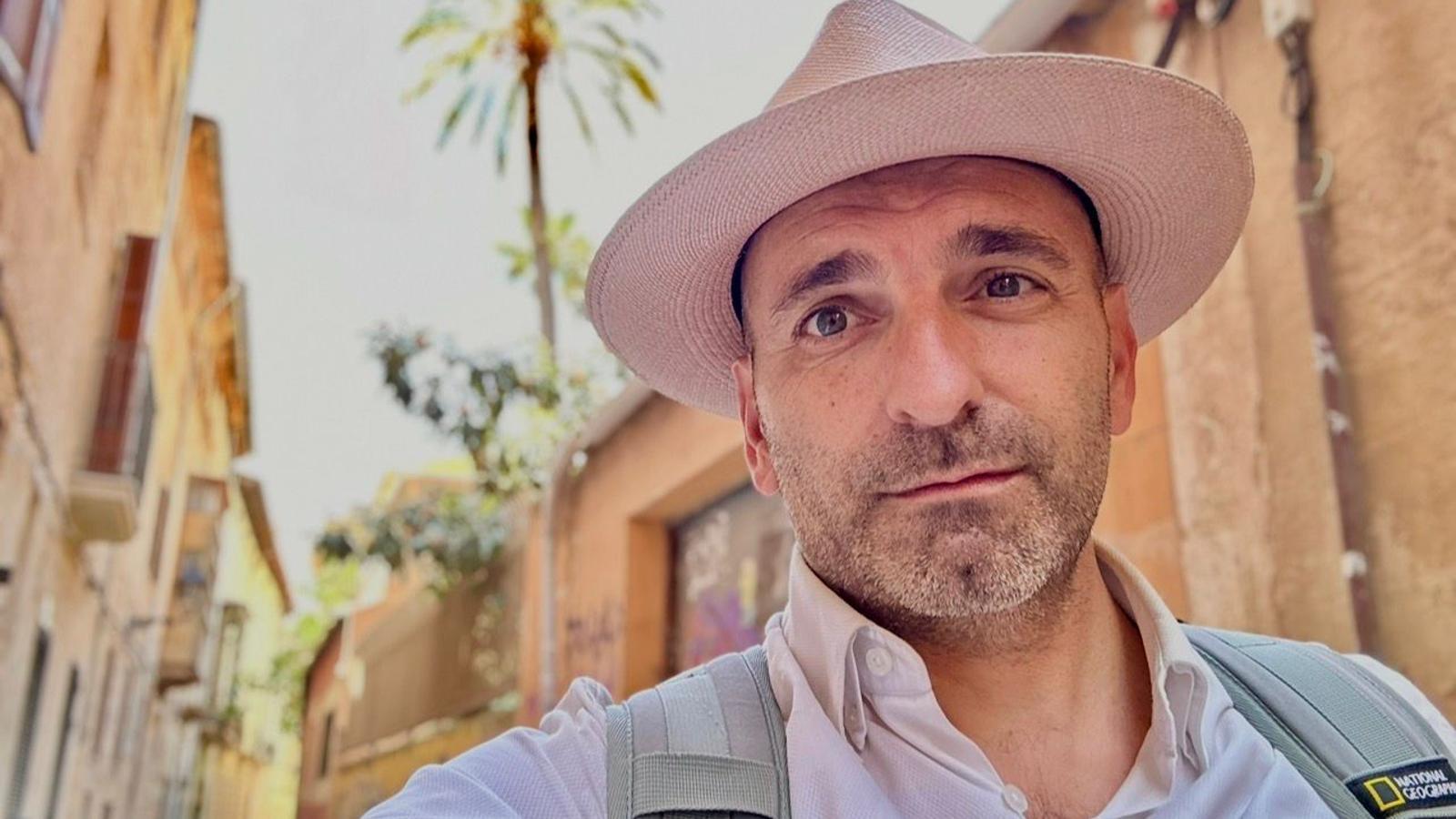
PalmThe writer Jaume Oliver Ripoll reinvents the history of the Civil War in One Day We Will Assault the City with Iron Horses, "a spy novel in a Palma that never existed", in which he fantasizes about a victory for the Republic that turns Mallorca into the seat of a government led by three women. His second book, with which he won the last Ciutat de Palma Novel Prize, "is a uchronia embedded in a dystopia", as well as "a vindication of the city and historical memory", a story "with many layers" that is, in synthesis, an adventure novel, he explains in an interview with EFE.
"I like apparently realistic novels in which, suddenly, reality fades away and something truly extraordinary happens to one of the characters. I like to catch the reader off guard", points out the Palma-born narrator. Like his alter ego in his novel, Bradley, Oliver is "a bad historian" who ends up working as a journalist. The writer is a correspondent for TVE in the Balearic Islands, a profession that, he maintains, has shaped his way of narrating.
Cinema as a reference
Another crucial personal condition in the book, full of cinematic quotes and names taken from characters and actors, is the author's fondness for cinema. "I strongly claim generational references and mine are clearly from cinema," explains Oliver, who champions popular American films from the 80s and 90s, from "Indiana Jones" to those of "Rocky".

Also central to the story, just like in his previous novel (Crónica desordenada de Ciutat Antiga), is Palma, the city where he was born in 1975 and with which he admits to an intense relationship: "I adore it and I hate it." "Cities are characters in novels and, sometimes, as in this case, central characters. (...) I don't know if I could write about another city," he assures.
The urbanism and architecture of the Balearic capital are part of this passion and inspiration for the novel, where the utopian project of the city's transformation by the architect Gaspar Bennazar is executed by the impulse of the triumphant Republic which takes Palma as the seat of government and a symbol of Spanish modernity, although in parallel Nazism expands beyond 1945.

"This also appeared in Back to the Future. When you touch a piece of the past – he argues – everything falls apart, and I touch a piece in the Civil War". In his alternate history, the failed attempt to reconquer Mallorca led by Captain Alberto Bayo from Barcelona in the summer of 1936 succeeds and "the balance of World War II is also thrown off".
The threats of totalitarianism
For Oliver, situating the story in very precise real spaces, alluding to cultural references close to his generation, and fabricating historical events to construct an alternative history are not restrictions for less familiar readers, but, on the contrary, creative decisions that sustain the verisimilitude of the narrative and the desire to reflect on the past and the threats of today. He has sought to do so in simple language, the result of meticulous work. "I believe that good literature is that which is very worked on, very rewritten, but without it showing. For me it is fundamental and I have a lot of fun doing this," he states.
This persistent dedication led him to combine his work as a television chronicler with writing in hours stolen from sleep and family tasks ofOne day we will assault the city with iron horses.
The next was more difficult. "I've been hitting a wall for three years trying to get it published," he admits. Finally, the novel award in Catalan from the Palma City Council last January and the publication of the work on the eve of Sant Jordi by the Catalan publisher Pagès Editors have rewarded the effort. Jaume Oliver, who has been writing a new story for a year and a half, is confident that the recently published one will have a reach through the "word of mouth" of its readers. "I believe in the long life of books, they should be in bookstores for a long time," he maintains.
