Ramon Llull and Sufi mysticism unite to narrate the sorrow of a degrading landscape
The French Egyptian artist Chirine El Ansary wins the Llull Laboratory scholarship with a performance inspired by the sacredness of mountains
-
CAT -
CAST -
GER
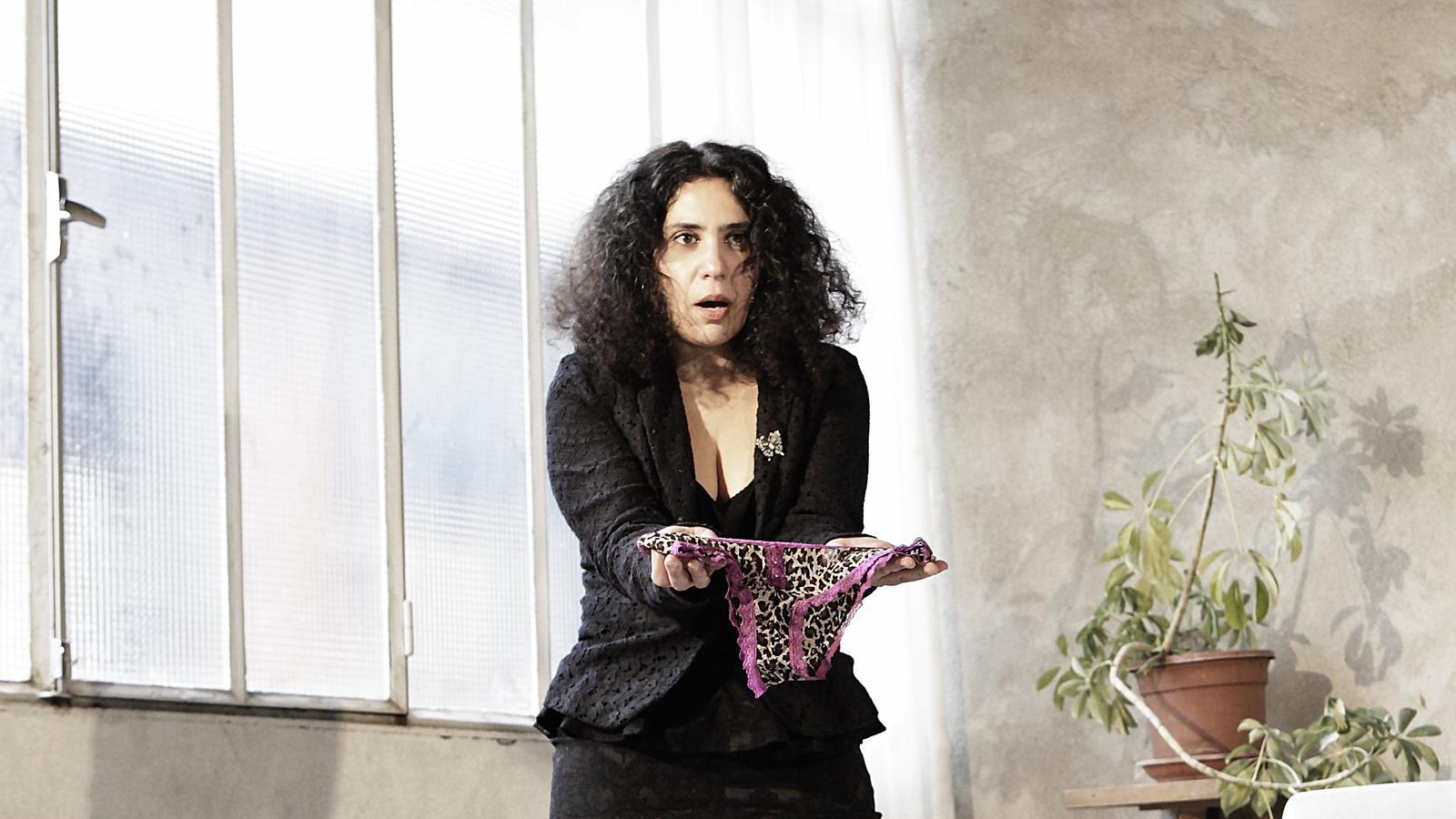
PalmaSeeing how the environment we feel is ours degrades without having left it can provoke a particular form of longing: grief for a home we still inhabit, but no longer recognize. This is what is known as solastalgia and it is the starting point of the work with which the French Egyptian artist Chirine El Ansary has won the second international creation and artistic residency scholarship from the Llull Laboratory.
The proposal, titled Mundus Vocalis, will be a bilingual performance in Arabic and English that will unite Sufi mysticism with the life and work of Ramon Llull. The artist will traverse the sacred geographies of the mountains through the writings of saints and mystics, mainly from medieval Arab-Muslim traditions, and will incorporate the Book of Friend and Beloved and the Puig de Randa, Llull's spiritual retreat.
The work poses a question that runs through the entire project: how can the mystical praise of detachment be reconciled with deep roots in places? El Ansary seeks the answer in the sacredness of the mountains, both real ones —Muqattam in Cairo, Montjuïc in Barcelona, and Randa in Mallorca— and the “hidden mountains” that are constructed through spiritual offerings.
These spaces appear in the proposal as symbols of resilience and memory, but also as meeting points between the earth, the universe, and the divine. The performance will interweave Sufi poetry, medieval philosophy, and current reflections on environmental destruction, displacement, and the breaking of ties with the places we consider sacred or emotionally significant.
“The core of the project is the existential unease caused by displacement, environmental destruction, and the breaking of ties with places we consider sacred or emotionally significant,” the artist explained.
From Sufi poetry to Ramon Llull
The winning proposal is the second part of a larger project in which El Ansary had already begun to explore texts from the Sufi tradition. In a first phase, as a beneficiary of the Javier & Marta Villavecchia scholarship, she researched and compiled writings from the Haas Collection at the Pompeu Fabra University Library and prepared the first drafts of the performance.
The Llull Laboratory scholarship will allow her to deepen this research and incorporate the legacy of Ramon Llull. The objective is to highlight the cultural and spiritual exchanges of the medieval era and observe how they resonate in the contemporary world.
The first staging will be in a duet format, with one performer and one musician. Subsequently, El Ansary plans to expand the work into a multilingual production with a maximum of nine performers.

Born in Cairo and residing between Egypt and France, Chirine El Ansary is a storyteller and performer. She studied theatre and performance in Cairo, Paris, and London and actively participated in the independent theatre scene of the Egyptian capital before focusing on stage storytelling. Her work combines movement and language to construct images and evoke emotions.
The jury highlighted the originality and contemporaneity of the project, the intercultural and bilingual dimension of the performance, and the viability of the work plan. They also valued an artistic trajectory that, as they point out, unites scenic excellence with academic rigor.
The commission was formed by the Philosophy professor and director of the Llull Laboratory, Amador Vega; art historian Maria Hevia; and psychoanalyst and writer Miquel Bassols. The jury particularly noted the dialogue that El Ansary establishes between Sufi mysticism, Ramon Llull, and her experience in Randa.
Solastalgia, a term coined by philosopher Glenn Albrecht, precisely describes the inconsolable longing a person experiences when they continue to live in their home, but see their surroundings degrade around them.
Thirteen projects from four countries
A total of thirteen proposals have been submitted to the 2026 call for entries, from artists from Spain, France, the United States, and Finland. All were individual and original works linked to some specific aspect of Ramon Llull's thought.
The scholarship is endowed with 6,000 euros, provided by the Baltasar Coll Foundation, and includes the possibility for the artist to do a residency at the Estudi General Lul·lià to research and materialize the proposal. The public presentation of the work is scheduled for November 27, coinciding with the feast of Blessed Ramon Llull.
The Llull Laboratory is a space for experimentation, teaching, debate, and dissemination created by the Estudi General Lul·lià. The scholarships seek projects that bring Llullian work and thought closer to contemporary art. The program has the financial support of the Baltasar Coll Foundation and the Consell de Mallorca.
In the first edition, the winner was the Greek multi-instrumentalist and composer Christos Barbas with Lux in Tenebris, a contemporary mass for a choir of voices and ney —a reed flute typical of the Middle East— inspired by fragments from the Llibre d’Amic e Amat.
