Sweet cushions, a forgotten jewel of traditional Mallorcan pastry making
We explain how to prepare sweet pillows
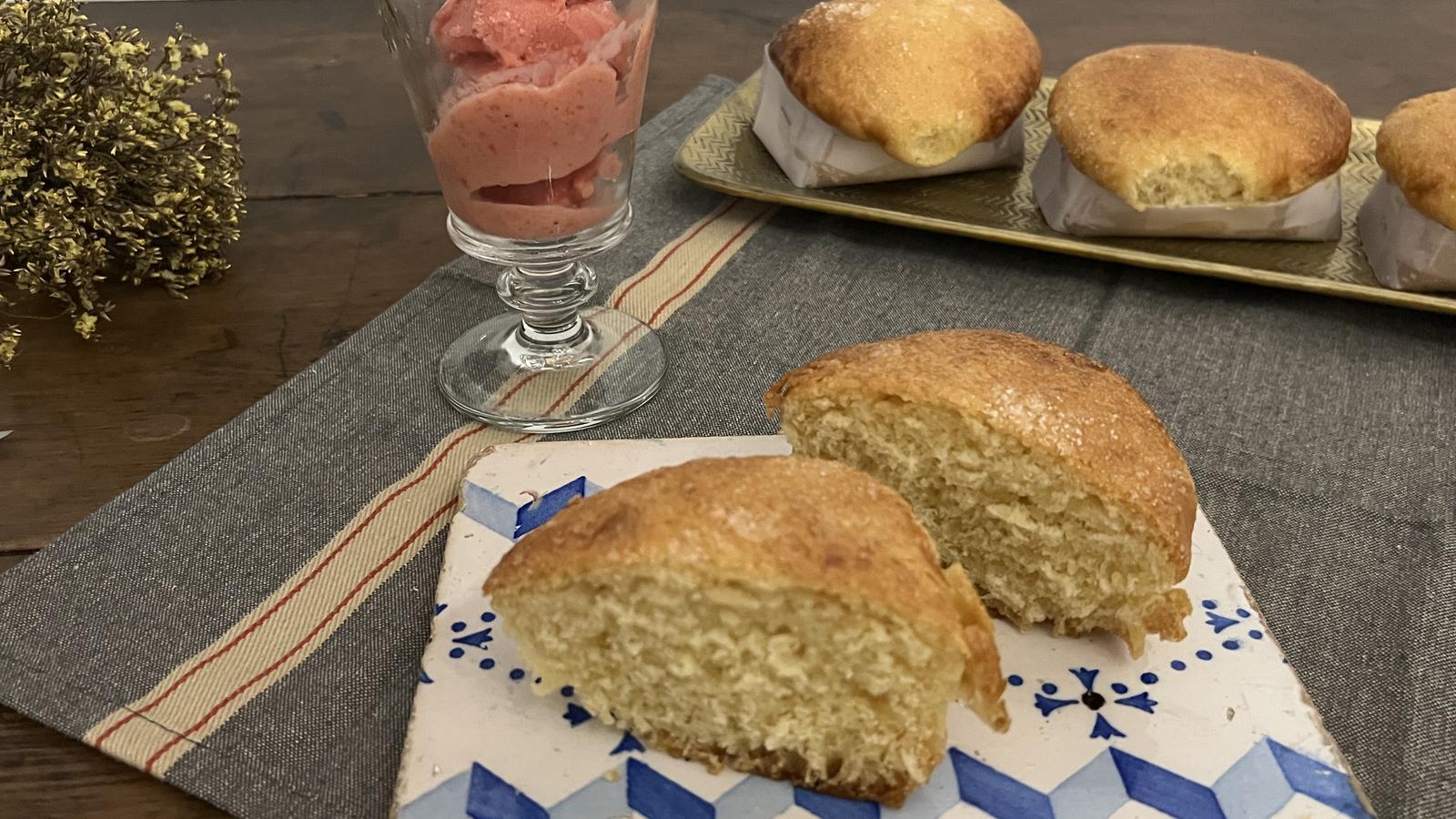

Traditional pastry making constitutes one of the richest gastronomic heritages of the Balearic Islands. Cultural exchange, the utilization of available resources, and the transmission of culinary knowledge from generation to generation have given rise to an extraordinarily wide repertoire of cakes, pastries, pies, cookies, and sweets that have accompanied religious celebrations, family parties, and the agricultural calendar. This diversity not only responds to the creativity of bakers and pastry chefs, but also to the fundamental role that domestic kitchens, convents, and prosperous homes have played in the conservation and transmission of this heritage.
However, this legacy has undergone a progressive reduction throughout the 20th and early 21st centuries. Changes in eating habits, the disappearance of many homemade preparations, the simplification of the offerings in bakeries, among other causes, have led to numerous recipes no longer being prepared to the point of disappearing from collective memory. While some specialties have managed to stay alive, many others only survive in old recipe books, family manuscripts, and scattered references in historical documentation. Imperial cushions are a paradigmatic example: a pastry item documented between the 19th and 20th centuries, mainly linked to the recipe books of wealthy families, which over time has completely disappeared from both bakeries and private kitchens. We find documented another type of imperial cushion, a very striking quadrangular cake, with a quarter base, filled with egg or pumpkin jam, almond paste, and meringue coating. Today's recipe, however, refers to a quemullar.
Puff pastry
Bamba dough is a sweet fermented dough that, during the 19th century and much of the 20th, constituted one of the most versatile bases of pastry making. From this dough, once it had undergone the first rise, various preparations could be obtained by adding new ingredients or modifying its shape and preparation process. In this way, such diverse items as cocs, corbates (another now-disappeared sweet, consisting of a bamba cake molded into the shape of a necktie) or coixins were born.
Imperial coixins were made from a piece of fermented bamba dough to which egg yolks, sugar, and lard were added. With the resulting dough, small pieces were formed that were flattened, greased with lard, rolled up, and placed in individual quarter molds. After a second rise, they acquired a cylindrical shape that resembled a small pillow, from which the name probably derives.
The first documentary references to this preparation are found in two recipe books from the late 19th century. The first is by Mateu Jaume, from Can Joan de s’Aigo (1884-1885), published under the title Llibre de gelats i quemullars (Olañeta, 2000). This work first explains the preparation of bamba dough and then that of imperial coixins. The second is Cuyna mallorquina, by Pere d’Alcàntara Penya, which includes two very similar formulas that start from an already prepared bamba dough and differ only in the proportions of the ingredients.
The recipe books from the first decades of the 20th century provide new details about the preparation process. Cuina mallorquina de casa de senyor (Palma, 1927), describes in detail the preparation of the leaven obtained from scraps of bread dough left to soften in water. Once they regained the right consistency, the water was removed, egg yolks and flour were added, and it was left to ferment. After this first fermentation was complete, the dough was enriched again with eggs, sugar, lard, and flour, left to soften a second time, and finally, the "coixins" were shaped in their characteristic form. For its part, La cuinera pràctica (Felanitx, 1935) distinguishes between two types of "coixins": mantegats and imperials. The first were made from raw ensaïmadas. Two cups of milk were added to the first dough, and lard to the second. The imperial "coixins," on the other hand, started with a raw ensaïmada and a yeast roll.
The last known reference from the 20th century appears in Nuestra cocina. 600 recetas de Mallorca, Menorca, Ibiza y Formentera, by Lluís Ripoll (1974), which publishes the recipe for the imperial "coixins" from ca n’Esquella in Ciutadella. Curiously, in the recipe book of this noble Minorcan family, the recipe appears titled as "coques raïssones" and not as imperial "coixins."
After several tests, I started from the "coca de Sant Feliu," a fluffy cake typical of my town. As for the preparation instructions, I have followed the indications of Tomeu Arbona in Rebosteria tradicional de Mallorca. (Olañeta, 2015).
We will dissolve the yeast in lukewarm water. We will add the oil, sugar, and eggs. We will mix it well and add the previously sifted flour. We will knead it for about 10 minutes, trying to incorporate air, which will help to soften the dough. With oil-greased hands, we will place it in the container, cover it with a cloth, and let it rest for about two hours.We will mix the egg yolks with the sugar and pour it into the dough. We will knead the dough again and let it rest for half an hour. We will break the dough into pieces and rejoin them. We will let it rest for another 20 minutes. We will form balls of about 1.300 g. We will flatten them with a rolling pin, spread them with lard, and roll them up. Since the dough will be a bit soft, you can dust it with a little flour so it doesn't stick. We will place the cushions in rectangular or quarter molds and let them rest. When they are ready, we will brush them with egg, sprinkle sugar on top, and bake them at 150 ºC for about 20 minutes or until they are golden brown.
l 100 g of oil l 100 g of water l 25 g of pressed yeast l 3 eggs l 125 g of sugar l 500 g of flourl 4 egg yolksl 130 g of sugarl 130 g of lard l 1 egg to brush the cushions and sugar
