The Almudaina Palace that the Majorcans had not yet been able to see
The monument opens for the first time rooms until now closed and offers three days of free visits after a renovation of 2.57 million
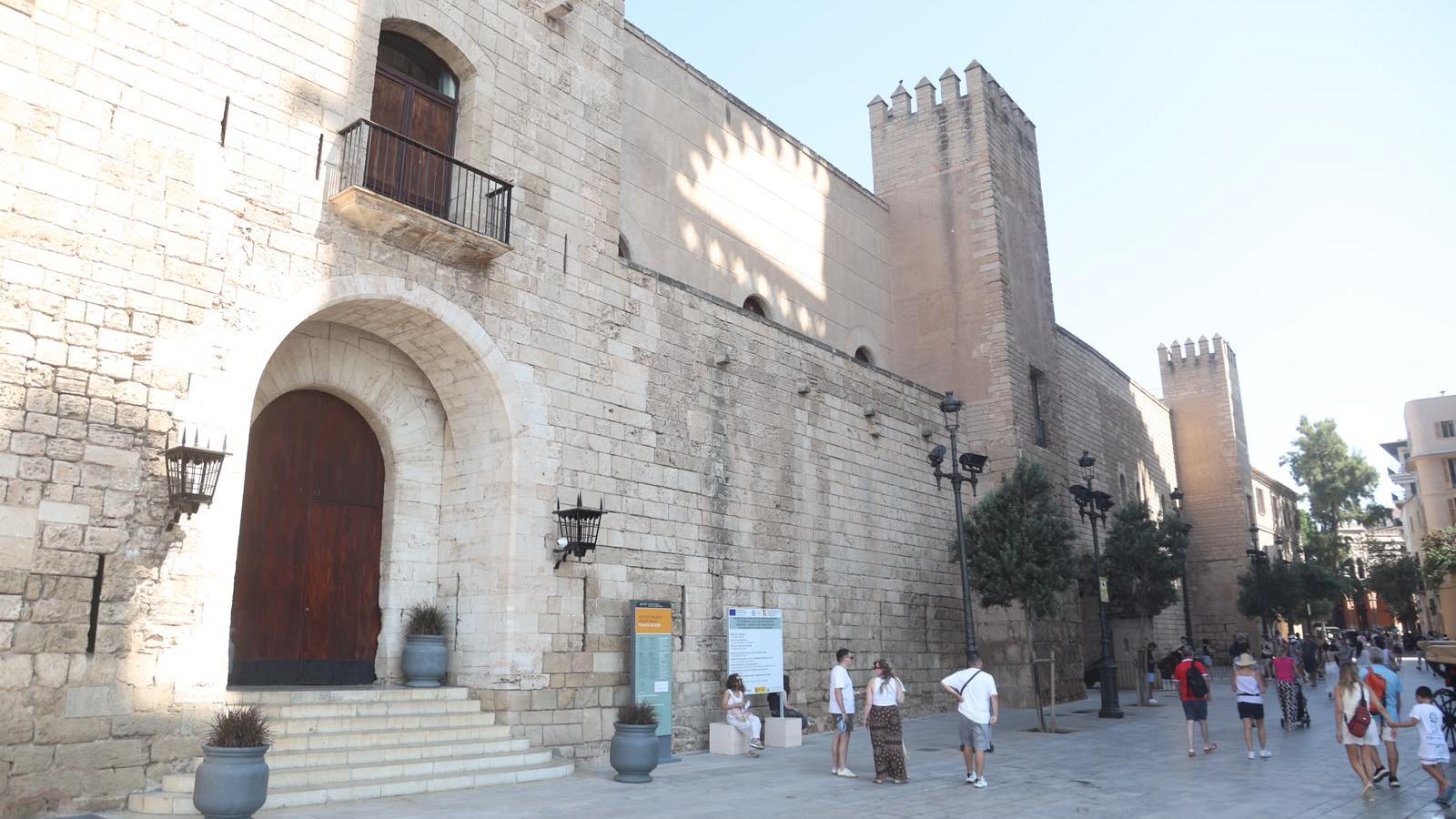
PalmaThe Almudaina Palace will reopen this Wednesday, July 29, after a comprehensive renovation of 2.57 million euros that transforms the visit to the monument and incorporates spaces that were previously closed to the public. To inaugurate the new route, admission will be free for three days, from July 29 to 31, until its capacity is reached.
The main novelty is the opening of the Queen's Palace, located on the upper floor. These rooms will allow visitors to delve into the visits of the Bourbon family during the 19th century, with special attention to the trip that Isabella II made to the Balearic Islands in 1860.
The renovation also brings order to the historical narrative of the building. The new itinerary follows a chronological line that begins with the Roman origins of the site, passes through the Muslim city of Madina Mayurqa, the Kingdom of Mallorca, and the incorporation into the Crown of Aragon, and ends with the Bourbon era. The final point is the Throne Room, which has been set in the time of Alfonso XIII.
An Islamic lion from the 10th century
The change does not only affect the rooms. National Heritage has removed works that did not have a direct connection with the history of the palace and has incorporated portraits, period furniture, and Roman coins from its collections, preserved until now in Madrid. The Museum of Mallorca has also deposited Roman ceramics and amphorae there.
One of the most outstanding pieces is a 10th-century white marble lion that would have originally functioned as a fountain for the ponds of the Hort de la Reina. After being restored, it is exhibited inside the palace to ensure its conservation, within a room dedicated to the Islamic period of Mallorca.
The visitor will also find a 12th-century bronze griffin, with a mouth in the shape of a lion's head, and the tympanum of the Coronation of the Virgin Mary, created between the end of the 13th century and the beginning of the 14th for the original portal of the chapel of Santa Anna.
In the coming months, one of the new rooms will host an exhibition of three 16th-century tapestries from the series History of Emperor Octavian, which are pending restoration.
Tickets, opening hours, and conditions
The open house days will be held on Wednesday 29, Thursday 30, and Friday 31 July. Free tickets can only be obtained at the ticket office and access will depend on available capacity. Guided tours will not be offered during these three days.
The first day, due to the institutional reopening event, the ticket office and access to the palace will close at 3 p.m. The other two days, the summer opening hours will be from 10 a.m. to 7 p.m., although the ticket office and entry to the venue close one hour earlier.
Once the open days are over, general admission will cost 8 euros and reduced admission, 5. The palace is open from Tuesday to Sunday, from 10 a.m. to 7 p.m. between April and September, and is closed on Mondays. On Wednesdays and Sundays, access is free from 3 p.m. to 7 p.m. for citizens of the European Union, residents, and Ibero-American citizens who can prove it.
The guided tour has a supplement of 8 euros and is offered in Spanish, English, and German at different times. The building has access for people with disabilities and allows photography without flash, but not the use of tripods or selfie sticks. Information about tickets and visiting conditions can be consulted on the official website of National Heritage.
A new entry and less electricity consumption
The intervention has also made it possible to create a visitor reception center on the ground floor, with access from the Portal Major through the parade ground. The new space, fully accessible, houses the lobby, ticket offices, cloakroom, and shop.
The majority of the 2.57 million invested comes from the Recovery, Transformation and Resilience Plan. Within this reform, 435,600 euros have been allocated to renew indoor and outdoor lighting. According to National Heritage, the new luminaires will reduce the palace's energy consumption by more than 30%, and last year it received 249,056 visitors.
