Enrique Javier Díez: "Schools cannot continue to trivialize the growth of neo-fascism"
Professor at the University of León

-
CAT -
CAST -
GER
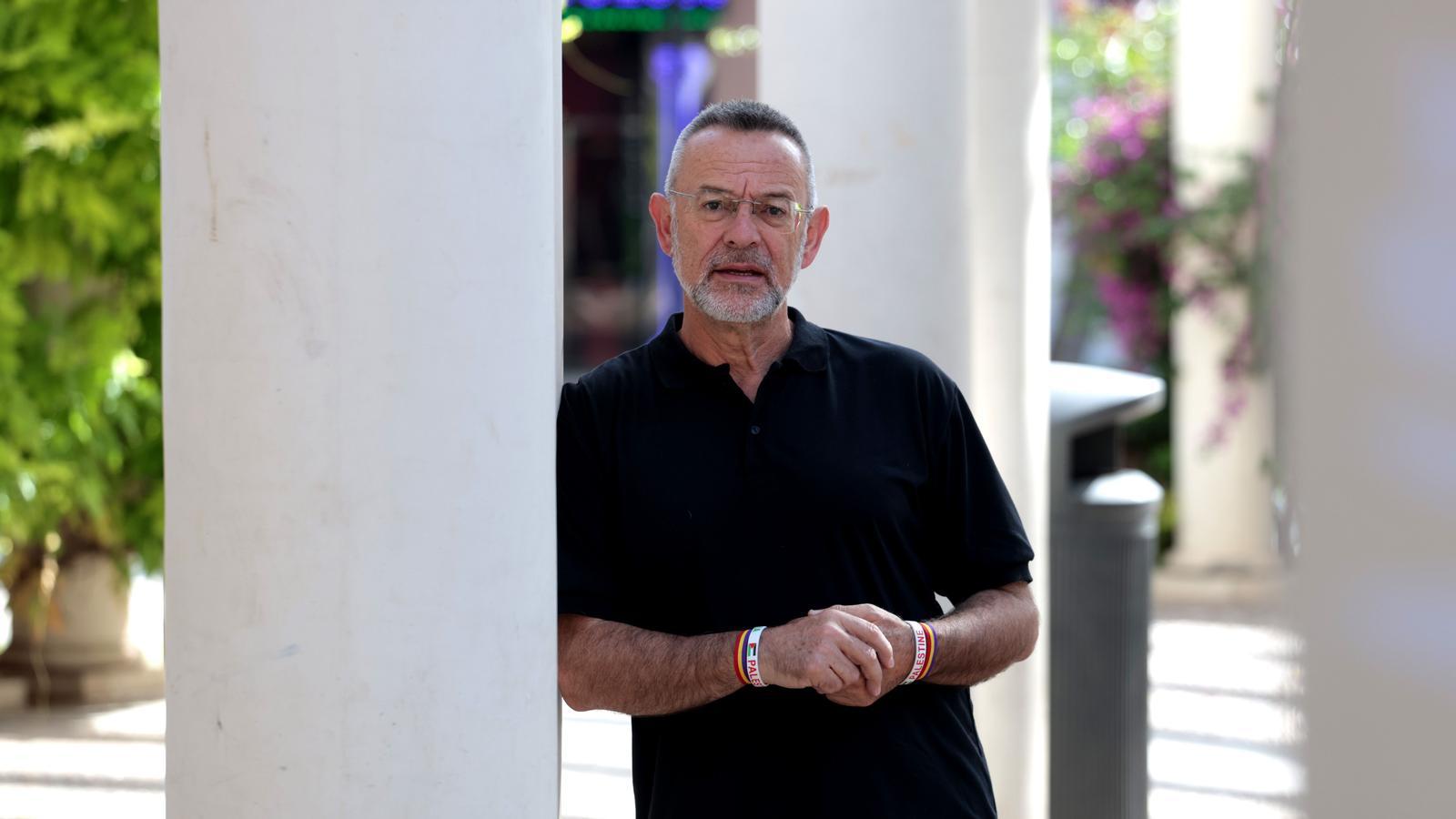
PalmaEnrique Javier Díez is a professor at the University of León and one of the most active voices in the debate on the role of education in the face of the rise of far-right discourses. A specialist in critical pedagogy and education for democracy, he advocates for a school that contributes to forming a citizenry committed to democratic values and the common good. This week he is in Mallorca to present this Thursday (La Col·lectiva) the book Antifascist Pedagogy. Building inclusive, democratic, and common good pedagogy in the face of the rise of fascism and xenophobia. All this, at a time when the debate about the presence of these discourses among young people is already a protagonist.
In the Balearic Islands, as in many other places, an increase in sympathies towards far-right discourses among some young people is detected. To what do you attribute this?
— This phenomenon began to be studied in the south of France, when it was surprising that many people with a communist and working-class ideology began to vote for far-right options. The conclusions reached are lessons we have not learned. It is, in a way, the tragedy of social democracy. When the right comes to power, it always promises change, even if it is "by blood and fire" or with a chainsaw, as Milei says. But when the left comes to power, it ends up managing capitalism through the so-called third way. This generates a sense of unfulfillment and a part of the working class feels neglected. Many of the transformations that have weakened the welfare state have occurred during social democratic governments. Margaret Thatcher even said that she was proud of Tony Blair because he had adopted her ideological framework. From here, the idea is installed that "they are all the same," because some implement certain policies directly and others more subtly. In this context, the right offers a very simple message: at least "we here" will be first.
This growth also occurs within the school. What concrete signs can a teacher detect in the classroom when these discourses begin to take root?
— Wars never begin with the first bullet, but with a change in language. Recently I was participating in an educational conference on the Palestinian genocide and five students told us that, if an activity was done on the Palestinian population, one should also be done on the Israeli population. They used exactly the same arguments as Vox, but they were not militants of Vox. These are ways of thinking that have gone viral, and social networks have a lot to do with it.
— I have also seen twelve-year-old students who defined themselves as Vox voters, who spoke of 'feminazis' or 'gender ideology'. They were students from a mining and working-class area. They have learned that today 'being bad' at school is no longer being punk or rebellious, but being from Vox, because that is what is perceived as anti-system. Rebellion has changed sides, and this is a cultural victory for the far-right.

— The teaching staff detects it to the point that some students sing the Cara al sol in the corridors or state that life was better under Franco. There is also a significant gender difference: it is mainly men who are more receptive to the idea that an authoritarian system could be better if it solved problems that concern them, such as housing, employment, and other material issues.
But what is the crux of the matter?
— The left is not offering a narrative of hope in the face of these problems. Furthermore, even sectors of the left have adopted meritocratic discourses. And this is also reflected in schools, which educate in a competitive model, fostering entrepreneurship and competition practically from the earliest educational stages.
From the Balearic reality, with a great cultural and linguistic diversity, do these types of discourses have more delicate ground or are they more easily polarized?
— The far-right adopts traits from racist and patriarchal models that have historically sustained the Western model. This is nothing new. What it does is theatricalize these discourses and, in multicultural contexts, exaggerate differences because it always needs to construct an enemy. It turns social relations into an "either you are with me or against me" logic. They defend concepts like the Ibero-sphere and project highly masculinized leaderships. The figure of Abascal, for example, is associated with this idea of the strong leader, the boss who guides the group and is not questioned.
What can the education system really do – beyond general discourse – to prevent this normalization of the far-right among young people?
— The first thing we should do is ask ourselves what we have done during the last 30 years for so many young people to end up approaching neofascist positions. It is evident that family, society and social networks influence this, but children spend many hours at school. We also have some responsibility.
— However, to educate a child, the whole tribe is needed. The school alone cannot do it. The far-right has understood this perfectly because it engages in permanent public pedagogy and maintains an authentic cultural battle. They have managed to create a new language that has even been adopted by part of the left and have re-signified traditionally progressive concepts like freedom. In Madrid, for example, freedom is having a beer on the terrace "because I'm worth it".
Is it a reversible situation?
— The left often arrives late to this cultural dispute. Intellectuals have also arrived late, discussing whether what they had in front of them was populism or something else. We must enter this cultural battle because the far-right knows the tools of critical discourse very well and uses them to its advantage. They have even been able to reappropriate forms of protest that we previously identified with the left. Schools cannot continue to ignore or trivialize the growth of the far-right and neo-fascism. They must become aware of the phenomenon and act on it. Teachers must educate in the values of anti-fascism.
Some argue that schools should be neutral and not "get into politics." Is it possible to be neutral in the face of discourse that questions basic democratic rights?
— The other day a student told me that I was politicizing the subject. I replied that yes, he had understood correctly: education is politics. Education that is presented as apolitical is, probably, the most political of all. The far-right accuses others of indoctrinating, but rarely questions the role that other institutions, such as the Catholic Church, have historically played within the educational system.
— Education cannot be neutral. Neutrality in the face of injustice ends up favoring those who wield power. Whenever you educate, you are transmitting a certain vision of society and a way of understanding life. Not taking a stand is also a way of taking a stand.
