The Government opens itself to limiting the purchase of second homes if Brussels endorses it
The Executive will "evaluate" the legislative proposal that the European Commission has made this week

-
CAT -
CAST -
DE
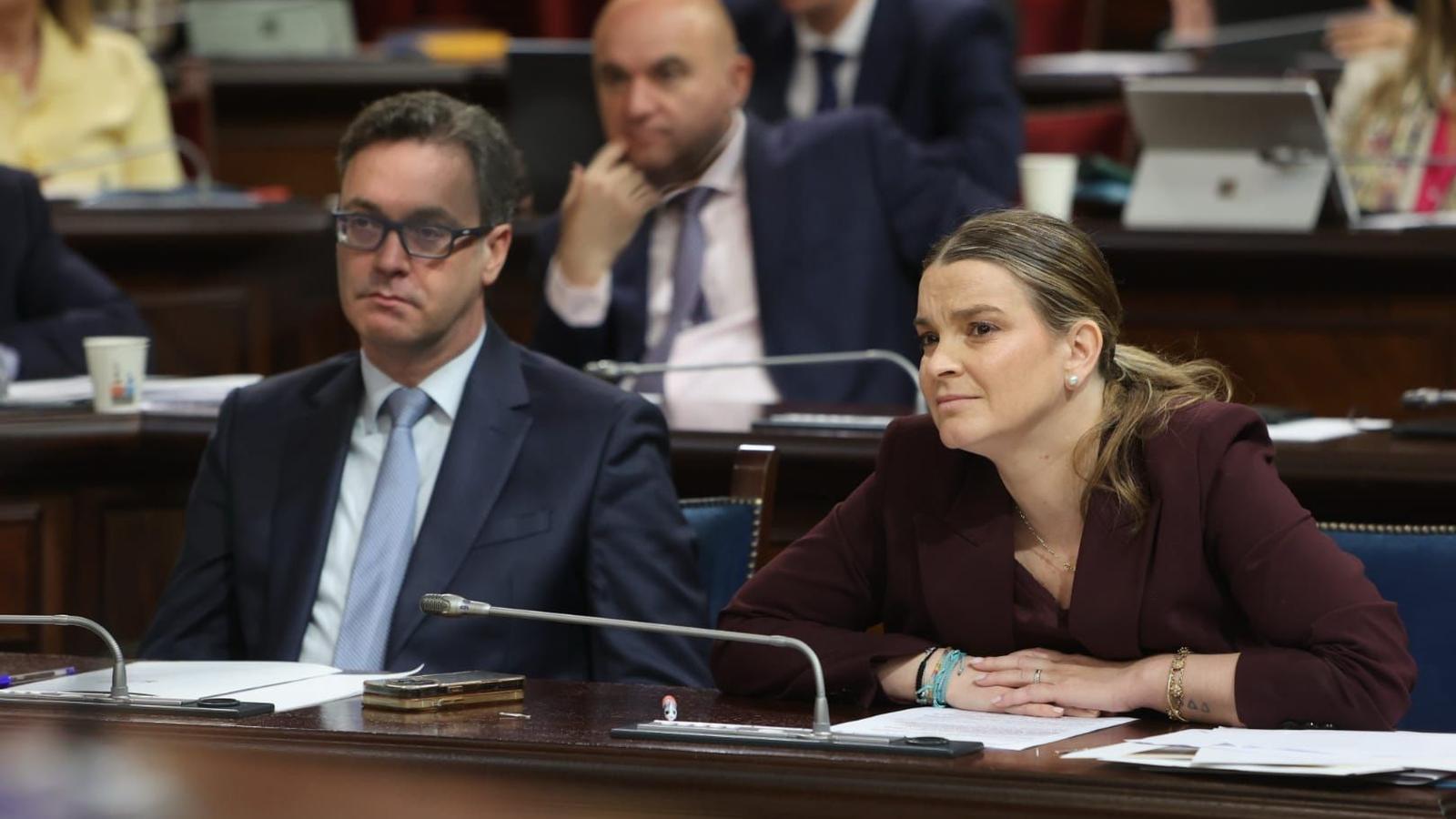
PalmaThe Government will "evaluate" the affordable housing draft law that the European Commission presented this week. The first vice president, Antoni Costa, has assured that they will even consider limiting the purchase of second homes if Brussels endorses it. He said this after the European Union (EU) opted to promote this limitation in areas affected by the housing crisis. The vice president also referred to the possibility of prohibiting the purchase of homes by non-residents, although the Commission's initiative does not cover this issue. "We are willing to analyze it if the door is opened," he explained.

The housing law that is subsequently to be processed in the European Parliament proposes measures so that territories and states can limit the rental of tourist apartments and the purchase of second homes to address rising costs and the lack of supply, although the text does not establish a distinction between residents or non-residents. The Eurobarometer of June 2025 found that 40% of Europeans consider affordable housing an immediate and urgent problem, and this percentage rises to 51% in cities. In the last ten years, the purchase price has risen on average by more than 60% and the rental price by 20% in the European Union as a whole. While one million Europeans are homeless, 20% of the housing stock in EU territory is empty.
It is the first time that Brussels has endorsed, on a European scale, the possibility of restricting the purchase or rental of apartments to encourage their use as primary residences. Nevertheless, banning the purchase of homes by non-residents remains difficult to apply in the EU. Although there are territories that allow restrictions in this regard, until now they had been treated as exceptions under Community law, which establishes non-discrimination based on nationality within the European Union (EU). Furthermore, the Court of Justice of the EU (CJEU) admitted to expanding these exceptions, but only under certain circumstances.
In a statement, the Commission asserts that the affordable housing law "does not introduce any EU restriction on the purchase or use of second homes" nor "short-term rentals", nor does it "grant state, regional, and local authorities new powers to do so". However, if Brussels' proposal were to be approved, the law would establish "a common European framework that authorities must respect if they decide, by virtue of the powers they possess under state legislation, to adopt measures that affect the acquisition or use of housing for residential purposes".
Costa also highlighted that other measures included in the European proposal are in line with policies adopted by the Balearic Government, such as the limitation of holiday rentals and the streamlining of procedures for building public housing. He also justified, once again, the PP's refusal to apply a cap on rental prices by applying the state housing law. "We believe it is counterproductive and affects the most vulnerable families," he justified. "We will apply any measure that allows us an improvement, which we believe can be effective," he assured.
Last February, the majority of the PP and Vox rejected a bill by MÉS per Mallorca to prohibit the purchase of housing by non-residents and companies. Despite losing the vote in the regional Chamber, the eco-sovereigntists have also raised the proposal to the Congress of Deputies. After the European pronouncement, the first vice president defended that the Government will apply the measure if it considers that it works regardless of its "ideological basis".
Appeals the transfer of migrant minors
On the other hand, the first vice president has announced a new appeal against two resolutions from the Canary Islands and Melilla that establish the transfer of several unaccompanied migrant minors to the Balearic Islands. The Community's Advocacy has argued that neither of the two resolutions responds to the best interest of the minors nor are they duly justified, because their repatriation through family reunification had not been proposed beforehand. It considers that the transfer of minors cannot be done "in a generic or automatic way, but must respond to the personal circumstances of each one".
In this sense, Costa has lashed out at the government of Spain for its management of the migration crisis in Ceuta. "It was warned 72 hours in advance, and 80,000 people entered Ceuta without it doing absolutely anything," he said: "Pedro Sánchez's government is incapable of controlling the borders". Asked about the fact that the Balearic Islands appear only in a testimonial way in the declassified documents regarding Ceuta after the Executive insinuated that Sánchez was hiding a police report about a supposed high risk of arrivals to the Archipelago, Costa has doubted the word of the Minister of the Interior. "It is the word of Mr. Fernando Grande-Marlaska," he explained: "We cannot trust a minister who is not capable of doing absolutely anything to control the migratory flows to the Islands". Thus, he considered "justified" the "fear" of the Balearic Government after Sánchez implied during his appearance in Congress that he had received information that affected the Peninsula and the Balearics. "We do not know where this report is, we are in the hands of an incompetent government," he asserted.
