Choose school? Or segregate the bastard elite?

There was a time when it was not the children nor the families who chose schools. It was the school that chose them. We are talking about a Mallorca that no longer exists, but which still beats in the memories of those who lived it and in the windmills of the houses of that time that dare to remain upright amidst the disorder and haste of today.
In my father's house there were a dozen out of ten siblings, and still one did not float. Grandfather went to Havana to make his fortune. And he must have made it, it must be said. He bought Mendia, a small estate with a 14th-century chapel right in front of Santa Cirga, and there they raised the brood. We are talking mainly about the first half of the last century. The children were dense, in my father's house (imagine, two consecutive sets of twins). There was a teacher, Don José, who looked for students in the surrounding areas and began to hold school in Mendia itself. Grandmother fed him, as part of what that little man was supposed to charge, and to alleviate the saying that has endured to this day: "To be hungrier than a schoolteacher." In our house there is a delightful photo, which illustrates this writing, with Maestro Biel de Son Brun, another rural teacher who in his home taught the children of that neighborhood to read and write. The image shows the children and the teacher, beret on, on a day they went for a snack in the pine forest of La Coma, a mythical enclave of Manacorí childhood memory and also referenced by another Manacorí from that time, Guillem d'Efak.
Also from that time were the rural schools. La Murtera, so deep inland, in the middle of nowhere, that many Manacorins would not know how to find it; Puig d'Alanar, near the sea and near Son Macià; and right next door, also, the school of l'Espinagar, today an unrecoverable ruin. Puig d'Alanar and La Murtera, on the other hand, have survived, but not as schools, but as municipal spaces for the enjoyment of petty bourgeois parties and other recreational and festive events. Those schools must have lasted until very close to the seventies, when modern life and tourism made the Mallorca that today's urbanites idealize, perhaps too cheerfully, fade away. Few would want to return to that way of life, if only to recover lost childhood. There are no longer rural schools, because the outskirts are a city of thousands of inhabitants who do not live there, they only inhabit it superficially.
That precarious school, however, served to provide basic education to an entire generation that, otherwise, would have been illiterate, as were many of their direct predecessors. Today, the right to education is universal and undisputed. There are those, however, who want to pervert it in the name of the freedom that the powerful preach. Liberalism may have seemed appealing to us in the progression of certain values and freedoms of a more moral or democratic nature. On the other hand, it becomes a perverse lie when the terms we address involve an improvement for those who need it most. Linguistic liberalism is a good example of this. After trampling on the language of this country for centuries to try to make it unnecessary, they now say that everyone should be free to choose the one they find... Exactly the same happens with equality between men and women, exemplified in the ingenious “neither 'misclismo' nor 'feminism'” that some short-sighted people still try to uphold today to maintain their small loophole of privilege.
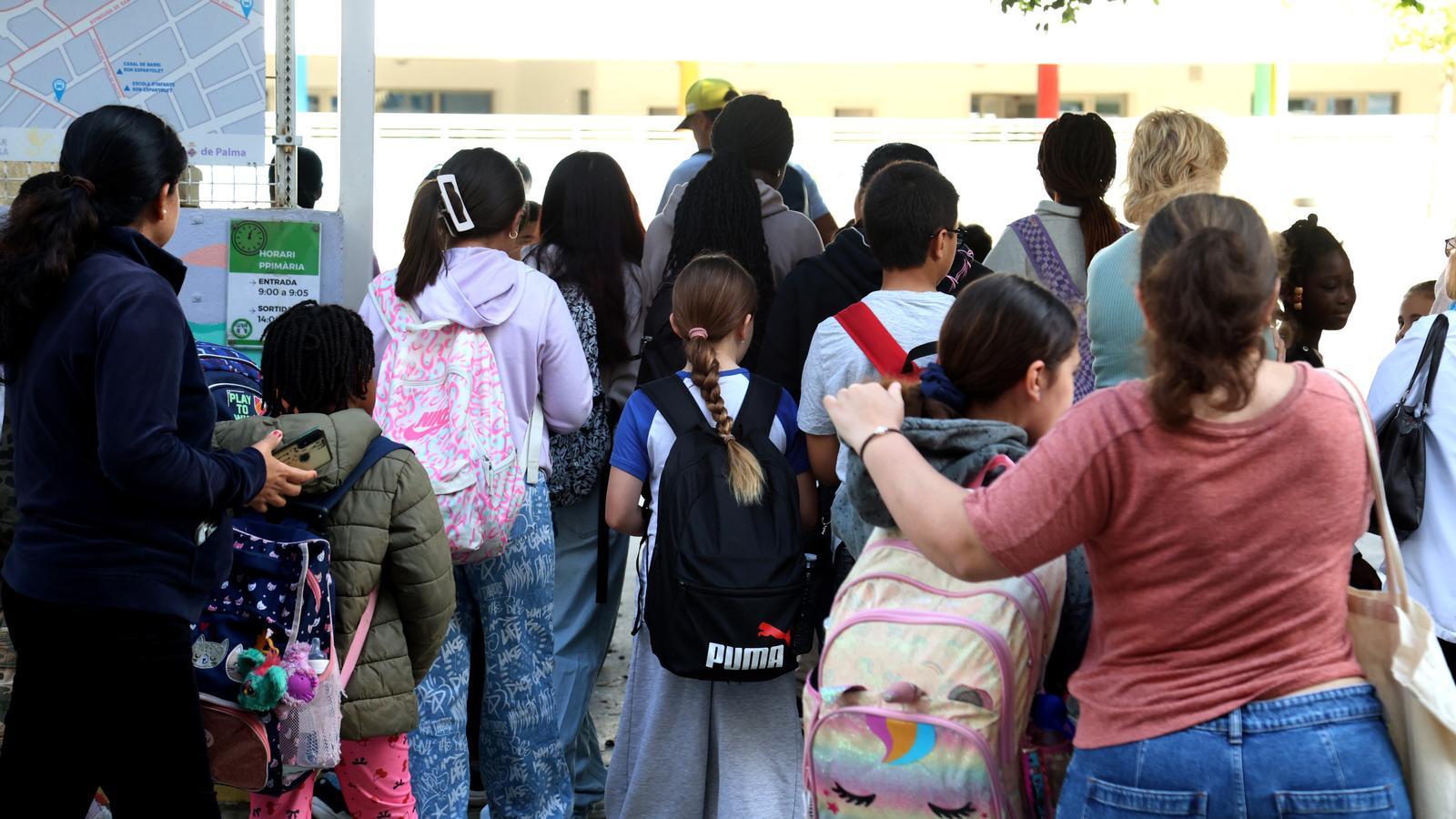
And now, here, we come to talk about school liberalism, defended by those who seek to shield the privileges of those already established in abundance and luxury. Counselor Vera is vigorously promoting the electoral promise of freedom of school choice. In the name of freedom? Or in the name of school segregation between the elite and the herd? Children should go to school near their homes and should socialize, train, and be educated with their equals, with the children who are neighbors door-to-door on the landing, with those who live on the same street. Public schools and institutes must adapt to the needs of their environment, and it is clear that they must opt for the methodology they consider most appropriate and effective, but this, in no case, should be an excuse for a family to choose one school or another. For some time now, what we could call 'school tourism' has been used, a practice that leads hundreds of families to drive miles and miles every day to take their children to the best school in the region, or who knows, perhaps on the island. It is another way to create elite circles, to denature the schools that welcome these children from outside their towns and neighborhoods, and to denature them, fostering the capricious egomania that governs the little heads of so many boys and girls today.
Public schools and institutes aim to educate future generations. It has always been this way. But, in a diverse, unhinged, and disjointed society like Mallorca today, their primary objective must be to guarantee equal opportunities for all of us who live in this devastated paradise. And if freedom defenders don't like it, let them pay for a private school; that's what their money is for. Choosing a school is not a right. What is a right is going to a school near your home, receiving an education equal to that of your peers, and having the same opportunities as them. If public school doesn't act as a social elevator, it's not working.
