The left unites to dispute the PP for the senator of Menorca
Right and left try not to divide the vote to win the only senator while, the extremisms lost, PP and PSOE try to attract the moderates and undecided

-
CAT -
CAST -
DE
CitadelMenorca and the Balearic Islands face the first skirmish on November 29th of what is coming next year with the regional elections. These elections –both the right and the left agree– will be marked by what happens next Sunday. The left is unifying candidacies and discourse to prevent the right from governing, which also has its own strategy to make change possible. The polarization is reflected in the fight for the only senator seat, which, for the first time, will only have two candidates: the PP and a left-wing coalition named Menorca in the Senate.
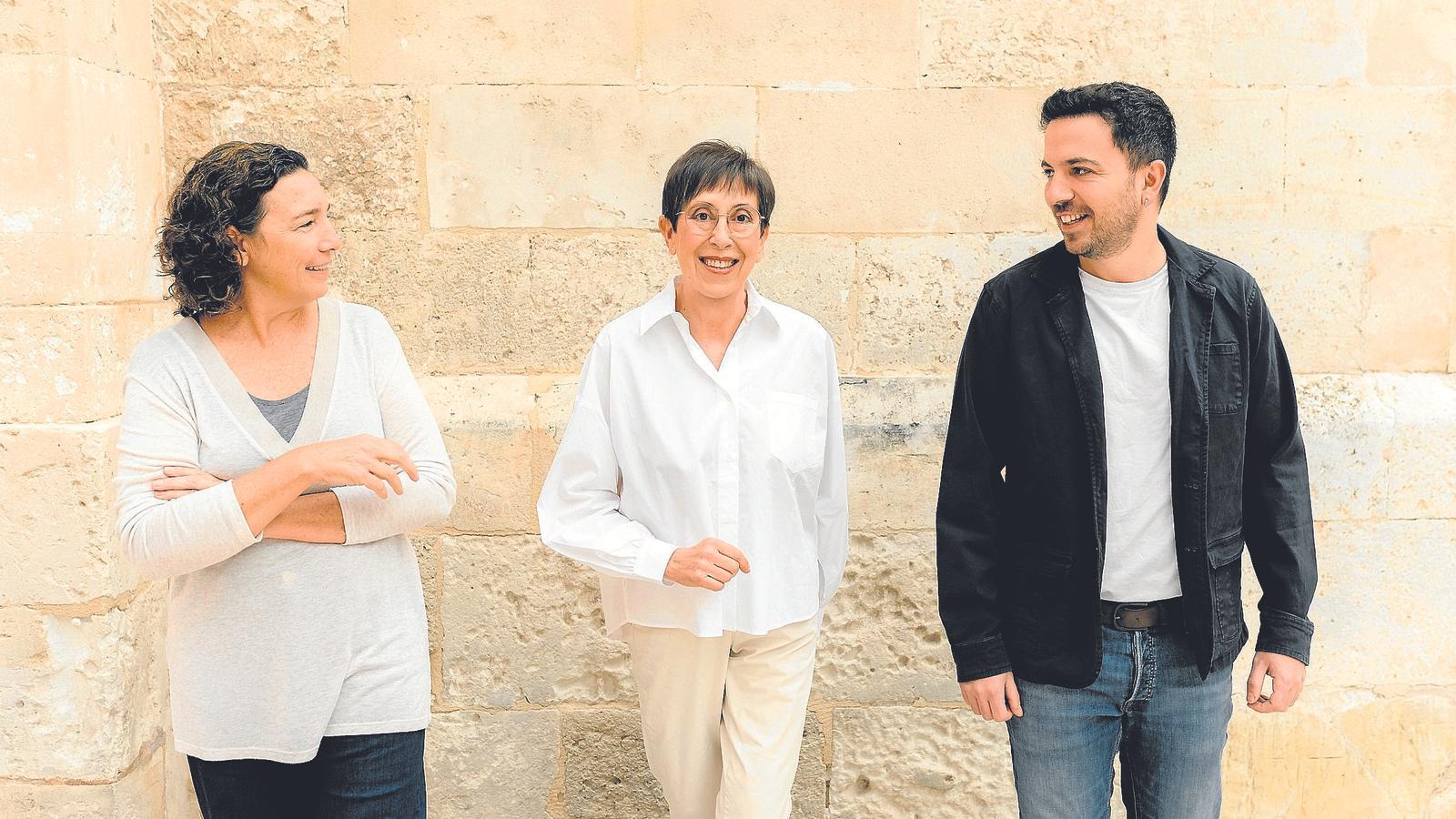
The state elections have brought Joana Barceló back into active politics. The first woman to preside over the Council of Menorca and who was the spokesperson for the government of Francesc Antich has decided to take the step, already retired, "due to the especially worrying, hard, and difficult moment we are living in." "There is a plan to roll back rights that were very hard to win and that we believed were guaranteed, and we must prevent it," she reasons. If the PP and Vox win, warns Barceló, "abortion, equality, gender-based violence, public pensions, Education, and Healthcare will be called into question." "If, furthermore, they lower our dependency levels, what will be left of the welfare state?" she asks.
Left-wing coalition
This is one of the reasons that has pushed her to run, as well as the fact that she was proposed by a left-wing coalition. “It is a very exciting challenge,” she says, convinced that she must go beyond the support of the left-wing electorate to “add people in favor of Menorca”.
To achieve this, the veteran socialist believes it is fundamental to bet on “another way of doing politics, not against anyone, but in favor of the rights and needs of the island”. Faced with the tension experienced at the state level, putting dialogue into practice to “avoid confrontation and build lasting agreements”. In this sense, she gives the example of the Camí de Cavalls. When the law was presented at the beginning of the century, “it initially had the rejection of the Popular Party, but we insisted on achieving an agreement that would last over time and, finally, it was approved without a single vote against”.
In this line, promises Barceló, neither acronyms nor parties will count, not even the one in which she still militates, the PSOE. In fact, if she is elected, she will be part of the mixed group. “I have not decided to return to politics to raise my hand without further ado or to stop arguing and defending what is best for everyone. I will be faithful to our people and to the values of the left”. This commitment also extends to the financing model, which must be reviewed. “If we are the second community that contributes the most, for the sake of justice, we must also be the second that receives the most,” she concludes.

The PP has opted for an opposite profile to try to maintain the senate seat. After ensuring that Vox does not run so as not to split the right-wing vote, the hitherto senator and current president of the Popular Party on the island, Cristòfol Marquès, did not put himself forward; he ceded the first place on the list to his general secretary, Ramon Sintes –Marquès will wait for the regional elections. A councilor in Ferreries with previous experience as president of the New Generations, Sintes represents, at 35 years old, one of the faces of renewal within the PP. In electoral debates, he has made it clear that, even though Vox has not presented its own candidate, he does not represent the far-right formation. "I am only the candidate of the PP, no one else's. Whoever knows me knows that this is so," he remarks.
The number three on the Balearic PP list for Congress is the hitherto deputy Joan Mesquida, who aspires to repeat. Mesquida acknowledges that he is uncomfortable with Vox's stance against the autonomies and Europe, but defends his party's right to govern with the support it needs. "It would be missing that we could not reach agreements with whoever we want, when Sánchez has surrendered to Bildu, Junts, and ERC and has given them power that harms our financing," he says.
The Populars place the improvement of financing at the center of their demands. They say that in this way the road works can be finished with State money and promise to reduce taxes for businessmen and the self-employed to incentivize employment and combat precariousness. "It is a matter of justice to demand from Madrid everything that belongs to us," remarks Sintes.
Sintes and Mesquida campaign together and follow Feijóo's speech to the letter, according to which the only major goal is to finish with Pedro Sánchez. The PP and PSOE are aware that they are playing for the undecided and centrist vote that could end up tipping the balance. Meanwhile, Vox lets them be, aware that where it can grow the most is to the right of the PP.
"In nearly 50 years of democracy, there has been almost no noticeable change between the PP and the PSOE. Only the push from Vox can drive the big decisions that the PP will never promote on its own," says the coordinator of the far-right formation on the island, Pedro Marquès. Sixth on the Balearic candidacy for Congress, he promises "to do what Gabriel Le Senne tells me." Marquès is loyal to the person who brought him back to politics after disputing, 12 years ago, the presidency of the PP in Ciutadella and heading the Vox candidacy for the Council of Menorca when the former deputy Antoni Camps led the formation on the island.
Marquès demands protecting property owners so they are willing to rent and curbing irregular immigration, including minors, who “are sent by their parents to facilitate family reunification”. “Everything is a strategy,” he says.
The Vox coordinator also does not guarantee pensions for the elderly and recalls that “Felipe González already warned in the 80s that it was better to get a pension plan because he did not see the system as guaranteed”. “Sánchez says that, either we have four more years of progress or four decades of regression. I would rather go back four decades. You will not find anyone who says that ten years ago we lived worse, because that is not the case”.
The socialists take a positive view of the legislature, despite the difficulties. They point out that in the next four years, the fruits of their management will be partially seen. From the new courts of Ciutadella to the Maó Police Station, the second submarine cable to Mallorca, and the demanded airport control tower. They also promise to resolve the housing issue if they have a broader progressive majority than they have had until now.
The general strike of November 11th was like water off a duck's back for the PSOE. Marc Pons highlights the responsibility of the right. “The citizenry has spoken loud and clear against the policies of the PP,” says the number two of the socialist candidacy. Successor to Joana Barceló, Marc Pons spent a period in Madrid under the orders of Minister Teresa Ribera. Now, the politician from Es Mercadal returns to support Francina Armengol, for the first time on the candidacy for Congress. “A broader progressive majority is needed to be able to apply the measures that society demands of us,” he says. One is to facilitate access to housing, declaring the islands a stressed zone, a measure that “the PP and Vox have blocked in the government”.
Pons warns that in these elections, “the defense of the general interest and of public rights and services, or the right of Trump, Milei, and Netanyahu in Spain” is at stake. Despite his militancy, he understands that a coalition has been formed to the left of the PSOE. “95% of progressive policies are coincident,” he remarks.
Veu balear
The only strictly Balearic voice in Congress is that of Ara Més-Front Ampli. The Menorcan member of the candidacy, Mateu Berenguer (Ara Maó), assures that the coalition's vote will be expensive. "We have not come to be anyone's sidekick," he says. Berenguer, one of the young faces of the Més per Menorca executive, appreciates that this time Ara Eivissa, Més per Menorca, and MÉS per Mallorca have imposed the Ara Més electoral brand with a Balearic proposal.
Among their demands, highlighting the restriction on the purchase of second homes by non-residents on the island, a minimum wage and a reduced VAT for the Islands, a supplement to pensions, and a cap on fuel prices so that they are, at most, 5% more expensive than on the Peninsula.
Programs aside, the increase in the electoral census will influence the result. 78,901 people are called to vote in Menorca, 4,656 more than three years ago (6.3% more). It is assumed that participation will exceed that of 2023, when 46% of the population did not go to vote. A luxury that no one can afford now.
