Voters abroad after the Supreme Court's decision: "They suspend your right to vote overnight"
Citizens registered in the CERA question that the right to vote of those naturalized by the Law of grandchildren is called into question and reject the suspicions about the growth of the foreign census
PalmaThe Supreme Court's decision to suspend the right to vote for a portion of Spaniards who have obtained nationality through the Democratic Memory Law has surprised both the beneficiaries and the rest of the voters abroad who are registered in the Electoral Roll of Spaniards Resident Abroad (CERA). The witnesses consulted by ARA Balears reject the idea of questioning an acquired fundamental right, as well as Vox's assumption that the socialist party might have wanted to inflate the census so that these votes would benefit them in the upcoming elections.
"They suspend your right to vote overnight"
Roberto Cano shares with ARA Balears a photograph where he appears with his brothers in Pineda de Mar. He travels there often, because his family was originally from this town and from Calella and initially settled in Paysandú (Uruguay), although he lives in Argentina. His bond with Catalonia, he says, is "total and constant". An active member of the Casal de Catalunya in Buenos Aires, he became a Spanish national in February 2023 and in the month of May he joined the list for the Council of Spanish Residents (CRE) in Buenos Aires (Argentina). "I did not have to present any proof of political exile, since my file fit perfectly into the legal channels that the State opened," he explains.
As a consequence of this, the Supreme Court has now provisionally suspended his right to vote. "It divides us arbitrarily," he opines: "If you are a descendant of a political exile you vote, but if you are a descendant of an economic migrant, as is my case, they suspend your right to vote overnight under a generalized suspicion". Indignant, he considers the court's resolution "unprecedented": "It leaves us democratically unprotected". "The Spanish state analyzed my documentation and recognized me as a full citizen," he laments: "Citizenship cannot be fragmented nor can we be treated as citizens on probation".
"We are a victim of the political context"
Florencia Vassallo has been formally Spanish since March 2024, when the consulate in Buenos Aires (Argentina) confirmed to her that her nationality had been processed correctly via postal mail. Although she demonstrated roots in A Coruña (Galicia), she also has ancestors in Castile and León and Andalusia. "How important my roots are, that I even have a PhD in Economics from the University of Seville," she explains.
She missed being able to participate in the Galician elections by a few weeks, and after the Supreme Court's resolution, she will not be able to do so in the next general elections either. "I am experiencing this with great frustration, because I was very excited to be able to vote," she explains. The reason is that, when she became a Spanish national, she did not provide documentary proof of her ancestors' exile. "It is very difficult to prove exile, and I know people who wanted to do it and were told by the consulate that it was not necessary," she explains. To speed up the procedures, the Spanish government exempted applicants from submitting these documents in an instruction, and this is precisely what the high court is now questioning. She considers herself a "victim of the political context." "Our inclusion in the CERA comes from the acquisition of Spanish nationality," she continues: "If we question the vote of those naturalized under the grandchildren's law, why not that of all the others, such as those naturalized under the historical memory law?", she asks.
"Vote in the Spanish elections since the year 1977"
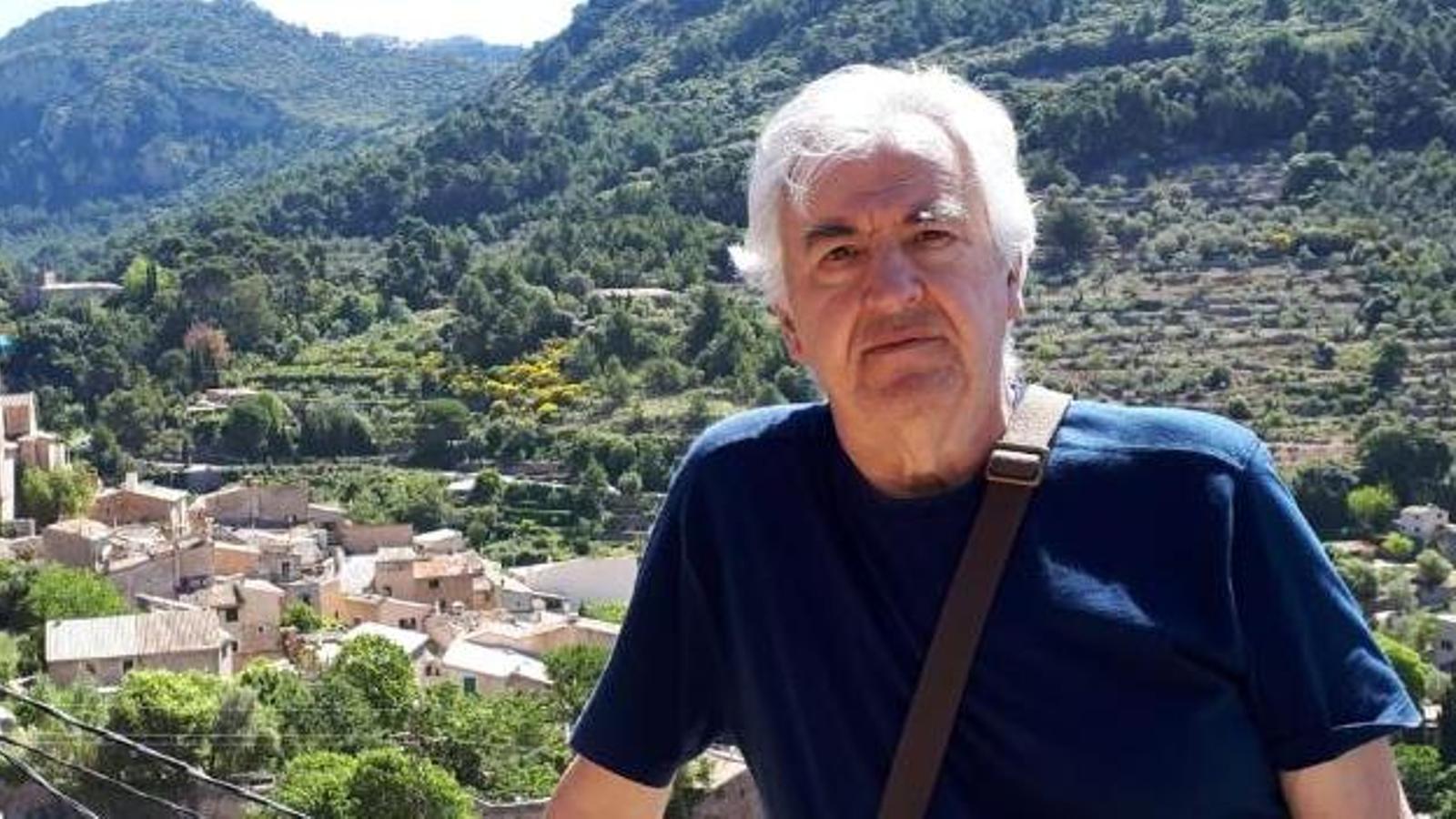
"I am the son of Majorcan emigrants and all my life I have felt that I am a son of migrants," explains Juan José Estrades, a retired teacher from Montevideo (Uruguay). He tries to travel every year to Valldemossa, his parents' village, where he has cousins and aunts and uncles, and he was president of the Balearic Circle in Uruguay. "I have been voting in Spanish elections since 1977, the first ones after the dictatorship of Francisco Franco," he recalls: "I registered in the Valldemossa census, because you have to nationalize yourself in the specific place you come from."
He rejects the Supreme Court's criterion, which considered that, if the increase in the CERA was not limited, there was a "well-founded danger" that election results could be altered. "It makes my hair stand on end," he asserts: "With what legal equity is this well-founded danger placed on the table?". He recalls that CERA voters represented 0.84% of the ballots in the last elections: "What is the fear? The fear is valid, but it is being generated based on a political issue.".
"Living in Spain does not imply that you are more involved in politics"
Paula Sabajanes is a Galician journalist who was born in Buenos Aires (Argentina). She obtained nationality because she was the daughter of Galicians, and she lived and studied in that territory thanks to a scholarship from the Xunta intended precisely to strengthen the bond between Galicia and its residents abroad. She debunks the idea that living in the State automatically implies a greater knowledge of the country's reality or its political situation than residing abroad: "Living in Spain does not necessarily imply that you are more linked to politics".
Involved in the community of Spaniards abroad, she has experienced the political debate over the CERA firsthand. She considers it "surprising" that the president of the PP, Alberto Núñez Feijóo, insists that the Spanish government is engaging in "electoral engineering" with the Democratic Memory Law. "As president of Galicia, he received many votes from the migration abroad, I don't know why he thinks they will vote massively for the left," she asserts. According to the Spanish consul in Buenos Aires, José María Ridao, there are currently 360,000 Spanish nationals registered at the institution. With these figures, Sabajanes asserts, Buenos Aires could become "the city with the third-highest number of Spaniards in the world." However, she points out that the fact that "the census grows does not mean that participation in elections grows." In fact, in the last general elections of 2023, only 10.4% of those registered in the CERA exercised their right to vote.
