Chaletism triggers water consumption in rural areas by 32% while that of agriculture falls by 27%
In Mallorca, extraction to supply homes and properties outside the public network has increased by 7.8 million cubic meters annually

-
CAT -
CAST -
DE
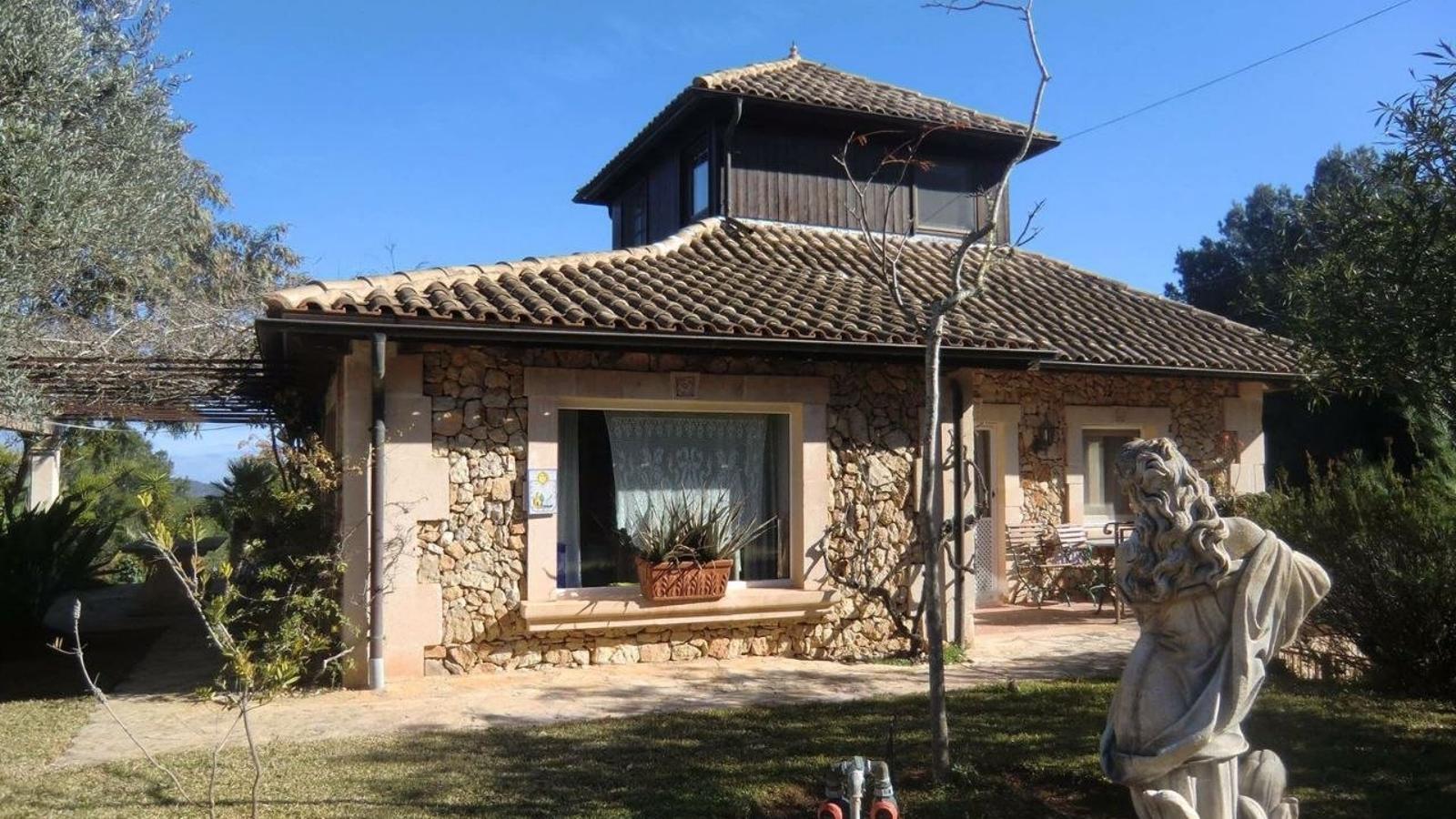
PalmaGroundwater is increasingly being used for the consumption of rural properties and homes, and less for agriculture. Data from the hydrological balances of 2015 and 2023 confirm that the estimated extractions to supply rural properties and scattered homes in Mallorca grew by 31.9%, while those intended for agricultural uses decreased by 26.6%. This is the trend shift denounced by the Water Alliance, which warns that the increase in demand in rural land, mainly to supply villas, compromises the recovery of aquifers and threatens both the future of agricultural holdings and the supply of the very homes that depend on the wells.
The figures reveal a profound change in the distribution of groundwater resources. Consumption by rural properties and scattered homes has gone from 24.45 to 32.25 million cubic meters per year, an increase of 7.8 million. In contrast, agricultural extractions have fallen from 37.40 to 27.44 million, nearly 10 million less.
The paradox is that the total volume of water extracted from Mallorcan aquifers has practically not changed. According to the balances analyzed by the entity, it has gone from 142.10 million cubic meters in 2015 to 143.77 million in 2023, an increase of only 1.2%. Mallorca does not extract much more groundwater in total, but it has significantly changed the way it is distributed among different uses. This increase in rural consumption is also reflected in the territory. Currently, in 51 of the 64 groundwater bodies in Mallorca, dispersed consumption already exceeds agricultural consumption. In 2015, this situation occurred in 42 bodies.
The Water Alliance considers it especially worrying that estimated extractions for dispersed consumption exceed by 32% the volume that the Hydrological Plan assigns to this use for 2027. The entity demands a halt to new water extractions linked to urban, residential, and tourist growth in areas with overexploited aquifers. "If we don't have water, we cannot authorize more growth," states Juan Calvo, spokesperson for the Alliance. According to Calvo, current limitations must be reviewed to prevent demand from continuing to increase and exerting even more pressure on resources that are already heavily exploited.
"We cannot even irrigate what we are authorized for"
The consequences of this situation are already being felt in some agricultural holdings. Miquel, a farmer from the Llevant of Mallorca who prefers to keep his surname anonymous, explains that the quality of the water from his well has progressively worsened in recent years. "For five good years now, we have seen how the water coming out is of poorer quality. Especially on very hot days. If we pump a little too much, much worse water comes up. I suppose that down there, what used to be there is no longer there," he relates.
The deterioration of the water directly affects the activity. "We cannot even irrigate what we are authorized to, because we would kill the plants," he laments. In his case, having a concession to extract water does not mean he can use the full authorized volume, because the quality of the water coming out of the well is no longer suitable for crops. Miquel also denounces the lack of control that has historically characterized the exploitation of underground resources. "We all know that historically people have done a bit of whatever they wanted here, and now those of us who dedicate ourselves to this are in a grim situation," he states.
His testimony illustrates one of the most worrying consequences of the deterioration of the aquifers: the decrease in available water suitable for agricultural activity. The farmer confirms that the quality has worsened, although he does not have an analysis that would allow him to determine if it is due to an increase in salinity, the presence of nitrates, or other factors.
"Unlike a city, the countryside is dead"
The Water Alliance warns that the increase in dispersed consumption may end up harming the homes that contribute to increasing demand. Unlike urban centers, which can have connections to supply networks and incorporate desalinated water, many isolated estates depend exclusively on groundwater resources. "Unlike a city, which can connect to the water supply network, to a desalination plant, the rustic area is dead," warns Juan Calvo, spokesperson for the Alliance, who assures that the lack of control is total and speaks of a Wild West in terms of water control and management.
The problem appears when wells run dry and when the water quality worsens to the point that it becomes difficult to use. In these circumstances, alternatives can be very limited and force owners to resort to more expensive supply systems. The entity gives as an example what happened in Ibiza during 2025, when several homes on rural land had to resort, as it explains, to supply by tanker trucks, with difficulties even in obtaining this service.
"There is a lack of access to water," warns the representative of the Water Alliance. The organization believes that authorizing new growth in territories where resources are insufficient may aggravate the situation and jeopardize future supply.
Consumption that is estimated, but not directly measured
One of the great difficulties in knowing the real extent of the problem is the lack of direct data on extractions. Scattered consumption is not calculated from the readings of all well meters, but through estimates based on buildings on rural land registered in the cadastre. This means that the 32.25 million cubic meters attributed to this use are an estimate of the hydrological balance and not the result of summing all the water actually extracted by homes and scattered estates.
The deficiencies of the control systems are reflected in the Government's parliamentary responses to the MÉS per Mallorca deputy Maria Ramon. The Ministry of the Sea and the Water Cycle acknowledges that current records do not allow knowing how many inspections have been carried out specifically to verify if there are wells in operation without the mandatory authorization to put them into service. According to the Executive's data, between 2023 and 2026, 67 sanctioning proceedings have been initiated for extracting water from wells without having completed this administrative procedure in the Balearic Islands as a whole, 17 of which correspond to Mallorca. The Government estimates the total of the sanctions at 1,043,594 euros, although it does not specify how many are final or what amounts have been collected.
The Ministry explains that it has promoted an administrative reorganization to improve the management of groundwater extractions and strengthen verification and inspection tasks. But the Water Alliance considers that the lack of information makes it difficult to verify if well owners respect the authorized volumes. For this reason, it calls for the generalization of meters and the establishment of effective mechanisms to read them and periodically communicate consumption.
The main demand of the Water Alliance goes beyond improving records. The entity demands that hydrological planning prevent increasing the demand for groundwater in areas where resources are overexploited. It considers that current restrictions are insufficient and advocates for specifically limiting new catchments intended for residential and tourist uses on rural land.
