How was Biel Mesquida, according to his friend Nicolau Dols: "His mother and his grandmother were already great readers"
Nicolau Dols, friend of the writer, tells us the best-kept secrets of his childhood
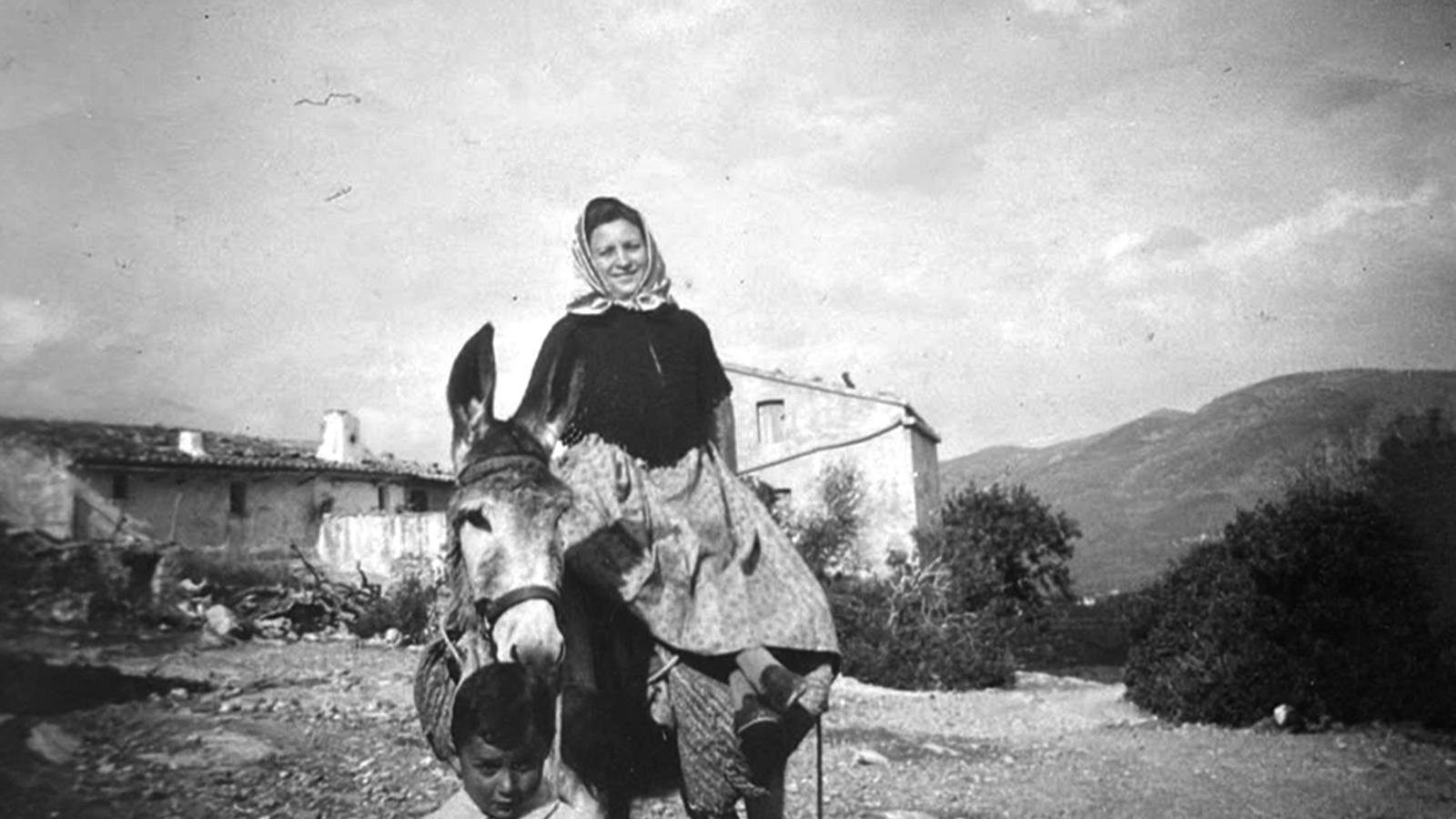

PalmaThey knew each other by sight until an event caused their life threads to become entangled forever. Linguist and professor Nicolau Dols tells us about the writer Biel Mesquida: “In 2001, Biel published T’estim a tu, a collection of articles about Mallorca at the time. I wrote a review of it in El Mirall. A few days later, when we were still using answering machines, I arrived at the office and there was a message from him. He didn’t say anything to me. He simply recited, impeccably, Joan Alcover’s poem Desolació. I understood that gesture as an elegant and very typical way of thanking me for the review. It must be said that he has one of the best voices in the Catalan Countries for reciting.” The friendship was consolidated a little later, when they coincided working at the UIB. Nicolau did not know Biel as a child, but their relationship is such a long after-dinner conversation that the professor says he can give some details about it.
He immediately points out that “his biography greatly helps to understand his personality”. He was born in 1947 in the Valencian Country, in Castelló de la Plana, because his mother worked there as a teacher. His father was also a teacher, “an itinerant profession, at that time”. This is why the family passed through Ciutadella, Manacor, and other places. “This itinerancy is fundamental to understanding him. He cannot identify with a single place, because he has incorporated permanent change as an essential part of his way of seeing the world,” points out Dols.
Another decisive childhood circumstance that marked him “is that he had premature access to books”. And he recounts: “His mother was a great reader, as was his grandmother. He grew up surrounded by written literature, in addition to oral tradition. When natural intelligence coincides with such early exposure to books, the result is a very unique literary personality”. Biel Mesquida usually explains that when he was three years old, he was already writing letters to his grandparents. “I don’t know how accurate this memory is, but it would be very interesting to be able to see those letters,” says the linguist.
In 1964 he went to Barcelona to study Biology, and later he studied Information Sciences. “This dual training explains many things. On the one hand, there is the baroque writer; on the other, a very scientific way of observing reality, an enormous attention to detail, and a very rich vocabulary also from a technical point of view. All this is reflected in his writing”.
Dols says of Mesquida that he is “a force of nature”: “He is an extraordinary intellectual. I have never seen anyone read like him. He has an absolutely exceptional reading speed and comprehension ability. I don't know if it's a natural or acquired quality, but it's impressive. He is permanently up to date with everything that is published.” But there is something else that makes him, perhaps, even more special: “Another very significant characteristic is his intellectual humility. He has always been concerned with the language of his books being impeccable. When he has a doubt, he consults. When he wants to create a new word, he creates it; but, when he is not clear, he asks for advice. I myself have helped him many times with linguistic matters. He is an immense creator, but also someone who has never stopped learning”.
All the words Dols uses to talk about Biel are grand and ample. He says he has a unique ability to create networks and establish links between people; and that he is always attentive to his friends. “He is empathetic, a sufferer in the good sense of the word, and has the ability to put himself in others' shoes”. As a creator, Dols admires “his ability to reinvent himself”. And thus: he concludes, “Biel has never wanted to repeat a formula. He has always sought a new language. That is why I consider him one of the great creators of contemporary Catalan literature”.
