More than 60 entities from the Llevant demand quality public healthcare and that the Hospital de Manacor double the number of beds
Citizen entities demand to dignify the working and economic conditions of physicians and to incentivize that they do not fall into the need of having to work “mornings in the public [sector] and afternoons in the private [sector]”
-
CAT -
CAST -
DE
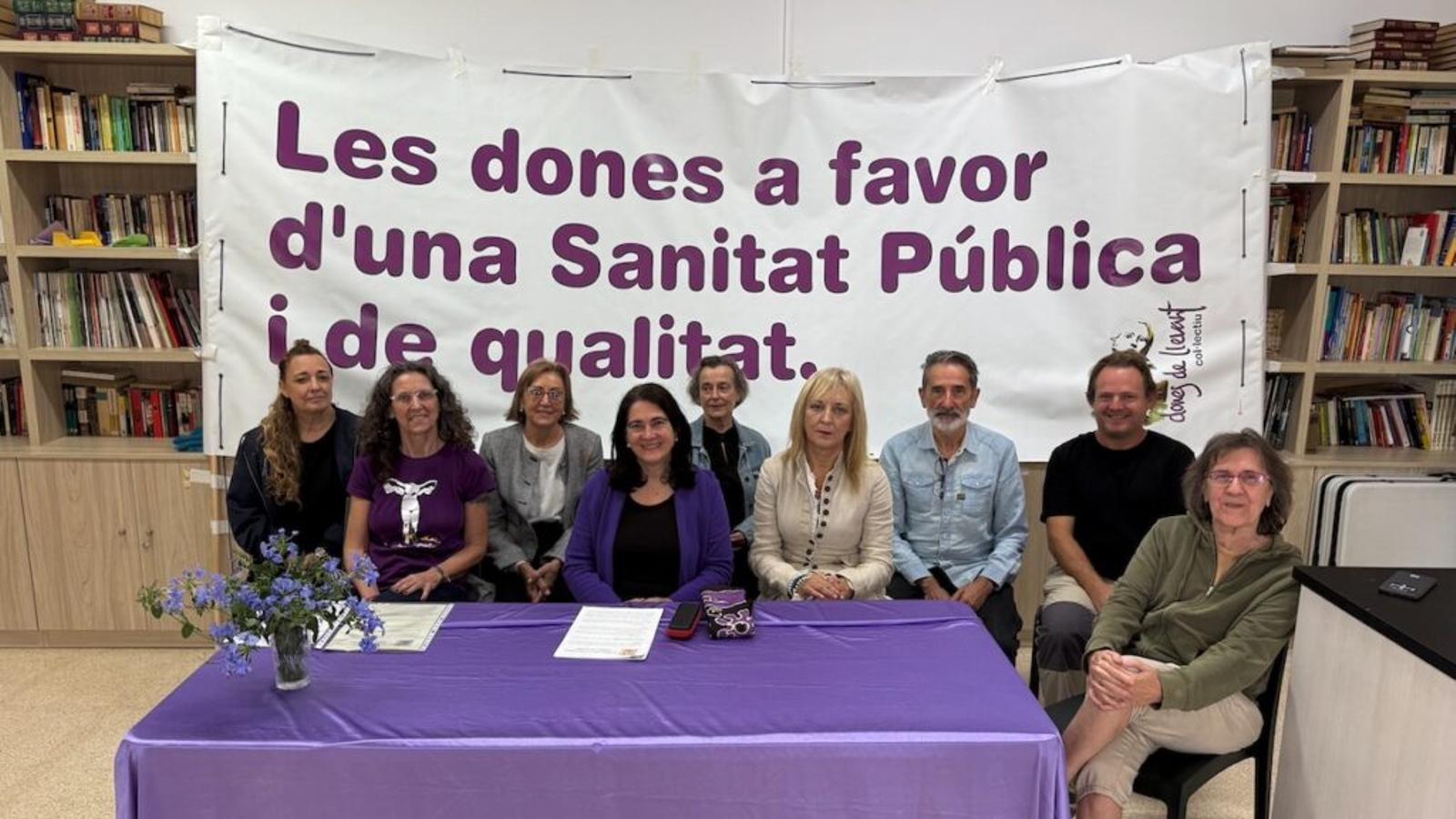
PalmaThe Dones de Llevant collective is once again calling for a public and quality healthcare system in the face of what they consider to be a setback in the provision of services and an increasingly pronounced shift towards the private sector in several key specialties. This was made known this Monday in Manacor, where representatives of various civil society, healthcare, trade union, and sports organizations (representing the more than 60 that are united in a single voice) reiterated their call for the Manacor Hospital to comply, for example, with phase 3 of its Master Plan and increase the number of rooms and beds from the current 200 "to the more than 400 that would be the ideal for a potential population of 167,000 people," explained Maria Magdalena Gelabert, spokesperson for the collective.
"Now that general elections are approaching, it is important that all parties keep in mind these demands that we have been making since January 2026, in addition to demanding data that the regional hospital has not yet provided us," they criticize, recalling the spirit of that demand for public and local healthcare, which 40 years ago filled the streets of Palma to call for the urgent construction of the Manacor hospital in 1987.
Likewise, the civic organizations demand the dignification of the working and economic conditions of the medical staff and to provide incentives so that they do not fall into the need of having to work "in the mornings in the public sector and in the afternoons in the private sector." In this regard, Miguel Reyero, representing Doctors of the World, recalled: "Before, in the 80s, you had to sign an exclusivity contract with the public healthcare system after having passed the competitive examinations. Later, over the years, they even gave you financial incentives equivalent to what would now be 900 euros. Today, with what they offer, it no longer compensates them; it is a situation that should be resolved."
Lack of transparency
They also demand more funding from the Government to be able to open clinics and operating rooms in the afternoons, and that chronic patients or surgeries do not have to be outsourced to private healthcare, “which makes many of these patients prefer to wait to be operated on in the public system”. Lawyer Francisca Mas made a special mention regarding transparency, both in terms of financing processes for private hospitals and in terms of the annual budgets of the regional health service.
“We want a stable and adequate gynecology service in the region; for the Manacor Hospital to once again be recognized for the prestige and quality of its delivery rooms. May voluntary pregnancy interruptions not be referred to the private sector. We applaud the improvement of the facilities, but it is of no use if it does not reduce the waiting lists for specialists”, adds Gelabert, who recalled that both last March and two months ago, data was requested from the management of the Manacor center “and we have still not received a response”. “With all this, we still remain without a second health center in Manacor, which we request to be a SUAP (Urgency and Primary Care Service)”, indispensable to be able to alleviate the increasingly serious incidents suffered by the Emergency department of the public regional hospital.
The Dones de Llevant collective also stresses the need “for diagnoses to take into account the peculiarities of women's and men's bodies and the balance in the most effective treatments; for example, a heart attack is more complicated to detect in a woman's body, which poses a serious problem”. “We live longer, we are 30% poorer and we are the ones who, in most cases, are in charge of family care”, said Francisca Mas. “For this reason, it is very important to preserve the public sector, because it is an ally of women”.
