Giulia Valle: "I dressed in my brother's clothes so as not to attract attention"
Composer, double bassist and writer

-
CAT -
CAST -
DE
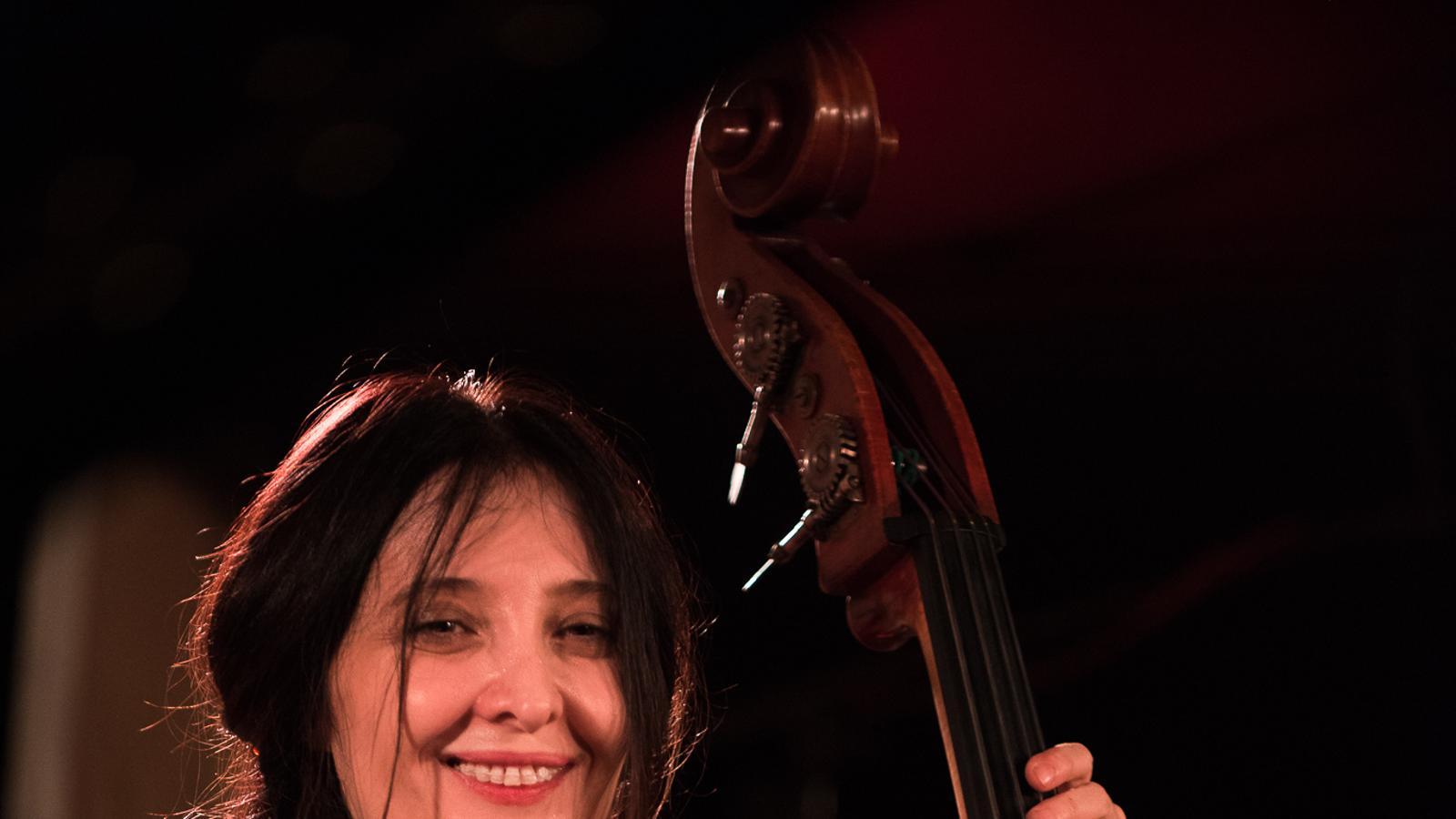
PalmaFor more than three decades, she has been one of the leading double bassists and composers in national and international jazz. She has led her own projects, shared the stage with some of the genre's biggest names, and this Saturday she presents in Port d'Andratx (Studio Weil) Cerebro en equipo. Neurociencia para el desempeño y la motivación en Música (y otras Artes), a book that combines her artistic experience with years of research on the brain, creativity, and motivation. In this interview, she reflects on jazz, the music industry, the role of women, and the need to understand music as a communication tool.
You have been leading your own projects for years. At what point did you feel that you no longer just wanted to perform music, but to explain it with your own voice?
— It was a very natural process. While I was training as a musician, I felt the need to express myself through composition as well. When you have a purpose, studying stops being an obligation and becomes a tool. Everything I learned — harmony, composition, and orchestration — made sense because it allowed me to write my own music. I always say, using a football analogy, that I like to be both a coach and a midfielder at the same time.
When you compose, what usually comes first: an idea, an emotion, or the sound of the double bass?
— Always an intuition. Creativity is born from a spark that you then build upon with knowledge and experience. But, ultimately, many decisions are intuitive. It's also important to keep your antennas always up: a conversation, a noise, or a rhythm you hear on the street can end up becoming music.
Does it still make sense to talk about jazz as a genre, or is it today mainly a way of understanding music?
— For me it's a way of understanding music. Jazz integrates very diverse influences: classical music, popular music, improvisation, and a great understanding of musical architecture. It's an open music, which absorbs what it finds interesting. Therefore, reducing jazz to a single style is impossible: many ways of making music coexist within it.
Jazz continues to have a reputation as minority music. Is it a matter of audience, programming, or prejudice?
— Of the three things. But I also think that musicians have a part of the responsibility. When a proposal is excessively intellectual, it can lose its connection with the audience. Music must reach both the head and the heart. Also, the industry has completely changed. When I started, recording an album had a path: there were record labels, festivals, and specialized media. Now, music is consumed mainly through playlists and jazz has been left very much outside this system. To this are added prejudices. Many people think that jazz is difficult music, because they have heard it once and haven't connected with it. But jazz should not be understood, it should be felt.

Are there still situations where a woman has to prove herself more than a man in the world of jazz, or is this stage already starting to be left behind?
— When I started, yes. In fact, a musicologist who has studied my career says that if I had been a man, I would probably have had a different path. For many years I tried to go unnoticed. I even dressed in my brother's clothes to avoid drawing attention. I wanted to be judged for my music, not for being a woman. I have always believed that music should transcend gender. I have rejected projects made up exclusively of women, because I prefer musicians to be chosen for their talent and not for their sex. Now, the situation is different and I applaud that there are more women at festivals. But I also see another problem: ageism. It seems that there is only room for novelty and youth, while in other countries veteran musicians continue to play a very important role. When I was starting out, in the 90s, there were almost no female double bassists and, furthermore, I wanted to lead my own projects. It wasn't easy, but it was a great school.
You have shared the stage with many musicians. What qualities do you look for in your travel companions, beyond talent?
— I have learned that leading is taking care of the people you have by your side. I look for musicians with imagination, the ability to listen, and adaptability. I like them to bring personality and help build music that, while sophisticated, reaches the audience. Furthermore, I feel very fortunate, because in this country there are extraordinary musicians. In Mallorca, especially, there is an impressive pool of talent.
Does playing in unique spaces like Studio Weil and Bellver Castle change the way you approach a concert?
— Yes. Spaces like Bellver have a special magic, but also important acoustic challenges. As musicians, we adapt. In the end, the charm of the place adds a lot, even if, technically, it is sometimes easier to play in a small room with good acoustics.
Improvisation is the great symbol of jazz. Is it also a good philosophy of life?
— More than improvising, I would talk about adapting. Improvising with the resources you have is very useful, but living without any kind of plan, at least for me, is impossible.
If you had to debunk one single topic about jazz, what would it be?
— That jazz is only improvisation. Improvisation exists, but behind it there are many hours of study, scores and a very well-crafted structure. Improvising does not mean playing without preparing.
You have written the book Team Brain. Neuroscience for Performance and Motivation in Music (and other Arts). What does it represent to you?
— It is probably my most important legacy, along with music. It was born after a burnout and six years of research on how the brain conditions creativity, motivation, and artistic performance. I would like it to help other musicians understand that many creative blocks have a neurobiological explanation and that they can be managed.

If you had to take away one single lesson from this research process, what would it be?
— Understanding how the brain works changes the way you experience creativity. When you know that a lack of motivation or creative blocks have a biological explanation, you stop blaming yourself and learn to manage them. This is the knowledge I would like to share, both on and off stage.
