
In 2010, Catalan anthropologist Jaume Franquesa published the book Sa Calatrava Mon Amour (Documenta balear). The subtitle was already quite revealing: Ethnography of a neighborhood trapped in the geography of capital. This year, to commemorate the humble origins of this neighborhood of narrow streets, the residents' association has promoted the creation of a mural dedicated to the ancient trade of leather tanning, documented since the 15th century. Directed by artist Claire Sintes, it occupies a wall of a municipal plot on Carrer del Bastió d’en Berard. Last year, the association felt completely powerless when it couldn't prevent Cort's decision to cut down the 18 lush trees, ‘the beautiful men’, in Plaça de Llorenç Villalonga, formerly known as ‘the little love garden’. The City Council cited security reasons.The name Calatrava comes from the military order of Calatrava, to which the Catalan knights who arrived in the 13th century following the conquest of Mallorca belonged. These religious soldiers were granted the lands in the extreme part of Islamic Medina Mayurqa through Count Nuno Sanç. The Arab baths, located in the gardens of Can Fontirroig, date from the 11th century. They are one of the few examples of Muslim architecture on the island. In 1256, the construction of the convent of Santa Clara began on the remains of a mosque.Within Calatrava is also the Jewish quarter, which formed a closed enclosure surrounded by a wall. The main gate of the old Jewish quarter was located at the intersection of Carrer de Monti-sion, Carrer del Sol, Carrer de Santa Clara, and Carrer del Call. One of its most illustrious inhabitants was Jafudà Cresques, author of the *Catalan Atlas* (1373), considered the masterpiece of medieval European cartography – it can now be consulted at the Bibliothèque Nationale de Paris. Since 2007, a statue of the famous cartographer has presided over Plaça del Temple.The church of Monti-sion, located on the street of the same name, dates from the 16th century. On one side stands the Jesuit college, which will now be converted into a medicalized residence managed by the Quirón group. Not far away is Plaça de Sant Jeroni, where in the 17th century the college of Sapientia was built under the invocation of Ramon Llull – in 1976, priest Jaume Santandreu would convert it into a shelter for the marginalized. Another unique building in the neighborhood is Ca la Gran Cristiana, on Carrer de la Portella, which has housed the Museum of Mallorca since 1976.On Carrer de Sant Alonso, Ca n’Alcover stands out, currently the headquarters of the OCB. The house of the author of *La Balanguera* was the epicenter of intellectual life in Mallorca at the beginning of the 20th century. The Xesc Forteza theater dates from 2003. One of the last emblematic establishments in the neighborhood was Forn de sa Pelleteria. Inaugurated in 1565, it remained open until 2012. Its charismatic pastry chef, Miquel Pujol Ferragut, died two years later, in 2014, at the age of 66. Now, in Calatrava, there are no longer any shops with history.
La Calatrava, the neighborhood that brought freedom to Mallorca
Once Franco was dead, from 1976 onwards, one of the most degraded neighborhoods in Palma created the first neofesta and was a pioneer in the ecological and feminist struggle through explosive artistic creativity. The subversive Calatrava model would inspire the village festivals of the Part Forana and in 2014, Orgull Llonguet

-
CAT -
CAST -
DE
PalmaIn the Mallorca of late Francoism, the revolution began in La Calatrava, a small neighborhood of Palma located between the cathedral and the Baluard del Príncep. Antoni Rotger Martínez was its alma mater. “I no longer recognize – he laments at 80 years old – the streets where I grew up and played with other children. There are tourists everywhere and, because of gentrification, many of my former comrades in struggle have had to leave. This was a rundown, working-class neighborhood, and now it is prey to the real estate speculation that the entire island suffers from”. In 1975, this man from Calatrava, of the 'pedra picada' style, was 32 years old and, with Franco agonizing, he already led the neighborhood mobilization against the construction of a large parking lot for tourist coaches in front of the Cathedral. The cry of protest was ‘Park YES, parking NO’. Due to that pressure, in May 1976 the City Council rectified and gave way to a competition of ideas for the design of the current Parc de la Mar, which was inaugurated in 1984.
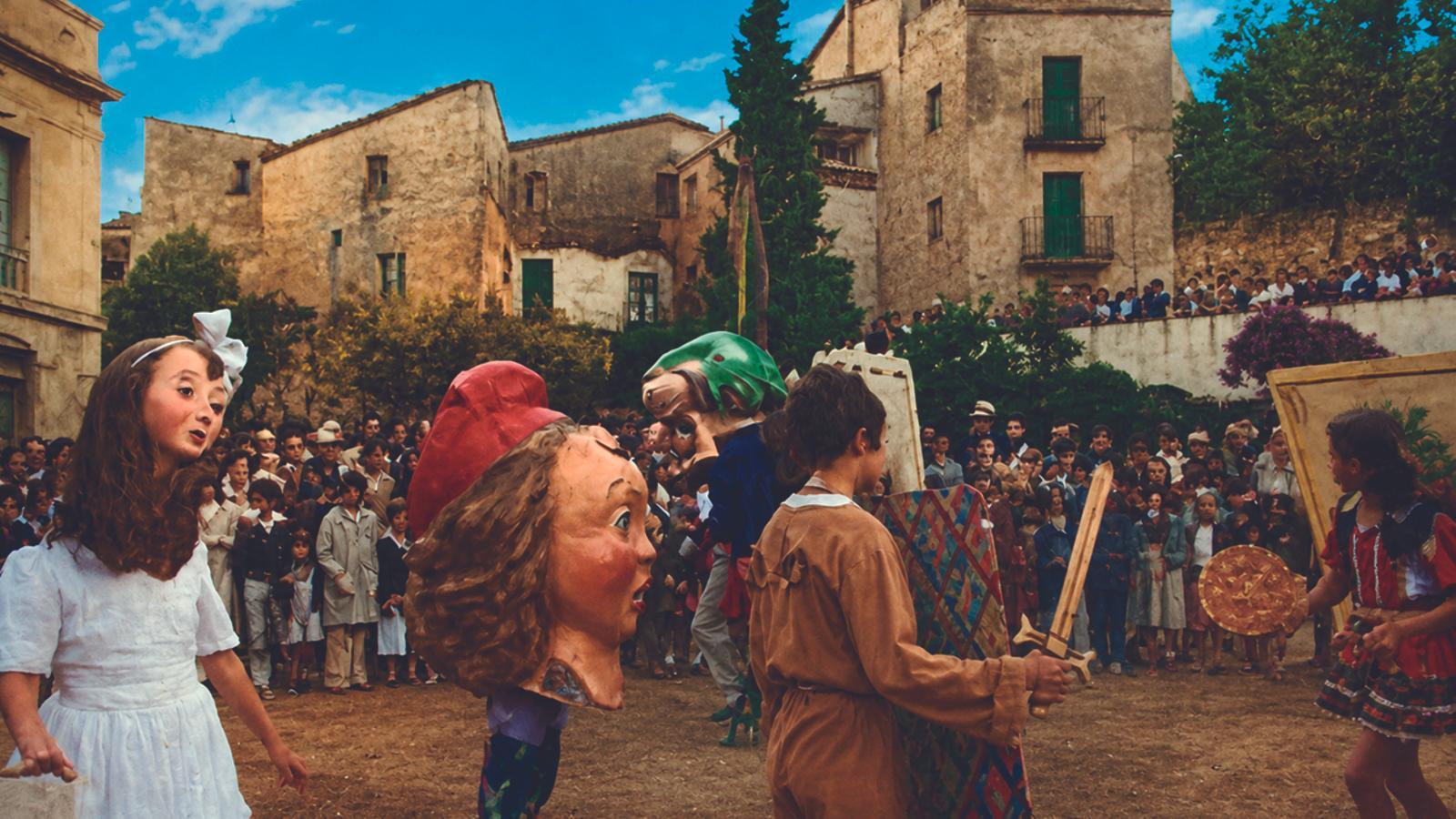
In the summer of 1976, eight months after the dictator's death, Rotger set out to revitalize the cultural desert that Palma was. With a group of friends, he set up the Calatrava Festival Commission to give a new boost to the Sant Cristòfol festivities (July 10th), which at the time were limited to the blessing of vehicles in Plaça de Santa Fe. "Our base of operations was the S'Alfombrera carpet factory, on Berard street, which we renamed Sa Fàbrica. It had been closed for about fifteen years and belonged to the Mercadal family, who gave it to us for free. The OCB, of which I was a member, joined the initiative and gave us a lot of publicity." During the first fortnight of July, the narrow streets where the famous cartographer Jafudà Cresques lived in the 14th century were decorated with protest murals to host the first popular major festival in the city that awakened citizen consciousness. "We had it easy with the institutions. Since January 1976, replacing the far-right Carles de Meer, the civil governor of the Balearic Islands was a native of Calatrava, Ramiro Pérez-Maura, the grandson of President Antoni Maura.

First neofestival
One of the members of the Festival Committee was the 74-year-old Felanitx activist Bartomeu Mestre Balutxo, who was then very closely linked to the neighborhood. “We created the first neofestival in Mallorca – he says –, before the Cosso de Felanitx, born in 1983. The program was the result of an unusual explosion of creativity. We organized concerts, parades, football matches, workshops, round tables on popular culture, circus and theater shows, poetry recitals, dinners, and outdoor cinema. We managed to de-hispanize, de-folklorize and make the summer festivals inherited from Francoism more participatory. We received some grants from Sa Nostra and La Caixa. To raise money, we did merchandising with items like t-shirts, bags, and caps. We opted for the reverse box office system, but it was a failure because it was a culture that was not yet widespread in society. The organizers, driven by enthusiasm, had no choice but to get into debt”.
The success of the event exceeded expectations. “All the events – Mestre points out – were massive. The folding chairs were always insufficient and there were people standing everywhere. People even came from the surrounding areas to take note of the ‘Calatrava model’ to organize their own festivals”. Five months later, on December 16, 1976, the Festival Committee was in mourning following the death of one of its most beloved members, Pere Mascaró. The young man, 26 years old, worked at Galerías Preciados in Palma and was murdered by a security guard linked to the extreme right, who immediately afterwards committed suicide. “It was the time of the so-called Transition – assures the activist – and fascist groups acted with absolute impunity. We mobilized in the streets to denounce it, but the case ended up being filed”.
Els Joglars
For the festivals of the second edition, those of 1977, La Calatrava did not hesitate to raise the flag of freedom of expression. In Plaça de Santa Fe, the satirical play La Torna, by the group Els Joglars, by Albert Boadella, was performed. The play, which would later be banned in Barcelona, revolved around the life of the German delinquent Heinz Ches, 30 years old, who on March 2, 1974, was the last prisoner executed by garrote, together with the Catalan anarchist Salvador Puig Antich, 25. There were more Catalan companies that participated in the beautiful Calatravian dream, including Dagoll Dagom and Comediants. From Mallorca, children's entertainment was represented by the puppet group S'Estornell and Cucorba, who had just been born. And in 1981 it would be the debut of Música Nostra, by Miquela Lladó.
The evening of 'Nit de cançons de l’illa' was very memorable, filling the Dalt Murada esplanade with thousands of attendees. Notable singer-songwriters and groups from the island's music scene performed, such as Guillem d’Efak, Toni Morlà, Biel Majoral, Bel Cerdà, Maria Àngels Gornés, the Calatrava brothers Joan Ramon and Maria del Mar Bonet, Els Valldemossa, Traginada and CPEP from Menorca, and UC from Ibiza. A night was also dedicated to 'La cançó del camp' with the participation of many traditional dance groups from the four islands and some singers like Biel Caragol. The occasion also provided an opportunity to hear the two most relevant figures from Palma of the era: the singer Pere Bonet, Bonet de Sant Pere, (1917-2002) and the young flamenco prodigy José Esteves de la Concepción, better known as Chocolate –in 1978, at 13 years old, he was found dead in Dalt Murada, supposedly a victim of consuming adulterated drugs.
School of democracy
The human warmth generated by that cultural epic would transcend festivals. Sa Fàbrica would become a true school of democracy. It provided shelter for the first manifestos demanding health centers in Palma's neighborhoods, which would eventually materialize with the creation of the PACS. It also promoted the publication of the first politically charged and satirical comics in Mallorca with iconic titles like Calatrava Story and Sa Lavativa. The host of collaborators was significant: cartoonists like Jaume Ramis, Tomeu Matamalas, and Jaume Vaquer, and writers like Biel Mesquida, Miquel López Crespí, Gabriel Janer Manila, and Climent Picornell.
In 1976, an assembly of women from Calatrava gave the necessary impetus to the Argentine journalist Leonor Taboada to form the Pelvis Collective, focused on offering sex education to women. Other initiatives cooked up in that stronghold of Palma's counterculture was the Dragonera Defense Commission. Among its members was the anarcho-ecologist group Terra i Llibertat, which on July 7, 1977, together with Talaiot Corcat, led the occupation of the small islet of Andratx to prevent its urbanization. “We made – Mestre recalls – the head of a giant dragon that, with about 12 meters of green fabric, we paraded everywhere in defense of Dragonera”.
In 1979 the owners of Sa Fàbrica reclaimed the premises. Then the new nerve center of the Calatravins became Ses Voltes, an old abandoned military barracks located at the foot of the Cathedral. Joan Nadal, the new Councilor for Culture of the first city council of the democratic era of the socialist Ramon Aguiló (1979-1991), ceded them. From this building the revolution continued with the organization of the first Sant Sebastià festivals and the first Rua since the time of the Second Republic. The Rueta for the little ones would not be missing either.
Inspiration for Orgull Llonguet
Ses Voltes would see the birth of CAT (Centre d’Activitats Teatrals) and the group of bagpipers led by Toni Artigues, Pep Toni Rubio, and Pep Rotger. The space would also be a meeting point for artists residing in the neighborhood such as the Italian clown Leo Bassi, the painters Miquel Barceló, Rafael Joan, Pere Pavia, and Miquel Àngel Llonovoy, and a whole generation of South American exiled creators, including the Argentine Horacio Sapere. In 1983, the people from Calatrava had to return the keys of Ses Voltes to Cort. In January 1984, a renowned farewell concert was held there with the group Peor Imposible, which had just been founded. The Mallorcan pop band of the multifaceted Toni Socias and Rossy Palma would later move to Madrid, where it would become an icon of La Movida.
“Having been left without a venue – Mestre assures –, the cultural dynamism of La Calatrava began to die, as everything came under the control of the City Council’s Department of Culture, including the Rua. The neighbors’ association, established in 1979, was not capable of leading the way. At least, from 1989 onwards, the neighborhood remained alive thanks to the leisure club promoted by activist Salvador Bonet”. Now the man from Felanitx, together with Antoni Rotger, is working on the program for the 50th anniversary of the iconic festivals that brought freedom to Mallorca. The central event will take place next Sunday, July 12, from 6 p.m. onwards, at Dalt Murada. Another of its great promoters, Manel Domènech, who died in 2025 at the age of 72, will be missing. In 2014, the subversive Comissio de Festes de la Calatrava would inspire the creation of Orgull Llonguet, which enlivens the Sant Sebastià festivals and, since 2015, the end-of-summer neo-festival of Canamunt and Canavall – with water guns, it recreates the confrontation between the two famous noble factions of 16th-century Palma.

