Menorcan corsairs against Washington
The islanders played a prominent role in the beginning of the history of the United States, which is 250 years old

-
CAT -
CAST -
DE
PalmaAlmost a hundred Menorcan privateering ships hindered Spain and France from helping the American colonists in the revolt against the British, led by George Washington, who would be the first president of the United States and would give his name to the capital. The islanders, and specifically the Menorcans, played a prominent and perhaps not very well-known role in the early days of the USA, which celebrates on Saturday, July 4, 250 years of its declaration of independence, in 1776.The revolt of the inhabitants of the 13 colonies was not an isolated event. On the one hand, it stemmed from the certainly groundbreaking ideas of the Enlightenment philosophers, such as Voltaire and his peers. On the other hand, from a previous conflict, the Seven Years' War, between France and Spain on one side and Great Britain on the other, in which the colonists had supported the metropolis, but for the expenses of which – wars are always expensive – it wanted them to pay the bill. This led to the rupture of hostilities in 1775 and the unilateral declaration of independence the following year.
Because the enemy of my enemy is my friend, the usual rivals of the British, the French and the Spanish, had no time to support the 13 rebellious colonies. In addition to the troops sent on the ground, France and Spain could harm the British where it hurt them most: their pockets, maritime trade. So they blockaded the Strait of Gibraltar. As researcher Marc Pallicer explains, who this July publishes in Círculo Rojo The privateers of Menorca in the service of Great Britain (1778-1782), it was "like closing the Strait of Hormuz now", that is, a catastrophe for the economy.
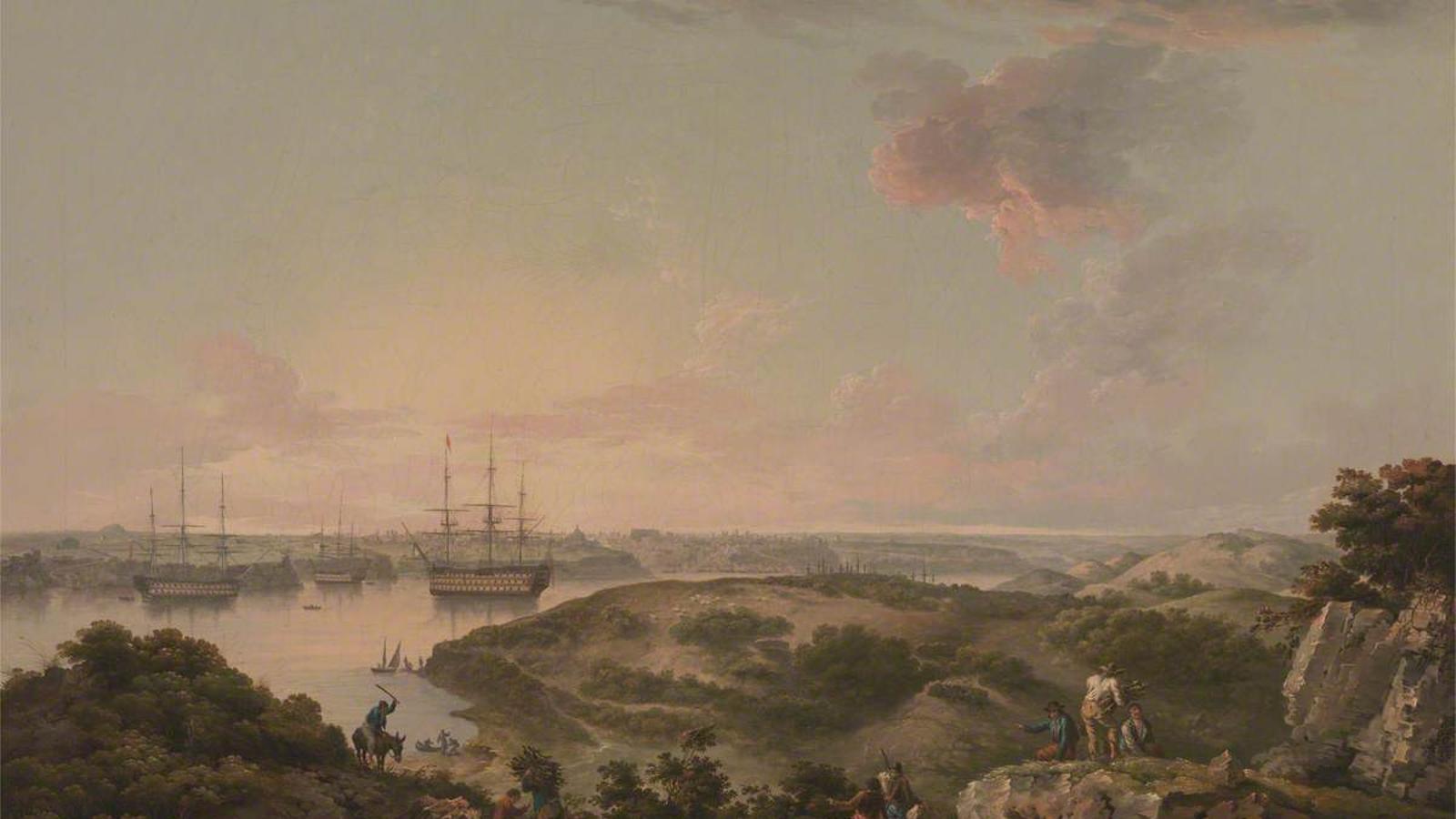
At that time, Menorca was under British domination, and the Mediterranean was the operational area for Menorcan ships. Consequently, they had to retrain, as we say now: they went from merchants to privateers. It should be said that, although colloquially they are confused with pirates, they were not the same, not by a long shot. Privateers did attack ships, certainly, and seized their goods. But they only did so against enemy nations and with a license, letters of marque, granted by their sovereign: in this case, King George III. Being a privateer was a perfectly respectable activity.
Menorcans against Mallorcans
Pallicer registered 94 Menorcan privateering ships that, in that second half of the 18th century, made life impossible for the French and Spanish, hindering them from helping the Americans. They represented a not insignificant reinforcement of British power. Not all captains of those ships were Menorcan; there were from the various peoples that made up Great Britain, but the crew was Menorcan. There were also ships that bore names of territories or localities of the metropolis.
Among those corsair ships, perhaps the most notable was the Maidstone, with a foreign captain in command. It became famous for capturing, all by itself and in two successive actions, two French squadrons. The Tartar was also one of the most celebrated. The captain of the Bermude, Ricard Rols – a Minorcan of British origin – Pallicer comments that he is still remembered today in Menorca. A child who asks for too much is told: “Do you think you are Rols’ son?”. The Bermude confronted a Catalan ship, the Comte d’Assalt, in a battle that lasted 13 hours and ended without a clear winner.
Of course, the Majorcans under Spanish rule were also a perfectly legitimate target for the Minorcan corsairs in the service of the British. The port of Pollença was the scene of one of the Maidstone’s actions and the Bermude approached the waters of l’Arenal worryingly – there must not have been any bathers then. Port d’Andratx was also affected. It was common for the Minorcan ships to use Cabrera as a refuge, something that visitors of various origins had done since time immemorial.
Not only did the Minorcans hinder the advances of the North Americans, but the British victories over the rebels were wholeheartedly celebrated in Menorca. The capture of Charleston, in 1780, was celebrated with fireworks, while anchored ships fired their cannons. Of course, the news arrived two months after the event; there was no Internet in those days. Another service the Minorcans provided to the British was that of spies: there were spies all over the Mediterranean, also in Mallorca: as long as they didn't let slip an “açó” (this) in a moment of carelessness, they could easily be mistaken for the native population of the neighboring island.

But not all Menorcan privateers maintained their loyalty to the 'jans', as the British were known in Menorca, from the proper name John, Joan, very common. That same 1776, which is now greatly commemorated, Jordi Ferragut – a captain from Ciutadella of just over 20 years old – anchored in Port-au-Prince, capital of Haiti, with the objective of obtaining firearms for the colonists' revolt, in exchange for the merchandise he carried. With that cargo he arrived in Charleston and joined the rebels, for which he achieved the rank of lieutenant in the South Carolina army.
Piece of exchange
To Jordi Ferragut, who was immediately nicknamed ‘George’, it was attributed to have saved the life of George Washington, the leader of the rebellious colonists and later their president, whose lineage gives its name to the capital of the United States. He participated, on the rebel side, in the siege of Charleston, whose British victory was celebrated on his native island, and was taken prisoner there. After the war, he was a pioneer of the conquest of the West. His son, David Glasgow Farragut – with an ‘a’, instead of the original ‘e’ – would be the first admiral of the United States.
The comings and goings of the revolt of the 13 colonies also affected another group of Menorcans: 110 families, who had signed up for the project of the Scottish doctor Andrew Turnbull to create a colony in 1768, New Smyrna, near St. Augustine, in the current state of Florida. It had been a Spanish possession, but in 1763 the Hispanic monarchy had ceded it to Great Britain by the Treaty of Paris. By that same agreement, the French returned Menorca to the British, after a brief period of rule. The act of exchanging territories with their inhabitants, as if they were trading cards, was common at the time.
The immigrant Menorcans found themselves in truly dire conditions, both due to the hostile conditions of the land and the systematic exploitation they were subjected to. The outbreak of the revolution of the 13 colonies, as collected by Jaume Sastre, generated “a tense situation” in Florida, even though it did not revolt. In that famously eventful year of 1776, the rebels were only 20 kilometers from St. Augustine. The British governor was so afraid that the desperate Menorcans would ask for support from the northern rebels, that he gave them permission to abandon the colony and settle in St. Augustine, a city where their descendants continued to speak Catalan until shortly before World War II.
The loyalty of the Menorcan privateers to the British crown was perhaps not as valued as it should have been: governments are moved by interests, not by sentimentality. Great Britain also needed allies, and sought them at the other end of Europe. The British ambassador James Harris offered the Empress of Russia, Catherine the Great, to cede Menorca to her if she gave them a hand in defeating the rebellious subjects. But the tsarina refused the proposal, which seemed poisoned to her: she had nothing to gain from that conflict.
However, that seemed to set off alarms in the court of Madrid, which, it should not be forgotten, was on the side of the North Americans and against the British. Spain had never accepted the cession of Menorca and Gibraltar under the Treaty of Utrecht of 1713 and took action. In 1782, the troops of Charles III, led by the Frenchman Duke of Crillon, took possession of the island, and the Menorcans became subjects of those who had until then been the enemy.
By a new treaty, that of Versailles, in 1783 Great Britain had no choice but to recognize, reluctantly, the independence of what had been 13 colonies of its property. Not only that: it had to return Florida to Spain, with the Menorcan colonists included, and it had to recognize Spanish sovereignty over Menorca. However: the British did not resign themselves to this, and in 1798 they retook the island. At that moment, probably no one imagined it, but the future great superpower of the world had been born. Even though the Menorcans had done their best to prevent it.
Minorcans also intervened in another crucial episode of the United States' past: the civil war, northern states versus southern states, between 1861 and 1865. Marc Pallicer has documented the names of 107 individuals originally from the island who participated in that conflict, with the abolition of slavery as the detonator and popularized by the classic Gone with the Wind.According to the Minorcan researcher, around 1840, a good number of Minorcans, perhaps about 500, settled in New Orleans, where they created a network of taverns. They imported products from the island and exported cotton to Minorca. In addition, they practiced the lucrative slave trade, destined for Cuba: since they used American ships, they could not be intercepted by the British, who were pursuing that inhumane trade.When the civil war broke out, a brigade of European residents was formed on the southern side, within which was a 'Spanish Legion', with 20% Minorcans, which defended New Orleans in 1862 against the attack led – how small the world is – by the admiral son of a Minorcan, Farragut, who emerged victorious. Two notable Minorcans from that conflict were Rafel Josep Llull, nicknamed 'Pepe Llulla' – who according to Pallicer was a real dandy and who, unlike the others, took the side of the North – and Miquel Guerrero, who emigrated to indigenous territory and after whom a bay is named.
Information elaborated from information by Marc Pallicer and texts by Jaume Sastre Moll, Miquel Àngel Casasnovas and Luis Ribot.
